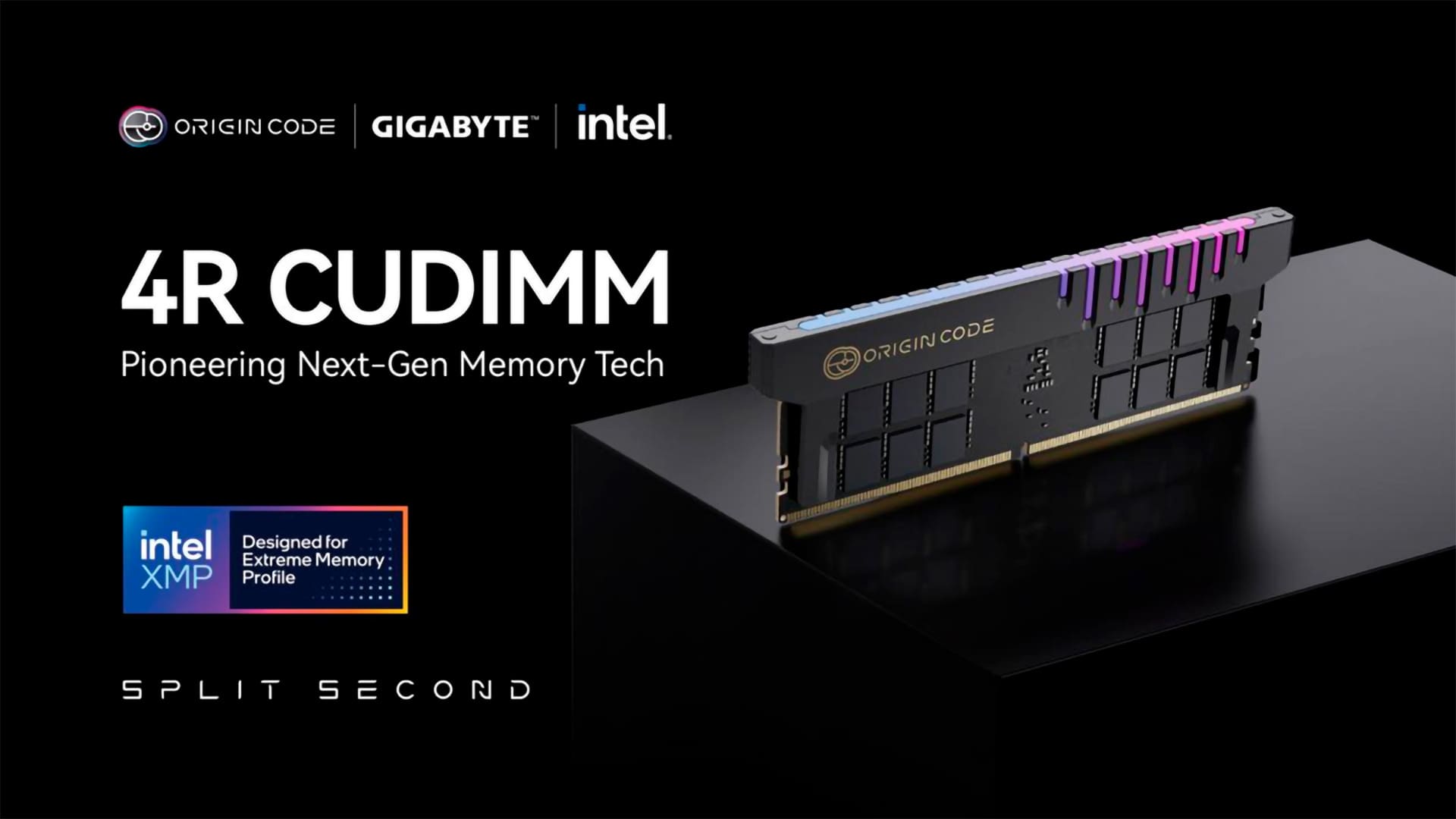
In a move that could redefine high-performance computing, Romanian memory manufacturer Origin Code has announced the launch of what it claims is the world’s first 256GB DDR5 dual-channel memory kit. While the company has not yet provided technical specifications or confirmed pricing, industry analysts suggest this development could significantly impact gaming PCs, professional workstations, and data-intensive applications like AI training and video editing.
The announcement comes as DDR5 memory continues its rapid evolution, with capacities doubling in recent years. While 128GB kits have become common for high-end systems, a 256GB configuration represents a quantum leap in single-system memory capacity. For context, most consumer PCs today ship with 16GB or 32GB, while enthusiast builds typically max out around 64GB or 128GB.
What makes this kit particularly noteworthy is its dual-channel configuration—a setup that pairs two identical memory modules to double bandwidth and improve system stability. While 256GB single-channel kits exist in server-grade memory, Origin Code’s dual-channel approach suggests a more consumer-friendly packaging aimed at desktop and workstation markets. The company has not yet specified the memory’s speed (measured in MT/s), latency, or power requirements, but industry observers expect these figures to align with current high-end DDR5 standards (e.g., DDR5-6000 or DDR5-8000).
Why 256GB? The Demand Behind the Technology
Origin Code’s 256GB kit addresses a growing need in several high-demand sectors:
- AI and Machine Learning: Training large neural networks requires massive memory pools to handle batch processing. A single 256GB kit could reduce the need for expensive multi-GPU setups or external storage bottlenecks.
- Professional Video Editing: Applications like Adobe Premiere Pro and Blender increasingly rely on RAM to handle 8K+ projects with multiple layers. Current 128GB setups often require constant disk swapping.
- Virtualization and Cloud Computing: Running multiple virtual machines simultaneously becomes feasible without external storage dependencies.
- Gaming (Niche Use Case): While most games don’t need this capacity, modders and streamers working with ultra-high-resolution textures or multiple game instances could benefit.
For perspective, NVIDIA’s latest AI chips like the H100 require up to 80GB of memory per GPU (NVIDIA H100 Specifications). A 256GB kit could theoretically support two such GPUs in a workstation configuration without external memory bottlenecks.
Technical Challenges and Industry Reactions
While the concept is groundbreaking, several technical hurdles remain:
- Motherboard Support: Most consumer motherboards have 4-8 DIMM slots with limited capacity per slot (typically 64GB or 128GB per channel). A true 256GB dual-channel kit would require motherboards with 128GB+ per-channel support—a feature currently rare in mainstream boards. High-end workstation motherboards like ASUS Pro WS X670E or Supermicro’s X13 platforms may be the only viable platforms.
- Power Consumption: DDR5 memory modules consume significantly more power than DDR4. A 256GB kit could draw 50-100W under load, requiring robust power delivery and cooling solutions.
- Price Point: While Origin Code hasn’t disclosed pricing, industry estimates suggest this kit could cost between $8,000 and $15,000 USD, positioning it as a niche product for enterprise and professional users rather than mainstream consumers.
Industry reactions have been mixed. Corsair, Kingston, and Samsung—major players in the memory market—have not yet commented on Origin Code’s announcement. However, AnandTech’s recent memory market analysis notes that while demand for high-capacity memory is growing, supply chain constraints and motherboard limitations remain significant barriers.
Who Will Use This? Target Audiences
The 256GB DDR5 kit is unlikely to appeal to casual gamers or home users, but several professional segments stand to benefit:
- AI Researchers: Universities and research labs working with large language models or generative AI could reduce training times by keeping entire datasets in RAM.
- 3D Animation Studios: Companies like Pixar or ILM use memory-intensive rendering pipelines that could see dramatic efficiency gains.
- Financial Modeling Firms: High-frequency trading systems and risk analysis tools often require massive memory pools for real-time calculations.
- Medical Imaging: Hospitals and research institutions processing 3D scans or genomic data could benefit from reduced disk I/O latency.
For these users, the kit represents a potential game-changer in workflow efficiency. “The bottleneck in many high-performance applications isn’t just CPU or GPU—it’s memory bandwidth and capacity,” explains Tom’s Hardware’s DDR5 memory guide. “Having 256GB in a single system could eliminate many of the external storage dependencies we see today.”
What’s Next? Origin Code’s Roadmap and Competition
Origin Code has not yet provided a release timeline or confirmed whether this is a one-off product or the start of a new product line. The company, which specializes in high-performance memory solutions, has previously launched innovative kits like its 1TB DDR4 modules aimed at server markets.

Competitors in the high-end memory space include:
- G.Skill: Known for extreme memory kits, though their offerings typically max out at 128GB for consumer markets.
- Corsair Dominator Platinum: Focuses on high-speed gaming memory rather than capacity.
- Kingston: Offers server-grade memory with capacities up to 1TB, but these are single-channel and not designed for consumer desktops.
- Samsung: Dominates the server memory market with high-capacity DIMMs, though these are rarely packaged for dual-channel consumer use.
If Origin Code’s kit gains traction, it could pressure other manufacturers to develop similar high-capacity dual-channel solutions. However, the lack of motherboard support remains a critical hurdle. “We’re seeing more demand for memory capacity, but the ecosystem isn’t quite there yet,” notes TechPowerUp’s DDR5 coverage. “Until motherboard chipsets evolve to handle these workloads, we’ll see this remain a niche product.”
Practical Considerations: Should You Upgrade?
For most consumers, a 256GB DDR5 kit is overkill. However, here’s what potential buyers should consider:
Key Questions Answered
- Is this kit worth the cost? Only if you’re working with applications that genuinely need this capacity. For most users, 64GB or 128GB remains sufficient.
- Will my motherboard support it? Check your motherboard’s QVL (Qualified Vendor List) for maximum supported memory capacity. Most consumer boards won’t support 256GB dual-channel.
- What about power requirements? A kit of this size will require a high-wattage PSU (1000W or more) and robust cooling to prevent throttling.
- When will it be available? Origin Code has not announced a release date. We’ll update this article as soon as more details emerge.
Alternatives for High Memory Needs
If you need massive memory capacity but don’t want to invest in a 256GB kit, consider these alternatives:
- Multi-GPU Systems: Pairing multiple GPUs with 128GB kits can achieve similar performance for AI workloads.
- External GPU Accelerators: Devices like the Razer Core X can add GPU power without internal memory constraints.
- NVMe Storage: High-speed NVMe SSDs (like Samsung’s 990 Pro or WD Black SN850X) can serve as fast secondary storage to reduce RAM pressure.
- Server-Grade Memory: Companies like Supermicro offer workstation systems with up to 2TB of DDR5 memory, though these are significantly more expensive.
Industry Impact: What This Means for the Future
Origin Code’s announcement signals several potential shifts in the tech industry:
- Motherboard Evolution: If demand grows, we may see motherboard manufacturers develop chipsets with higher memory capacity support, particularly in the workstation and server segments.
- Software Optimization: Developers may begin optimizing applications to take full advantage of massive memory pools, reducing reliance on external storage.
- Data Center Trends: The blurring line between workstation and server memory could lead to more hybrid systems in research and enterprise environments.
- Price Pressure: As high-capacity memory becomes more common, we may see prices drop for lower-capacity kits as manufacturing scales.
For now, Origin Code’s 256GB DDR5 kit remains a fascinating but niche product. Its success will depend on whether the market demand justifies the technical and financial barriers. One thing is certain: this development pushes the boundaries of what’s possible in consumer-grade computing.
Next Steps: What to Watch For
We’ll continue monitoring this story for:
- Official release date and pricing (expected in Q4 2023 or early 2024).
- Motherboard manufacturer responses regarding compatibility.
- Potential partnerships with workstation PC builders like Dell Precision or HP Z.
- Software updates that optimize for massive memory pools.
For now, potential buyers should wait for more concrete information before making purchasing decisions. If you’re in the market for high-capacity memory, we recommend consulting with a system integrator to ensure compatibility with your existing hardware.
Reader Questions: Have Your Say
Would you use a 256GB DDR5 kit if it were available today? What applications would you run with that much memory? Share your thoughts in the comments below—or let us know if you’ve already experimented with high-capacity memory setups.
For more on memory technology and its impact on computing, explore our guide to DDR5 specifications or our analysis of workstation memory trends.
Stay ahead of the curve with World Today Journal’s tech coverage. Subscribe for breaking news and in-depth analysis on memory technology, AI advancements, and high-performance computing.
Worth a look