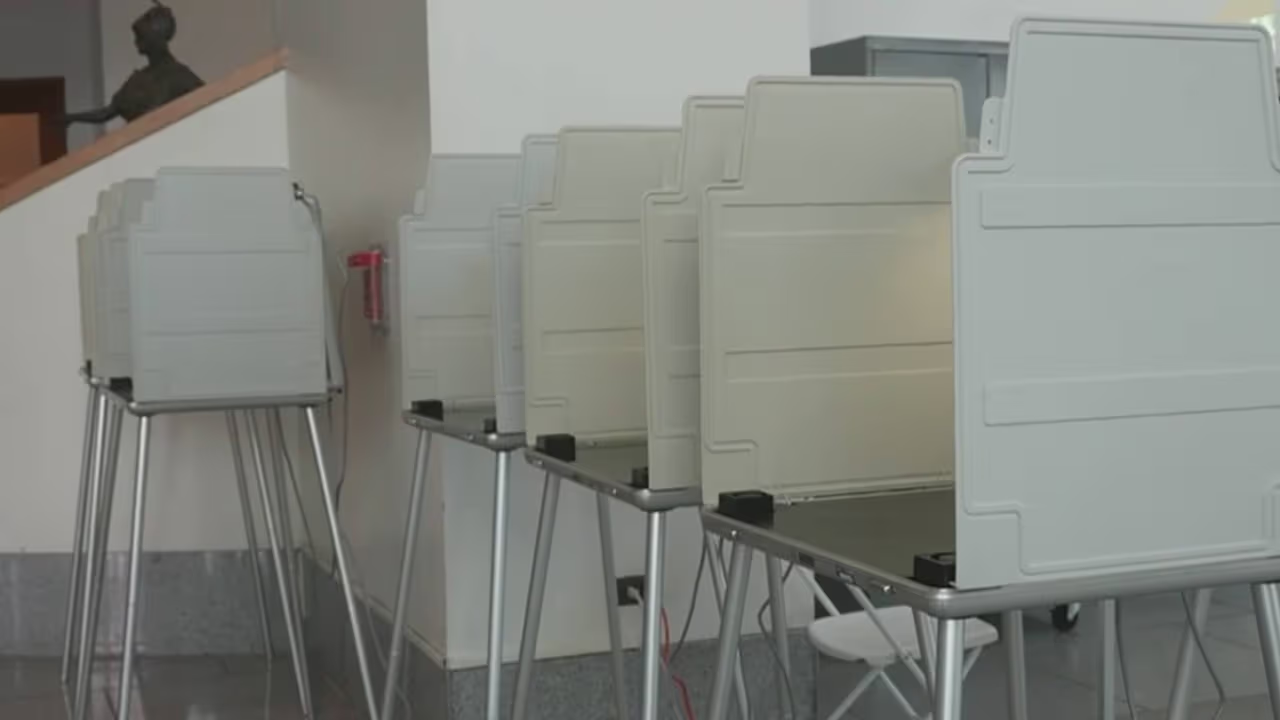
LOS ANGELES — The political landscape of the United States’ most populous county is undergoing a profound transformation, one measured not just in policy shifts, but in the sheer volume of ballots hitting the counting tables. In a significant indicator of civic engagement and systemic change, Los Angeles County has seen a massive surge in early participation, with approximately one million registered voters already exercising their right to vote through early and mail-in channels.
This milestone is more than a statistical anomaly; it is a harbinger of the political currents that will shape the region’s trajectory well beyond the current election cycle. As the “Destino 2026″—the political destiny of Los Angeles and its influence on the broader California landscape—looms on the horizon, the massive early turnout signals a highly mobilized electorate ready to define the local and national agenda.
For election officials and political analysts alike, the scale of this mobilization underscores a permanent shift in how democracy is practiced in the West. The transition from traditional Election Day voting to a multi-week, multi-channel engagement model has fundamentally altered the rhythm of Los Angeles politics, creating a continuous cycle of political expression that leaves little room for complacency among candidates and incumbents.
The Milestone of a Million: Analyzing the Surge
The arrival of the one-million-voter mark in early participation highlights the success of California’s move toward more accessible voting models. According to data and reporting trends from the Los Angeles County Registrar-Recorder/County Clerk, the implementation of the Vote Center model has been a primary driver in this surge. Unlike the traditional precinct-based system, where voters were restricted to a single location, the current system allows residents to cast their ballots at any designated center within the county.
This flexibility, combined with the widespread distribution of mail-in ballots, has effectively flattened the “Election Day spike” that once defined municipal and national contests. By spreading the voting process over several weeks, the county has managed to capture a broader demographic of voters, including those with non-traditional work schedules and those living in high-density urban areas where traditional polling locations may have been harder to access.
“The sheer volume of early engagement we are seeing is a testament to the infrastructure being built to support a modern electorate,” says political analysts monitoring the region. This high level of early participation creates a unique set of challenges and opportunities for the Registrar’s office, which must now manage a massive, rolling influx of data and physical ballots while ensuring the integrity and security of the count.
The implications of this one-million-voter milestone are twofold. First, it suggests a high level of voter literacy and awareness regarding the various ways to participate in the democratic process. Second, it places immense pressure on the logistical capabilities of local government to process, verify, and report results accurately in a timeframe that satisfies a highly attentive public.
Redefining the Ballot: The Impact of the Vote Center Model
To understand why Los Angeles is seeing such unprecedented early turnout, one must look at the legislative and structural shifts that have occurred in California over the last decade. The California Voter’s Choice Act has been the cornerstone of this evolution, mandating that counties move away from the rigid precinct model toward a more flexible, “Vote Center” approach.
This model serves several critical functions:
- Increased Accessibility: Voters are no longer tethered to a specific neighborhood polling place, allowing for greater convenience in a sprawling metropolitan area.
- Enhanced Language Access: Vote centers are required to provide materials and assistance in multiple languages, reflecting the immense cultural diversity of Los Angeles County.
- Technological Integration: The use of electronic poll books and modernized check-in processes has streamlined the experience, reducing wait times and errors.
- Mail-in Integration: The system seamlessly integrates the return of mail-in ballots—whether via drop box, mail, or in-person—into the centralized counting process.
However, the transition has not been without its complexities. Managing dozens of high-capacity centers requires significant staffing, rigorous training, and a robust cybersecurity framework to protect against potential interference. The scale of operations in Los Angeles, which serves millions of constituents, makes it one of the most complex election administration tasks in the world.
The Activist Mandate: Expanding the Franchise
As the numbers climb, local grassroots organizations and civil rights activists are intensifying their efforts. For these groups, the one-million-voter milestone is a victory, but it is also a call to action. Activists in Los Angeles have long argued that while the “Vote Center” model is a leap forward, significant gaps remain in reaching the most marginalized communities.
Local advocacy groups are currently focusing their efforts on several key areas to ensure that the “Destino 2026” is inclusive of all voices:
1. Language Justice: While the law mandates multi-language support, activists argue that deep, nuanced linguistic assistance is often lacking in high-density immigrant communities. They are calling for more bilingual staff and culturally competent outreach.
2. Digital Divide Mitigation: As election information moves increasingly online, activists are highlighting the need to support voters who lack reliable high-speed internet or digital literacy, ensuring they are not left behind in the information age.
3. Protecting Voting Rights: There is a growing movement to safeguard against any attempts at voter suppression or restrictive new laws that could impede the ease of voting that the current system has established. This includes advocating for the continued expansion of secure ballot drop boxes and extended early voting windows.
The pressure from these local actors ensures that election administration remains a dynamic and evolving field. Their work serves as a critical check on the system, pushing for continuous improvements that reflect the actual needs of the diverse population residing in the county.
The Road to 2026: Political Ripples and Long-Term Shifts
The current surge in voting is not an isolated event; it is a foundational component of the political landscape that will define the 2026 midterm elections. The “Destiny 2026” concept refers to the idea that the winners and losers of the current cycle will dictate the legislative priorities, judicial appointments, and executive leadership that will govern California and influence the nation for years to come.
Political observers note that the high early turnout is often a precursor to significant shifts in power. When a large segment of the electorate engages early, it often indicates that the issues at hand—ranging from housing affordability and public safety to climate policy and immigration—are deeply resonant with the core concerns of the citizenry.
the demographic shifts within Los Angeles County are playing a decisive role. The increasing political influence of Latino, Asian-American, and Black voters means that the candidates who successfully navigate the early voting period and mobilize these communities will hold disproportionate power in the coming years. The 2026 landscape will likely be shaped by how well political parties adapt to these changing voter profiles.
As we look toward the next major political checkpoint, the data from this early voting surge will serve as a roadmap. It will reveal which issues are driving voters to the polls and which demographics are leading the charge in redefining the political identity of the American West.
Key Election Statistics and Context

| Feature | Traditional Model | Modern Vote Center Model |
|---|---|---|
| Voting Window | Primarily Election Day | Multi-week early period |
| Location Flexibility | Strictly assigned precincts | Any center in the county |
| Ballot Options | In-person only | Mail-in, Drop Box, & In-person |
| Voter Engagement | Single-day peak | Sustained, rolling participation |
Frequently Asked Questions
Q: Why is early voting so much higher in Los Angeles County than in other regions?
A: The combination of California’s “Vote Center” model, the automatic mailing of ballots to all registered voters, and a highly organized local activist network creates a unique environment for sustained early participation.
Q: Does early voting change how results are reported?
A: Yes. Because ballots are being cast and returned over several weeks, the “Election Night” results often represent only a portion of the total vote. The final certification process can take several weeks as all mail-in and late-arriving ballots are verified.
Q: What is the significance of the “2026” timeline?
A: The 2026 midterm elections will be the next major test of the political shifts occurring today. The leadership and policy directions established in the current cycle will be the primary drivers of the 2026 political agenda.
As the counting continues, the next critical checkpoint will be the official reporting of the final Election Day tallies and the subsequent certification process by the Los Angeles County Registrar-Recorder. This will provide the definitive data needed to understand the full scope of this historic voter mobilization.
What do you think about the shift toward early voting? Is it making our democracy more accessible or more complex? Share your thoughts in the comments below and share this article to keep the conversation going.
Keep reading