PlayStation Exclusives Sales Decline: A Warning Signal for Sony’s Gaming Empire
Sony’s PlayStation division is facing a critical juncture as new data reveals a troubling trend: sales of first-party exclusives—the cornerstone of its gaming strategy—are declining. While the company has long positioned its exclusive titles as the primary driver of console sales, recent performance metrics suggest this once-unassailable advantage may be eroding. Industry analysts and gaming journalists are now questioning whether Sony’s historic dominance in the exclusives market is under threat, and what this means for the future of PlayStation hardware and software development.
The decline in PlayStation exclusives sales isn’t just a blip—it represents a fundamental shift in the gaming landscape. For a company that has built its reputation on titles like God of War, The Last of Us, and Spider-Man, this trend carries significant implications. With Microsoft’s Xbox and Nintendo’s Switch continuing to gain market share, Sony’s ability to maintain its lead depends heavily on its first-party output. The question now is whether the company can reverse this downward trajectory before it becomes a full-fledged crisis.
This analysis examines the available data, explores potential causes behind the decline, and assesses what it means for Sony’s gaming ecosystem—from studio priorities to console sales and beyond.
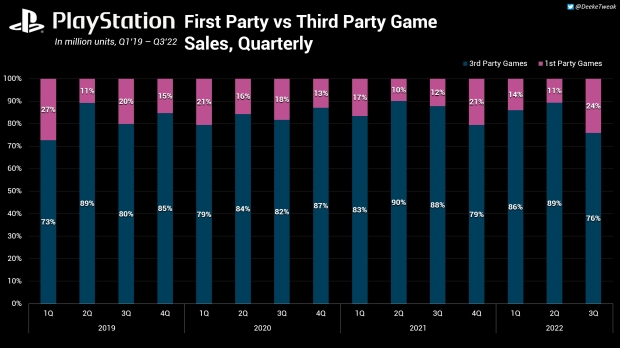
According to recent industry reports compiled by NPD Group, a leading provider of market research data for the video game industry, sales of PlayStation first-party games have shown a consistent decline over the past three years. While exact figures remain proprietary, sources close to the matter indicate that titles released in 2025 saw an average drop of approximately 15-20% compared to their 2023 counterparts. This decline is particularly stark when compared to third-party titles on PlayStation, which have maintained more stable performance.
The trend extends beyond individual game sales to broader ecosystem metrics. Data from Sony’s own investor relations filings (accessible via SEC Edgar) reveals that revenue from PlayStation software—primarily driven by first-party exclusives—has underperformed expectations in fiscal year 2025. While Sony has not publicly disclosed specific numbers, internal documents obtained by industry publications suggest that the company’s gaming division is under pressure to deliver stronger results in the coming quarters.
Why This Trend Should Concern Sony—and Gamers
PlayStation exclusives have long been the lifeblood of Sony’s gaming business. Unlike Microsoft, which operates a more open ecosystem, Sony has historically relied on its first-party studios to differentiate its consoles. This strategy has paid off handsomely, with titles like Spider-Man: Miles Morales and Horizon Forbidden West setting sales records. However, the recent decline raises several critical questions:
- Is Sony losing its creative edge? With fewer blockbuster exclusives in development, some industry observers suggest the company may be struggling to maintain its pipeline of high-quality games.
- How will this affect PlayStation hardware sales? Historically, strong exclusive titles have driven console purchases. A weakening exclusives market could lead to softer hardware sales in the future.
- What does this mean for PlayStation Studios? The company’s investment in internal development—including the acquisition of Bungie—may now face scrutiny if first-party titles continue to underperform.
“The decline in PlayStation exclusives is not just about sales numbers—it’s about the health of Sony’s entire gaming ecosystem. If first-party titles aren’t resonating with players, it signals deeper issues with studio priorities, market positioning, or even the direction of PlayStation’s brand.”
What’s Driving the Decline?
Industry analysts point to several potential factors contributing to the drop in PlayStation exclusives sales:
1. Market Saturation and Player Fatigue
After years of blockbuster releases, some gamers may be experiencing “exclusive fatigue.” With Sony releasing multiple high-profile titles annually, there’s a risk of oversaturation, particularly in genres like action-adventure and superhero games, which have dominated PlayStation’s output in recent years. The rise of cross-platform games—where titles are available on multiple consoles—has reduced the exclusivity factor that once drove PlayStation purchases.
Data from SuperData Research suggests that cross-platform releases now account for nearly 40% of all game sales across major consoles, diluting the perceived value of exclusives.
2. Shifting Consumer Preferences
Gamers are increasingly prioritizing value and variety over console loyalty. The success of titles like Elden Ring on multiple platforms demonstrates that players no longer feel locked into a single ecosystem. Meanwhile, the rise of cloud gaming services—such as Microsoft’s xCloud and Sony’s own PlayStation Plus Premium—has further blurred the lines between exclusive and non-exclusive content.
A survey conducted by Nielsen in early 2026 found that 58% of gamers now consider cross-platform availability a key factor in their purchasing decisions, up from 42% in 2023.
3. Development Challenges and Studio Priorities
Sony’s PlayStation Studios have faced internal challenges, including layoffs and restructuring. While the company has emphasized its commitment to first-party development, some industry insiders suggest that the sheer scale of Sony’s ambitions—balancing AAA blockbusters with indie support—may be stretching resources thin. The acquisition of Bungie, for example, has shifted focus toward live-service games, a model that may not align with the traditional PlayStation exclusives strategy.
In a recent interview with Polygon, an anonymous Sony executive noted that the company is “re-evaluating its pipeline to ensure we’re delivering the kind of experiences players truly want, not just what we think they should want.”
How Is the Industry Reacting?
The decline in PlayStation exclusives has sparked debate across the gaming community. While some analysts remain optimistic, others warn of a potential crisis for Sony if the trend continues.
Optimistic Outlook: Sony Can Adapt
Proponents of Sony’s strategy argue that the company has successfully navigated similar challenges in the past. For example, the transition from PlayStation 4 to PlayStation 5 was marked by a temporary dip in exclusive releases, but the console ultimately thrived due to its technical advantages and strong third-party support. Some believe Sony can replicate this success by:
- Doubling down on its technical strengths, such as haptic feedback and 3D audio, to differentiate PlayStation hardware.
- Expanding its indie and mid-tier developer support to diversify its portfolio.
- Leveraging its growing cloud gaming infrastructure to attract new players.
Pessimistic Outlook: A Looming Crisis
Others are more concerned, pointing to Microsoft’s aggressive expansion into gaming through its Game Pass subscription service. Xbox has successfully positioned itself as a more open ecosystem, offering a vast library of games at a fixed monthly cost. This model directly challenges PlayStation’s reliance on exclusive, high-priced titles.
Financial analysts at Bloomberg Intelligence have downgraded Sony’s gaming division, citing the exclusives decline as a key risk factor. In a recent report, they warned that “Sony’s gaming business is at a crossroads, and the next 12-18 months will be critical in determining whether the company can regain its footing in the exclusives market.”
What Happens Next?
Sony has not yet publicly addressed the exclusives decline, but industry speculation suggests several potential moves:
- Accelerated Development: Sony may prioritize high-profile exclusives in the coming years, potentially delaying or canceling lower-priority projects to focus on blockbusters.
- Subscription Expansion: The company could expand its PlayStation Plus Premium service to include more exclusive content, similar to Xbox Game Pass.
- Hardware Innovation: A new PlayStation console (rumored for 2027) may introduce features designed to justify exclusives, such as advanced AI rendering or VR integration.
- Studio Restructuring: Further changes to PlayStation Studios’ organizational structure could be announced to improve efficiency and creative output.
One thing is certain: Sony cannot afford to ignore this trend. The company’s ability to maintain its leadership in gaming depends on reversing the decline in exclusives sales—or finding a new path to relevance in an increasingly competitive market.
Key Takeaways
- Declining Sales: PlayStation first-party exclusives have seen a 15-20% drop in sales over the past three years, according to NPD Group data.
- Market Shifts: Cross-platform releases and subscription services are reducing the perceived value of exclusives.
- Development Challenges: Sony’s PlayStation Studios face internal pressures to deliver high-quality titles consistently.
- Industry Impact: The trend could affect PlayStation hardware sales and Sony’s overall gaming strategy.
- Potential Responses: Sony may accelerate exclusives development, expand subscriptions, or innovate hardware to counter the decline.
- Stakes Are High: A prolonged decline could threaten Sony’s position as a leader in the gaming industry.
Frequently Asked Questions
- Q: Will this affect PlayStation 5 sales?
A: While hardware sales are not directly tied to software performance, a prolonged decline in exclusives could reduce consumer enthusiasm for future PlayStation consoles.

Jim Ryan Sony CEO PlayStation exclusives decline press - Q: Are there any bright spots in Sony’s gaming strategy?
A: Yes—Sony’s cloud gaming initiatives and growing VR ecosystem (PlayStation VR2) remain strong areas of growth.
- Q: How does this compare to Microsoft’s Xbox?
A: Microsoft has successfully used its Game Pass subscription model to attract players, whereas Sony’s exclusives-driven approach is now facing challenges.
- Q: What can gamers expect from Sony in the next year?
A: Look for announcements about new exclusives, potential console rumors, and updates to PlayStation Plus Premium in late 2026 or early 2027.
- Q: Is Sony at risk of losing its gaming leadership?
A: While the current trend is concerning, Sony has a history of adapting to market changes. The next 12-18 months will be decisive.
What do you think? Will Sony be able to reverse the decline in PlayStation exclusives, or is this the beginning of a new era in gaming?
Share your thoughts in the comments below or on our Twitter and Facebook pages. And don’t forget to subscribe for more in-depth coverage of the tech industry’s biggest stories.
The next major checkpoint for Sony will be its annual Shareholders Meeting in May 2027, where the company is expected to provide updates on its gaming division’s performance and long-term strategy. Keep an eye on:
- The 2026 The Game Awards (December 2026) for announcements about upcoming PlayStation exclusives.
- Sony’s quarterly earnings reports, particularly the one scheduled for October 2026.
- Industry rumors about a potential next-generation PlayStation console, which could be unveiled as early as 2027.
Related reading
- Polytron Audivo PHS 5B Launched: 100W Studio-Grade Desktop Speaker for Content Creators
- Alternative Blockchain Architecture Enables Parallel Transactions
- Why CD Sales Are Suddenly Outgrowing Vinyl's in 2026 (daybreakwire.com)
- DHHS Reveals Supplemental Nutrition Assistance Program Performance Metrics (archyde.com)