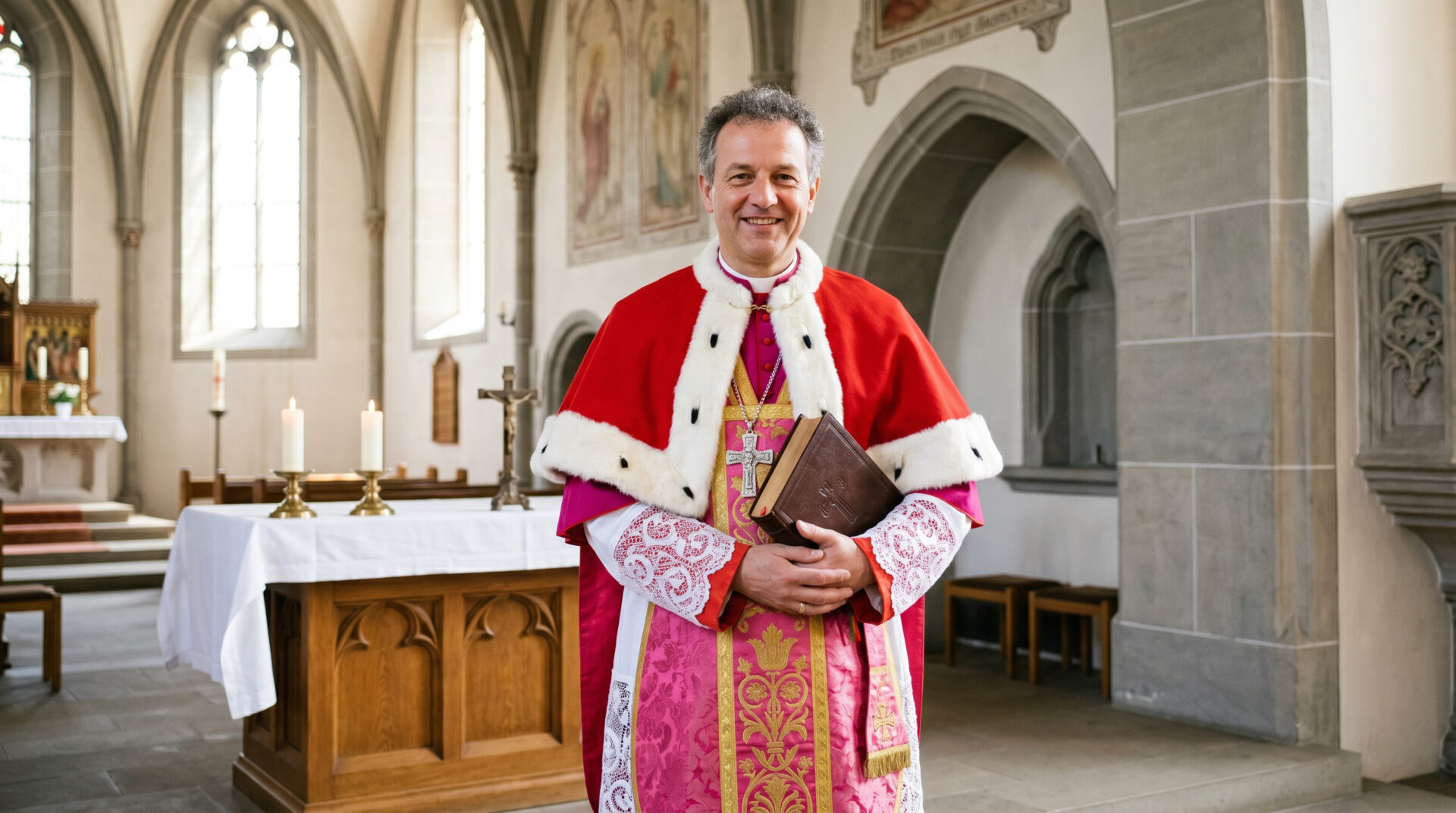
In the era of curated digital identities, the line between “costume” and “criminality” has become increasingly blurred. We have all seen it: the influencer who adopts a persona for a viral video, the traveler who dons local traditional attire for the perfect Instagram shot, and the digital creator who uses high-production aesthetics to signal authority. But what happens when the “aesthetic” in question is not just a fashion statement, but a symbol of sacred, institutional authority?
A growing legal debate, particularly within the European legal framework, is asking a provocative question: At what point does wearing religious vestments in a social media post transition from personal expression to a punishable offense? This isn’t merely a question of religious sensitivity; We see a complex intersection of digital identity, the misuse of titles, and the legal definitions of impersonation in the age of the algorithm.
As someone who has spent nearly a decade observing how software-driven identity and digital personas shape our reality, I find this development fascinating. We are no longer just talking about “fake profiles.” We are talking about the legal ramifications of visual identity theft—using specific, protected symbols to project a status that does not exist. When a user posts a photo on Facebook or Instagram wearing a priest’s cassock or a bishop’s mitre, they aren’t just playing dress-up; they may be inadvertently (or intentionally) stepping into a legal minefield.
The core of the issue lies in the distinction between artistic expression and the intent to deceive. While the law generally protects the right to “cosplay” or engage in creative performance, the moment those symbols are used to claim a specific social or legal status, the state may step in. This is particularly true in jurisdictions like Germany, where the protection of titles and the prevention of the usurpation of office are strictly codified in the criminal code.
The Legal Framework: Understanding “Amtsanmaßung” and Title Misuse
To understand why a Facebook photo could lead to a courtroom appearance, we have to look at the specific statutes that govern identity and authority. In the German legal system—which serves as a primary reference point for these discussions—two specific sections of the Strafgesetzbuch (StGB), or Criminal Code, are frequently cited in cases involving the misuse of status.
The first is § 132 StGB (Amtsanmaßung), or the usurpation of office. This law is designed to protect the integrity of public functions. It prohibits individuals from pretending to exercise an official duty that belongs to a public authority. While a priest is not always a “public official” in the same sense as a police officer or a judge, the legal threshold changes if the individual uses the vestments to perform acts that imply they hold a specific, regulated authority—such as performing a marriage or a baptism—thereby deceiving the public about their legal capacity to act.
The second is § 132a StGB (Missbrauch von Titeln), which deals with the misuse of titles. This section is traditionally applied to academic or professional titles (such as “Doctor” or “Professor”), but legal scholars argue that the principle extends to roles that carry significant social weight and regulated status. If a person uses religious attire to falsely claim a title that grants them access to specific social privileges or the ability to command trust, they may find themselves in violation of this statute.
The critical variable in any criminal prosecution is intent (Vorsatz). A photographer capturing a model in liturgical clothing for a high-fashion editorial is protected by the principle of artistic freedom. However, if a user posts a photo in a priest’s robe with a caption suggesting they are a religious leader, or if they use that persona to solicit donations or provide “spiritual counseling” for a fee, the intent to deceive becomes clear. At that point, the “costume” becomes a tool for potential fraud.
The Digital Identity Paradox: Why Social Media Changes the Stakes
From a technological perspective, social media platforms like Facebook and Instagram have fundamentally changed how “authority” is perceived and verified. In the physical world, if someone wears a priest’s collar, you might question them. In the digital world, the medium itself lends a sense of “truth” to the image. The high-resolution, filtered, and highly produced nature of modern social media content creates a “halo effect,” where the visual cues of authority are accepted more readily by the viewer.
This creates what I call the Digital Identity Paradox: the more realistic and “authentic” an impersonation looks, the more likely it is to trigger legal scrutiny. Algorithms are designed to promote content that appears authoritative or highly engaging, which means a well-crafted “fake priest” persona could theoretically go viral, reaching thousands of people before the deception is even identified.
the permanence of the digital record means that an “artistic” post made in one’s youth could, years later, be interpreted as an attempt at title misuse if the context changes. Metadata, geolocation, and the long-term history of a profile can all be used by investigators to establish a pattern of behavior. If a user consistently uses religious imagery to build a following or a brand, the “artistic defense” becomes much harder to maintain in a court of law.
As we move toward more sophisticated forms of digital interaction, including AI-generated avatars and deepfakes, the ability of the law to distinguish between a “performance” and an “impersonation” will be tested more than ever. We are entering an era where the visual symbol is almost as powerful as the legal document, and the law is struggling to keep pace with the speed of digital self-presentation.
Comparing Global Legal Approaches: Freedom vs. Protection
the legal consequences of wearing religious or official attire vary wildly depending on the jurisdiction. This global discrepancy is a major challenge for social media companies that operate under a single set of community standards but must comply with diverse local laws.
| Jurisdiction | Primary Legal Driver | Risk Level for “Cosplay” |
|---|---|---|
| Germany / EU | Protection of social order and official titles (StGB). | High (if intent to deceive is present). |
| United States | First Amendment (Freedom of Speech/Expression). | Low (unless direct fraud occurs). |
| United Kingdom | Fraud Act and protections against impersonation. | Moderate (focused on financial gain). |
In the United States, the First Amendment provides a massive shield for what might be considered “symbolic speech.” Wearing a priest’s robe in a photo is generally viewed as protected expression unless it is part of a concrete attempt to commit a crime, such as fraud. In contrast, European legal traditions often place a higher value on the “public peace” and the protection of institutional integrity, making the threshold for “misuse” much lower.
The Stakeholders: Who is Affected?
This is not just a theoretical debate for lawyers; it has real-world implications for several groups:
- Religious Institutions: When individuals impersonate clergy, it can erode public trust in the actual institution and lead to the exploitation of vulnerable congregants.
- Content Creators: Influencers and actors must navigate the fine line between “character work” and legal liability, especially when working with sensitive cultural or religious symbols.
- Social Media Platforms: Companies like Meta and X (formerly Twitter) face the constant challenge of moderating “impersonation” without stifling legitimate artistic expression or political satire.
- The General Public: As digital deception becomes more common, the public must develop a higher level of “digital literacy” to distinguish between authentic authority and performative aesthetics.
Key Takeaways: Navigating Digital Identity
- Intent is everything: The difference between art and a crime is whether you are trying to deceive people into believing you hold a specific, regulated status.
- Symbols carry weight: Religious vestments and official uniforms are not just “clothes”; they are legal signifiers that can trigger criminal statutes.
- Context matters: A photo in a studio is viewed differently than a photo posted with a caption that claims religious authority.
- Platform rules vs. Law: Even if your post isn’t illegal, it can still violate social media community standards regarding impersonation, leading to account bans.
Frequently Asked Questions
Q: Is it illegal to wear a priest’s collar as a fashion statement?
A: Generally, no. In most democratic societies, wearing clothing for fashion or artistic reasons is protected. It only becomes a legal issue if you use that clothing to claim an official role or to commit fraud.
Q: Can I be sued for “impersonation” on Facebook?
A: While “impersonation” is often a violation of platform policy (which can get you banned), actual legal lawsuits usually require proof of damages—meaning you used the fake identity to steal money, property, or rights from someone.
Q: How do authorities prove “intent to deceive”?
A: Investigators look at the “totality of circumstances,” including your profile bio, your previous posts, the captions you use, and whether you have accepted any form of compensation (money or gifts) while using the persona.
As digital identity continues to evolve, the legal definitions of “truth” and “authority” will undoubtedly undergo further refinement. We are watching the birth of a new field of digital jurisprudence—one where a single uploaded image can be the difference between a creative triumph and a criminal record.
What do you think? Should there be stricter laws regarding the “digital cosplay” of official roles, or does that threaten our freedom of expression? Let us know in the comments below and share this article with your network.
The next major checkpoint in this legal evolution will be the upcoming discussions on the EU AI Act and its implications for digital identity and deepfake regulation. Stay tuned to World Today Journal for updates.
Worth a look