
As the United States reaches its 250th anniversary, a significant portion of its population remains excluded from the full democratic process. Roughly 3.6 million Americans residing in U.S. Territories—including Puerto Rico, Guam, American Samoa, the Northern Mariana Islands, and the U.S. Virgin Islands—live under a system where they have no senators and only nonvoting representation in the House of Representatives. While these citizens can participate in presidential primaries, they are precluded from voting in the general election, a status determined entirely by their place of residence.
This democratic disparity is rooted in a series of Supreme Court rulings known as the Insular Cases, which began in May 1901. These decisions established a legal framework that distinguished between “incorporated” territories—those destined for eventual statehood—and “unincorporated” territories, which were not. This year marks the 125th anniversary of these rulings, which continue to define the political landscape for millions of residents who are technically part of the United States but lack the full constitutional protections and political representation afforded to those in the 50 states.
Pictured are warships during the 1898 Spanish-American War, after which the U.S. Acquired from Spain new territories thousands of miles from the mainland. Bettmann/Getty Images
The Origins of Territorial Status
The constitutional dilemma regarding overseas territories emerged following the Spanish-American War in 1898. After a four-month conflict, the United States acquired Guam, Puerto Rico, and the Philippines, suddenly incorporating approximately 8 million new residents into the American sphere. This rapid expansion forced a debate in Congress and the courts: should these new populations be fully integrated into the democratic fold, or governed as colonial subjects?

The Supreme Court’s resolution was to create a legal distinction that effectively placed these territories outside the full scope of the Constitution. In the court’s view, the territories belonged to the United States but were not part of it. This ruling resulted in a status that Chief Justice Melville Fuller, in his dissent, described as existing “like a disembodied shade, in an intermediate state of ambiguous existence for an indefinite period.”
The Spanish-American Treaty of Peace was signed in Paris in 1898. HUM Images/Universal Images Group via Getty Images
Historical analysis indicates that this exclusion was heavily influenced by the racial attitudes of the era. In the court’s opinion, Justice Henry Billings Brown argued that for territories inhabited by “alien races,” the application of traditional American principles of government might be impractical. This sentiment was echoed in Congress, where lawmakers often cited the perceived cultural and racial differences of the populations in the newly acquired territories as justification for denying them statehood or full representation.
Representation in the Modern Congress
The role of the “resident commissioner” was established to provide a form of representation for territories that were not on a path to statehood. Initially, the position functioned more akin to an ambassador than an elected representative. Over time, the role evolved to resemble that of a territorial delegate, granting the officeholder the ability to participate in debate and serve on committees, though they remain barred from voting on final legislation on the House floor.
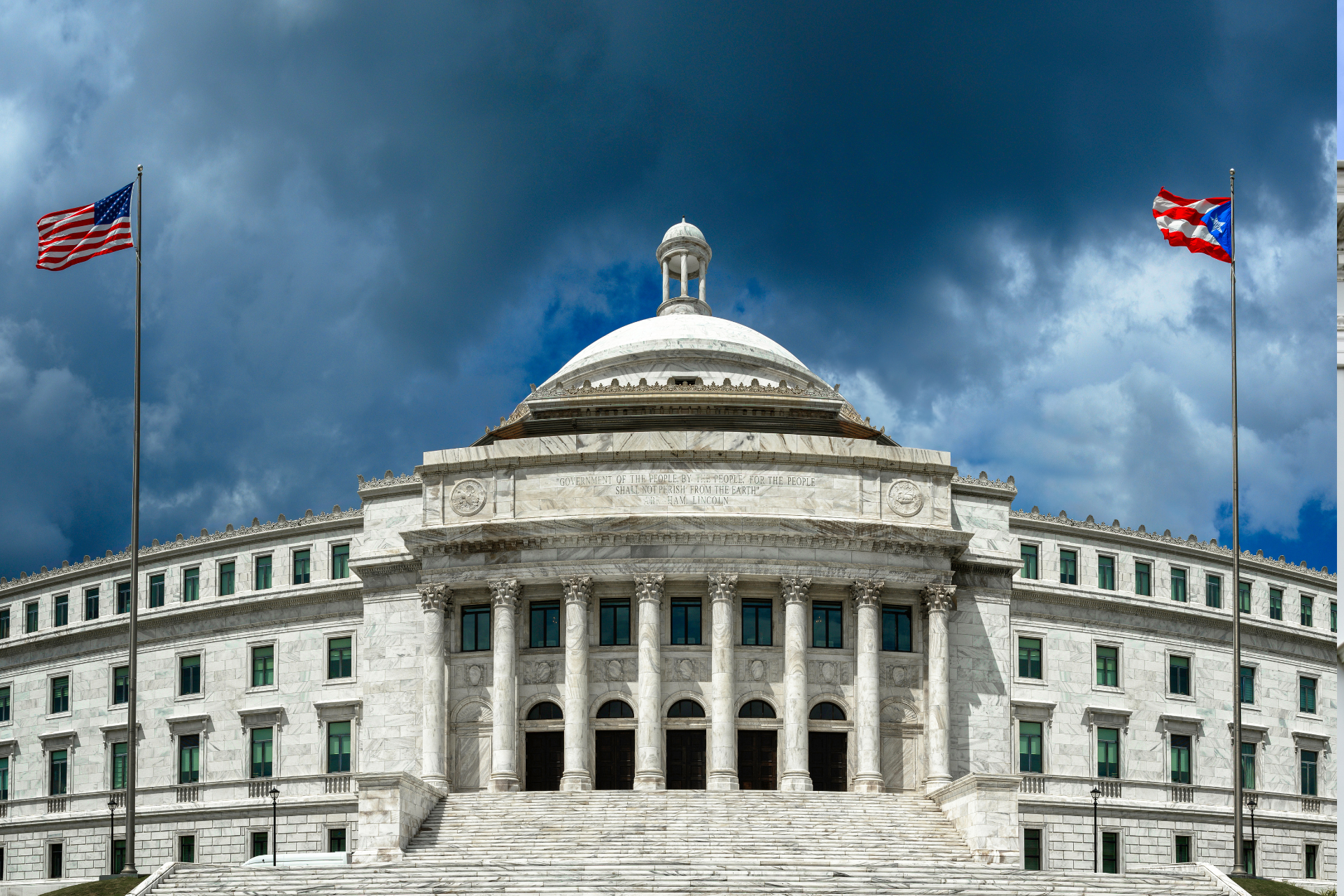
Today, the resident commissioner represents Puerto Rico, while other territories and Washington, D.C., are represented by delegates. Despite the significant populations in these areas—with Puerto Rico’s population exceeding that of more than a dozen states—their influence in the federal legislative process remains limited by this “second-class” status. They can introduce bills and influence committee proceedings, but their inability to vote on whether a bill becomes law remains a central point of contention for activists and legal scholars.
Even though Puerto Rico is more populous than over a dozen states, it has just one lawmaker: Resident Commissioner Pablo José Hernández Rivera, pictured here in 2024. AP Photo/Mark Schiefelbein
Ongoing Legal and Political Challenges
In recent years, the Insular Cases have faced renewed scrutiny. Supreme Court Justice Neil M. Gorsuch has publicly criticized the rulings, stating that they “have no foundation in the Constitution and rest instead on racial stereotypes.” Despite a growing body of legal scholarship calling for the cases to be overruled, the legal status of the territories remains largely unchanged.
For the millions of Americans living in these territories, the legacy of 1898 continues to manifest in their daily political lives. While the debate regarding their status continues, the current reality is that resident commissioners and delegates serve with a voice but not a vote, a structural limitation that continues to shape the democratic experience of territories thousands of miles from the U.S. Mainland.
As the legal and political discourse surrounding these territories evolves, interested parties continue to monitor potential legislative reforms or shifts in judicial interpretation. There are no immediate changes scheduled for the status of these territories, though advocacy groups remain active in seeking greater federal recognition for residents of the island territories and the District of Columbia.
If you found this analysis helpful, please share this article or join the discussion in the comments below.