As we navigate our sixties, many of us notice changes in our midsection that seem resistant to traditional exercise routines. An “apron belly”—the layer of skin and subcutaneous fat that sits lower across the abdomen—can often feel like it has a mind of its own, impacting how clothes fit and how supported the core feels during daily activities. While the desire for a “quick fix” is understandable, medical and fitness experts emphasize that the path to a firmer midsection after 60 requires a shift in strategy. Rather than focusing on isolated abdominal movements, the most effective approach involves integrating compound, full-body movements that enhance overall conditioning and metabolic health.
The physiological reality of fat loss is that “spot reduction”—the ability to target fat loss in one specific area—is not supported by current exercise science. According to research published in the International Journal of Environmental Research and Public Health, successful body composition changes rely on a combination of endurance and strength-based training that prioritizes overall calorie expenditure and muscle preservation rather than isolated muscle fatigue. For those over 60, this means building a routine that engages the legs, hips, shoulders, and core simultaneously, fostering an athletic foundation while supporting long-term health, as noted in studies regarding the role of abdominal fascia in metabolic outcomes via Anatomy & Cell Biology.
Moving Beyond Isolated Ab Work
For individuals aiming to improve core support and midsection firmness, full-body engagement is the gold standard. When you perform movements that require the entire body to work as a unit, your heart rate increases, and your core is forced to brace under load, providing a more robust training stimulus than standard crunches or sit-ups. This approach is particularly beneficial after 60, as it improves functional strength, balance, and posture—all of which contribute to a more athletic and firm appearance.
The following five exercises are designed to maximize your time in the gym or at home, focusing on compound motions that are both effective and sustainable for long-term health.
1. Running or Jogging Intervals
Interval training is a powerful tool for increasing calorie burn and improving cardiovascular conditioning without requiring excessive time. By alternating between short bursts of higher intensity and recovery periods, you challenge your heart and lungs while keeping the core active to maintain proper posture and stride control. This method is often more time-efficient than steady-state cardio and helps support fat loss when combined with consistent strength training and a balanced, protein-rich diet.
How to perform: Begin with 3 to 5 minutes of effortless walking to warm up. Increase your speed to a light jog or run for 20 to 60 seconds, then slow down to a walking pace for 60 to 90 seconds. Repeat this cycle for your desired duration and finish with a 3-minute cool-down walk. Aim for 8 to 12 rounds to maximize the cardiovascular effect.
2. Dumbbell Squat to Press
This compound movement bridges the gap between lower-body power and upper-body strength. By driving through the heels to stand from a squat and finishing with an overhead press, you engage the quadriceps, glutes, shoulders, and triceps, all while demanding significant stability from your midsection to prevent the lower back from arching. We see an excellent functional movement for daily life, translating directly into the strength needed for lifting and reaching.

How to perform: Stand with feet shoulder-width apart, holding dumbbells at shoulder height. Lower into a squat, keeping your chest lifted and core braced. Drive through your feet to return to a standing position, simultaneously pressing the weights overhead. Lower the weights with control back to your shoulders. Perform 3 sets of 8 to 10 repetitions.
3. Farmer Carry
Often overlooked, the farmer carry is one of the most effective ways to build functional core strength. By holding a weight in each hand and walking with a tall, steady posture, your core is forced to brace continuously to stabilize your torso. This movement improves grip strength, shoulder stability, and overall body tension, which are vital for maintaining a strong, upright posture after 60.
How to perform: Hold a dumbbell or kettlebell in each hand with your shoulders down and back. Brace your core and walk forward with steady, controlled steps for 30 to 45 seconds. Ensure your posture remains upright throughout the movement. Perform 3 carries, resting for 60 seconds between each.
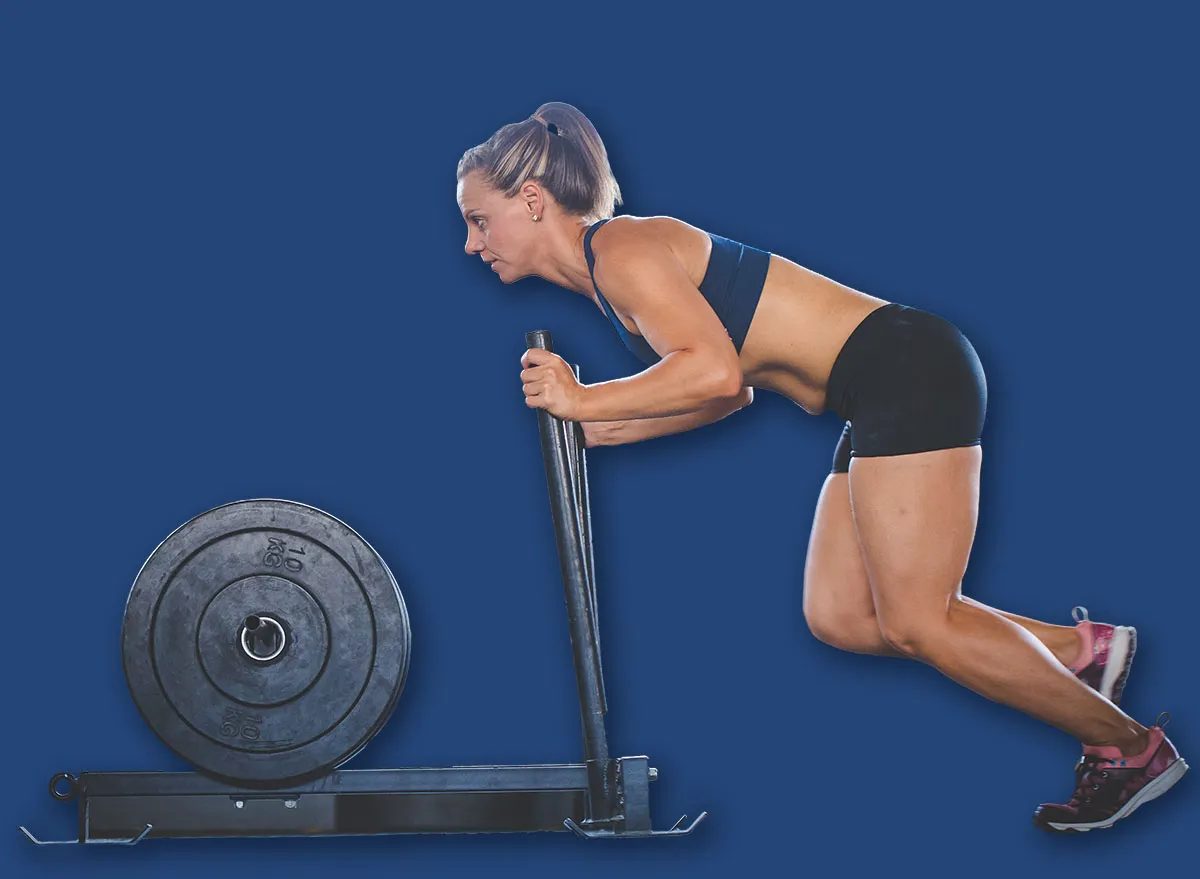
4. Sled Pushes
Sled pushes are a joint-friendly, high-output exercise that builds significant lower-body strength and conditioning. Because the movement involves pushing rather than jumping or pounding, it is often more accessible for those concerned about impact. Your core must remain braced throughout the push, creating a stable platform for your legs to drive against the resistance.
How to perform: Load a sled with a manageable weight. Place your hands on the handles, lean forward slightly, and brace your core. Drive through your legs to push the sled forward in steady, powerful strides for 15 to 25 yards. Perform 6 to 10 pushes, resting for 60 to 90 seconds between each.
5. Medicine Ball Slams
Medicine ball slams are an athletic movement that teaches the body to transfer force from the upper body through the hips and legs. This exercise builds power and core engagement without the need for heavy, static lifting. It is a highly effective way to increase heart rate and challenge the entire posterior chain, including the lats, shoulders, and glutes.
How to perform: Stand with feet shoulder-width apart, holding a medicine ball. Brace your core, lift the ball overhead while rising slightly onto your toes, and slam the ball toward the floor with force. Squat down to retrieve the ball and reset your posture. Perform 3 sets of 8 to 12 repetitions.
Building a Sustainable Routine
Consistency is the primary driver of body composition changes. To make these exercises work for your lifestyle, focus on gradual progression rather than immediate, high-intensity “beatdowns.” Start by mastering the form of each movement, and slowly increase the weight, reps, or distance as you become more comfortable. Remember that nutrition plays a critical role in supporting fat loss; prioritizing protein and consistent, nutrient-dense meals will help fuel your workouts and aid in recovery.
A firmer, more supported midsection after 60 is an achievable goal, but it is best viewed as a marathon rather than a sprint. By focusing on compound movements that build lean muscle and burn energy through full-body effort, you are investing in your long-term mobility and health. If you are new to these types of movements, consider working with a certified trainer to ensure your form is safe and effective. As you continue your fitness journey, stay tuned for upcoming health guidelines and community resources from our editorial team. We invite you to share your experiences or questions in the comments below.
Related reading