As we continue to monitor advancements in oncology, a significant development has emerged regarding the treatment landscape for metastatic pancreatic ductal adenocarcinoma (PDAC). The U.S. Food and Drug Administration (FDA) has recently taken steps to facilitate access to an experimental therapy, daraxonrasib (also known as RMC-6236), which is currently under investigation for its potential to address challenging RAS mutations.
For patients and their families navigating the complexities of advanced pancreatic cancer, the path forward often hinges on the success of emerging targeted therapies. Daraxonrasib represents a specialized approach, functioning as an orally active and multi-selective RAS inhibitor. Unlike conventional treatments, it employs a unique tri-complex mechanism designed to target the active, GTP-bound form of RAS proteins—a common driver in many pancreatic tumors, as noted in official FDA communications.
Expanding Access to Investigational Therapy
On May 1, 2026, the FDA announced it had issued a “safe to proceed” letter to Revolution Medicines, the sponsor developing daraxonrasib. This regulatory action allows for the initiation of an expanded access treatment protocol (EAP) specifically for patients diagnosed with previously treated metastatic pancreatic ductal adenocarcinoma. The timeline for this development was rapid; the FDA received the request on April 28, 2026, and authorized the protocol on April 30, 2026, according to the agency’s official press release.
This mechanism of expanded access is a critical pathway for patients who have exhausted standard treatment options. FDA Commissioner Marty Makary, M.D., M.P.H., stated, “Granting the request two days after receiving the expanded access application reflects the FDA’s strong commitment to facilitate early access to therapies for serious and life-threatening conditions, including pancreatic cancer.”
Understanding the Mechanism of Daraxonrasib
At the core of this research is the drug’s ability to inhibit RAS, a protein frequently mutated in the majority of pancreatic cancer cases. Daraxonrasib’s mechanism is distinct: it first binds to the chaperone-like protein cyclophilin A. This creates a complex that subsequently attaches to active RAS, effectively blocking downstream effector binding and inhibiting the oncogenic signaling that allows cancer cells to proliferate.
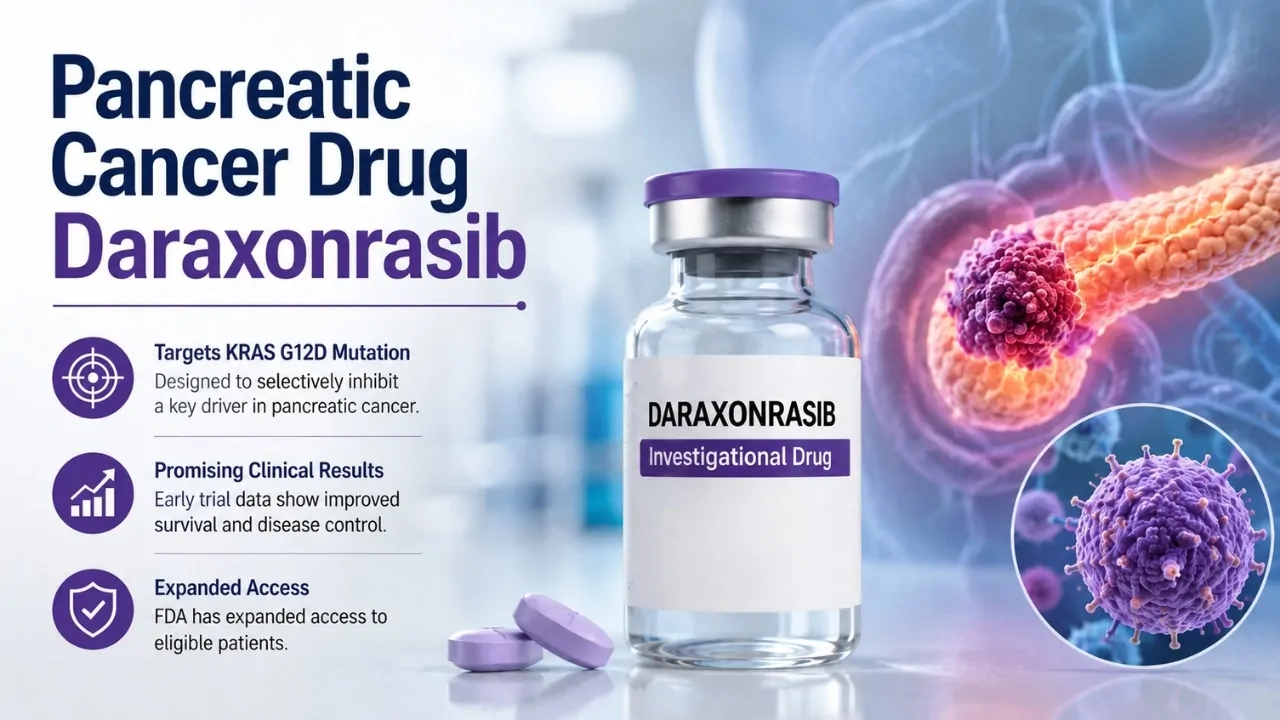
The drug has received several key designations from the FDA, reflecting the urgency and the potential clinical value of the research. In addition to its Breakthrough Therapy designation, daraxonrasib has been granted Orphan Drug status. As of October 2025, the FDA granted a national priority voucher to the compound, and the sponsor has indicated plans to submit a new drug application under the Commissioner’s National Priority Voucher (CNPV) pilot program, per FDA records.
What This Means for Patients
For those currently managing metastatic PDAC, the availability of an expanded access protocol is a vital development. EAP guidelines require that requests for such access be submitted to the drug sponsor by physicians licensed in the United States on behalf of eligible patients. This ensures that the administration of investigational treatments remains under the supervision of qualified medical professionals.
While the data from ongoing clinical trials continues to be evaluated, the regulatory milestones achieved to date suggest a focused effort to bring this targeted therapy to a patient population with significant unmet medical needs. As an editor, I often emphasize that while “breakthrough” designations and expedited reviews are promising, they are part of a rigorous, staged process designed to balance the need for innovation with the necessity of patient safety.
Key Regulatory Milestones
- October 2025: FDA grants a national priority voucher to daraxonrasib (RMC-6236).
- April 28, 2026: FDA receives the expanded access request from Revolution Medicines.
- April 30, 2026: FDA signs the expanded access treatment protocol.
- May 1, 2026: Official announcement of the “safe to proceed” letter regarding the EAP.
As we look toward the future, the medical community awaits further clinical results that will clarify the efficacy and safety profile of daraxonrasib in broader populations. For patients interested in learning more about clinical trials or expanded access, the best course of action remains a direct consultation with their oncology team. Physicians can provide the most accurate information regarding whether a patient meets the eligibility criteria for specific protocols.

We will continue to provide updates as more information becomes available through official regulatory channels. If you have found this overview helpful, please share it with those who may be seeking clarity on current developments in cancer research. We invite your thoughts and questions in the comments section below.
Worth a look