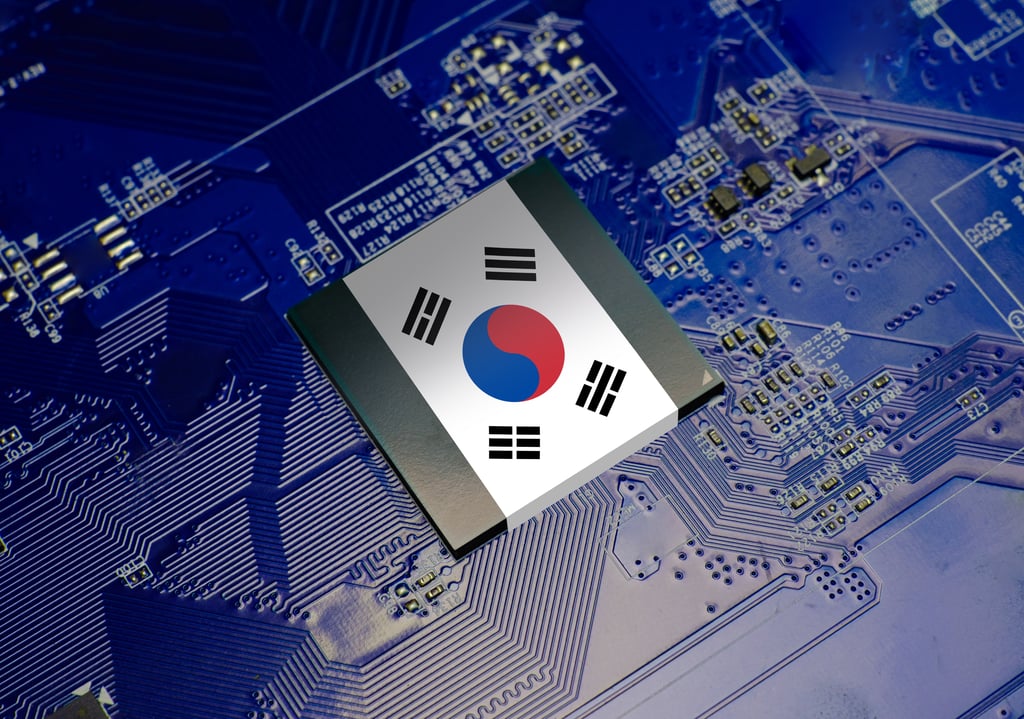
As the global artificial intelligence boom reshapes the semiconductor industry, Broadcom Inc. Continues to navigate a complex landscape of surging demand and rigorous supply-chain dependencies. While the company maintains its position as a major player in the infrastructure software and semiconductor sectors, recent financial projections have sparked discussions among investors regarding the stability of the broader AI hardware ecosystem. This scrutiny has particularly reverberated across the Asia-Pacific region, where key memory suppliers play a critical role in supporting advanced AI infrastructure.
Broadcom’s recent market performance has been characterized by significant growth. By December 2024, the company became the 12th entity to surpass a $1 trillion market capitalization, and by April 2026, it reached the $2 trillion milestone, ranking as the sixth company in history to achieve this valuation according to official company financial data. As of 2025, the firm generates 58% of its revenue from semiconductor-based products and 42% from infrastructure software services, highlighting the dual-pillar structure of its business model.
The Intersection of AI Infrastructure and Memory Supply
The semiconductor industry’s reliance on high-bandwidth memory (HBM) has created a tight-knit network of technological interdependencies. Companies like Samsung and SK Hynix, based in South Korea, are essential to this supply chain, providing the high-speed memory modules necessary for the AI chips developed by firms such as Broadcom. When market leaders release forward-looking guidance that signals potential shifts in demand, the impact is often felt immediately by these specialized suppliers.
The integration of these components into data centers and networking hardware is what powers modern generative AI platforms. Because Broadcom’s product offerings serve the data center, networking, and wireless markets, any fluctuation in its guidance serves as a leading indicator for the health of the AI hardware sector. Investors are particularly focused on whether the pace of capital expenditure in these areas will remain consistent with the aggressive growth targets established during the initial AI surge of 2024 and 2025.
Market Dynamics and Investor Sentiment
For investors, the recent guidance from major semiconductor firms has become a focal point for evaluating the sustainability of the “AI boom.” As Broadcom, often categorized alongside the “Magnificent Seven” tech giants, provides updates on its operational outlook, the market looks for signs of long-term stability versus short-term volatility. The financial results reported for 2025, which included $63.89 billion in revenue and $23.13 billion in net income, underscore the scale at which the company now operates, making its strategic decisions highly influential across global markets.
The sensitivity of the supply chain means that even minor adjustments in demand projections for AI-focused semiconductors can lead to broader market reactions. Analysts are closely monitoring whether the high-bandwidth memory production capacity in South Korea can keep pace with the evolving requirements of AI infrastructure providers. The alignment between Broadcom’s software-driven solutions and its high-performance hardware remains a key area of interest for institutional investors assessing the risk profile of the sector.
Looking Ahead: Supply Chain Resilience
The path forward for the semiconductor industry involves managing the delicate balance between rapid innovation and supply-chain reliability. As Broadcom continues to integrate its software and semiconductor segments, the company’s ability to meet the mission-critical needs of global enterprises will remain a primary metric for success. For the Asia-Pacific memory suppliers, the focus remains on maintaining output levels that satisfy the requirements of advanced AI systems without overextending during periods of market uncertainty.

Readers and investors looking for the most current updates on Broadcom’s strategic direction and financial health should monitor the company’s official investor relations portal, where quarterly earnings reports and regulatory filings are published. These documents remain the most authoritative source for understanding the company’s guidance and its impact on the global supply chain.
We welcome your thoughts on how these shifts in AI chip demand might influence the broader tech landscape. Join the conversation in the comments section below and share your perspective on the future of the semiconductor market.
Worth a look