Researchers have successfully mapped the precise depth of the magma chamber beneath the Sierra Negra volcano in the Galapagos Islands, revealing dimensions that challenge previous geological models. By utilizing geodetic observations and advanced measurement techniques, scientists have established new constraints on the volume and structural characteristics of this active volcanic system. These findings provide a clearer picture of the subsurface dynamics that govern volcanic activity in this high-profile region.
The Sierra Negra volcano, located on Isabela Island, is one of the most active in the Galapagos archipelago. Understanding the exact depth and storage capacity of its magma chamber is vital for assessing volcanic hazards and interpreting tectonic movements. Recent geophysical studies have sought to refine these measurements, moving beyond the estimates that relied on less precise surface-level data. According to research documented by the National Science Foundation, these projects employ unique observational data to place rigorous bounds on the total volume of the magma system.
Refining Volcanic Models in the Galapagos
For years, volcanologists have relied on theoretical models to estimate the crystallization pressure and depth of magma chambers under the Galapagos Ridge. However, these models often faced limitations due to the complex nature of the crustal architecture in the region. By applying refined geodetic monitoring, researchers have been able to distinguish between different layers of magma storage, providing a more granular view of the subsurface than was previously available, as noted in technical assessments regarding the depths of magma chambers under the Galapagos Ridge.
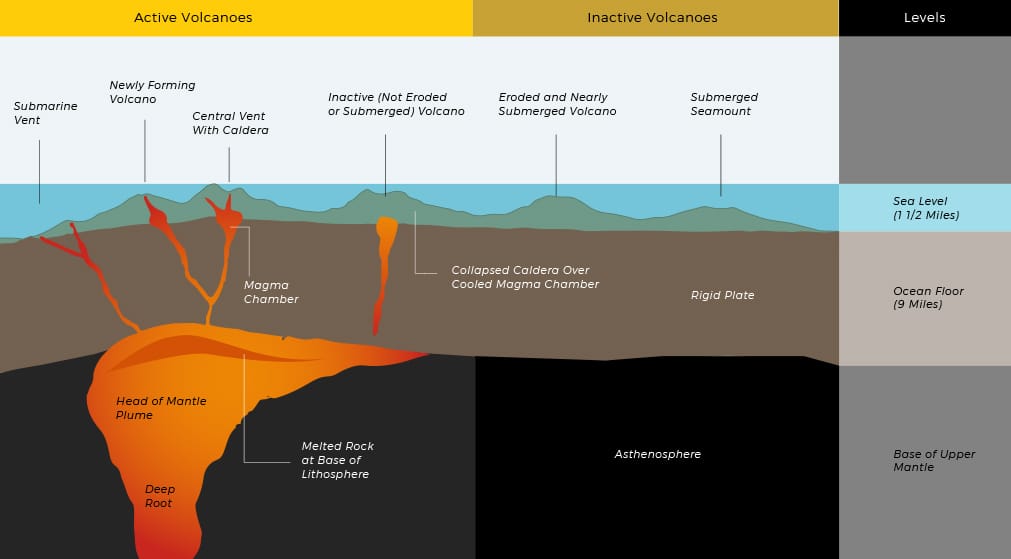
The significance of these measurements lies in their impact on hazard assessment. When magma chambers are better defined, scientists can more accurately predict how the volcano might respond to internal pressure changes. This is particularly relevant for the Galapagos, where tectonic spreading and volcanic activity are intricately linked. The data obtained from these geodetic constraints allow for a more precise calibration of how much magma can be stored before an eruption becomes likely.
Why Precise Depth Measurements Matter
Knowing the depth of a magma chamber is not just a matter of academic interest; it is a fundamental component of volcanic monitoring. Deeper chambers often exhibit different cooling rates and chemical compositions compared to shallower ones, which in turn influences the style of volcanic eruptions. By narrowing the range of uncertainty regarding these depths, researchers can improve the accuracy of models that track ground deformation—the physical swelling of the earth that often precedes volcanic activity.

This work represents a shift toward more empirical, data-driven geology. By moving away from general estimates and toward specific, measurement-backed depth profiles, the scientific community is better equipped to interpret the signals coming from the Galapagos monitoring stations. These improvements in measurement technology, combined with consistent data collection, serve as a foundation for future volcanic research in the region.
Looking Ahead: Ongoing Monitoring and Research
While the current findings offer a significant leap forward in understanding the Sierra Negra system, the process of monitoring volcanic activity in the Galapagos is continuous. Future research is expected to integrate these depth constraints with real-time seismic data to create a more dynamic model of magma migration. Scientists continue to refine these parameters as new geodetic data becomes available from the archipelago.
For those interested in the latest developments, updates regarding geophysical monitoring and volcanic research in the Galapagos are periodically shared through institutional repositories and academic journals. As our ability to “see” beneath the surface improves, the capacity to anticipate geological shifts in this unique ecosystem will continue to grow. We encourage readers to follow official scientific updates from organizations involved in Galapagos volcanic research for the most accurate and current information on this evolving story.
Keep reading