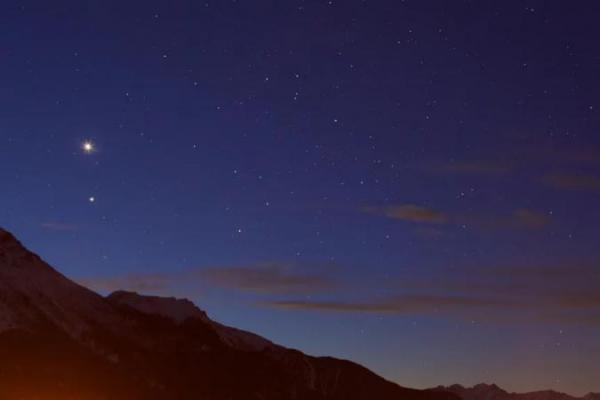
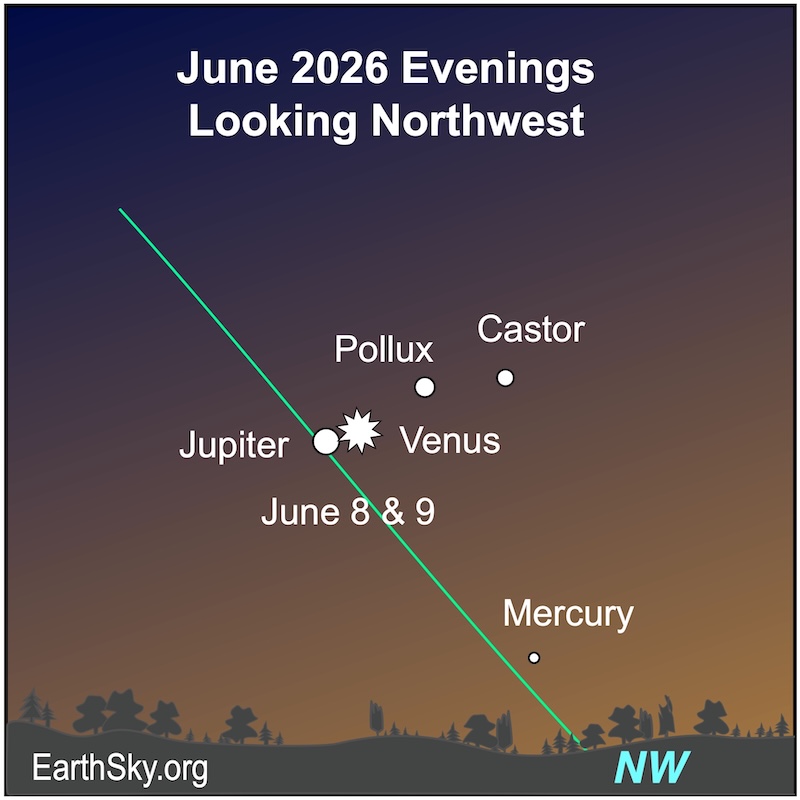
As we look toward the night sky this June, observers are preparing for a notable celestial event: a conjunction involving Venus and Jupiter. According to information provided by NASA, these two planets will appear to meet in the sky shortly after sunset, offering a clear opportunity for skywatchers to witness the pair in close proximity.
This event, which highlights the dynamic movement of our solar system’s neighbors, serves as a reminder of the accessibility of amateur astronomy. While Venus is recognized as our nearest planetary neighbor and the hottest planet in the solar system, Jupiter remains a constant feature of interest for observers. NASA notes that Venus is often obscured by its own thick cloud layers, making these moments of relative visibility particularly significant for those tracking planetary positions.
Understanding Planetary Conjunctions
A conjunction occurs when two or more objects in the sky appear close to one another from our perspective on Earth. It is important to clarify that this is an optical phenomenon caused by the alignment of the planets within their respective orbits around the Sun. The planets themselves remain millions of kilometers apart in space, despite their appearance of being “near” one another from our ground-based vantage point.
Venus, the second planet from the Sun, follows an orbital period of approximately 224.7 days. Because it orbits closer to the Sun than Earth does, its position relative to our sky changes frequently, leading to these periodic alignments with other planets. NASA’s ongoing exploration, including missions such as the upcoming VERITAS and DAVINCI projects, continues to expand our understanding of this cloud-swaddled world, which possesses surface temperatures high enough to melt lead.
Observing the Night Sky in June
For those interested in identifying these celestial bodies, no specialized equipment such as a telescope is strictly required. The brightness of Venus and Jupiter often makes them visible to the naked eye under clear conditions. NASA’s current skywatching guidance for June 2026 suggests that the best time to view these planetary pairings is after sunset, when the twilight fades and the planets become distinct against the darkening backdrop.
In addition to the planetary movement, the lunar cycle also plays a role in the appearance of the night sky this month. NASA reports that the Moon will pass in front of Venus during this period, providing another point of interest for observers. These events are part of a broader set of astronomical occurrences throughout the month, including the transition into the summer season and the rising of various deep-sky objects.
Why These Events Matter
Public interest in events like the Venus-Jupiter conjunction underscores the importance of science communication. As a physician, I often emphasize that engaging with the natural world—whether through the study of medical innovation or the observation of celestial mechanics—is a vital part of maintaining a curious and informed perspective. Understanding our place in the solar system allows us to appreciate the environmental conditions of other planets, such as the extreme pressure and heat characterizing the Venusian surface.
For those who wish to track these movements in real-time, NASA provides digital tools such as “Eyes on the Solar System.” This platform uses actual data and imagery gathered by various spacecraft to simulate the positions of planets and moons, allowing users to visualize the geometry of the solar system from home.
As we move through the remainder of the month, I encourage our readers to look upward during the evening hours. Whether you are an experienced astronomer or simply someone enjoying a clear night, these events provide a rare, shared experience. We welcome your observations and photos of the night sky—please feel free to share your experiences in the comments section below.
Worth a look