
Managing high levels of stress while navigating an ultra-busy schedule requires a shift from complex wellness routines to practical, time-efficient techniques. For many, the primary challenge is finding space for self-care amid the competing demands of professional responsibilities, caregiving, and daily household obligations. According to the 2025 Stress in America report from the American Psychological Association (APA), 69 percent of employed Americans report that work-related stress negatively affects their wellbeing, a figure that remains elevated compared to levels recorded in May 2020. Understanding how to manage these pressures requires identifying personal triggers and implementing small, actionable interventions that fit into a packed calendar.
The impact of chronic stress is widespread, with a majority of Americans citing the nation’s future, the economy, and financial concerns as significant stressors. Emerging issues such as societal division and the rapid development of artificial intelligence are also contributing to these feelings of overwhelm, per the APA. To effectively manage this, individuals must first recognize their own unique physical and mental signs of stress. Farnoosh Nouri, PhD, a clinical assistant professor at Southern Methodist University and a practicing psychotherapist in Dallas, emphasizes that because stress manifests differently for everyone, identifying these specific triggers is the first step toward effective management. Common physical symptoms can include muscle tension, headaches, digestive issues, jaw clenching, and changes in eating behavior.
Quick Breathing and Muscle Relaxation Techniques
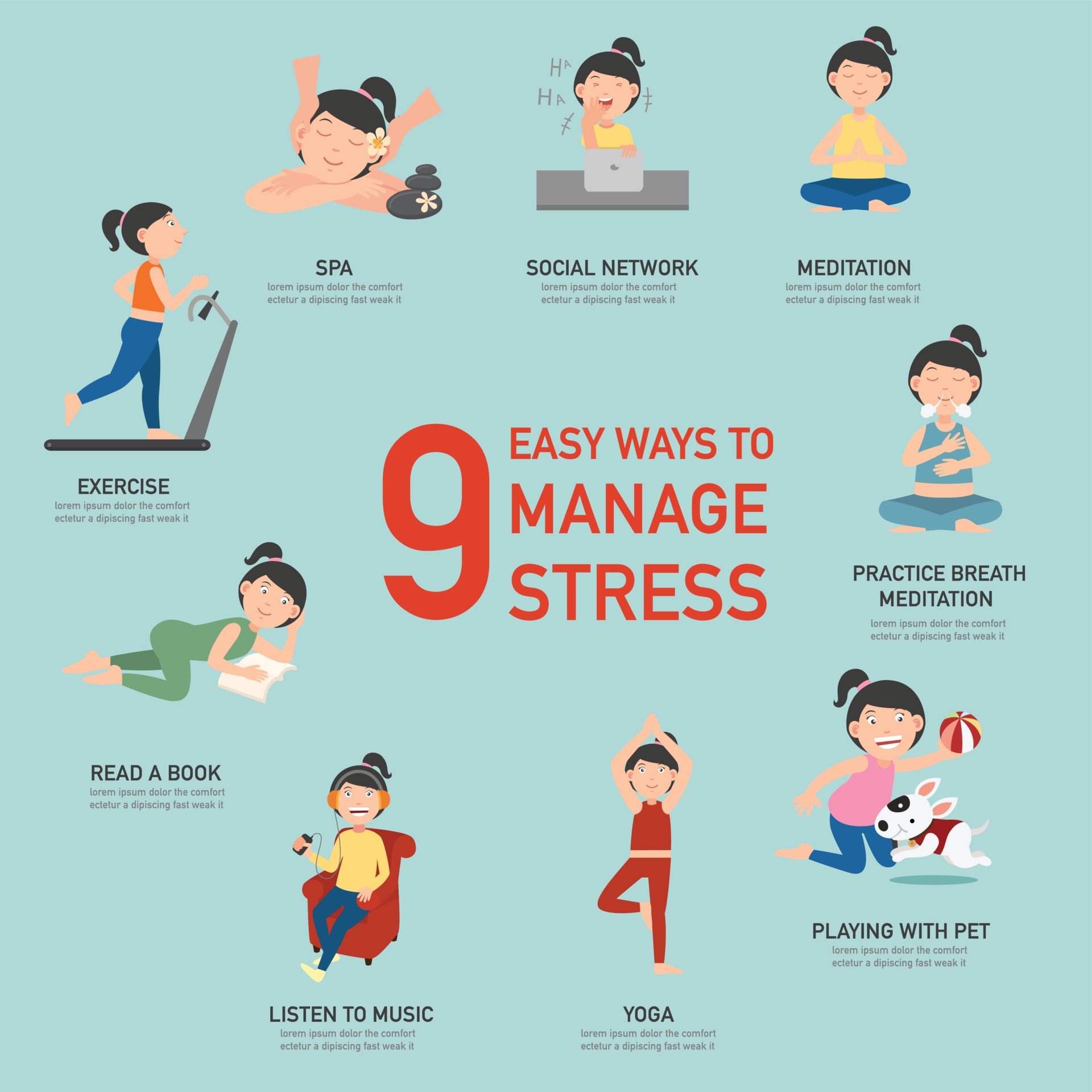
When time is limited, brief interventions can help shift the body out of a “fight or flight” response. Dr. Nouri suggests integrating three- to five-minute deep breathing exercises throughout the day. A recommended method involves inhaling for a count of four, holding for four seconds, and exhaling for a count of six. Longer exhalations are particularly effective because they help reduce sympathetic nervous system activity and activate the parasympathetic nervous system, which promotes a state of calm, explains Suzanne Wallach, PsyD, a licensed marriage and family therapist and executive director of the SoCal DBT Center in Los Angeles.
Progressive muscle relaxation is another tool that does not require significant time. By tensing a specific muscle group—such as the shoulders—and then releasing that tension, individuals can help the body exit a heightened state of stress. Research suggests that this technique is useful for reducing anxiety and depression. Dr. Wallach recommends starting with the toes and working upward, though focusing on a single high-tension area like the shoulders can be an effective, quick alternative if time is constrained.
Leveraging Short Bursts of Activity and Social Support
Physical activity does not need to involve hour-long gym sessions to be beneficial. Dale Larson, PhD, a licensed clinical psychologist and marriage and family therapist who researches stress management at Santa Clara University in California, suggests that even quick movements, such as a brief walk or desk-based push-ups, can help. Exercise provides an immediate release of neurotransmitters like dopamine and endocannabinoids, while also reducing the long-term impact of stress hormones such as cortisol and epinephrine.
Social support is equally vital, even when unstructured. Studies indicate that spending time with friends can aid in stress recovery, regardless of whether specific plans are made. Dr. Larson notes that contacting friends in similar professional fields can be particularly effective, as these individuals often possess a deeper understanding of the specific pressures associated with one’s work environment. This social connection serves as a buffer against burnout and provides a necessary perspective on daily challenges.
Prioritizing Tasks and Shifting Perspectives
Organization is a key strategy for making an overloaded schedule feel manageable. Dr. Wallach recommends limiting daily goals to two or three essential priorities. For those who find their plans interrupted by urgent tasks, a nightly 10- to 15-minute review of completed work and upcoming needs can provide mental clarity. This practice, supported by Dr. Nouri, allows for a more controlled start to the following day.
Shifting one’s perspective on negative thinking is also critical. When faced with the feeling of not doing enough, Dr. Nouri suggests reframing responsibilities as opportunities to meet personal goals. In professional settings, Dr. Larson advises that if you are in a system that lacks support, it is important to acknowledge that you are doing the best you can with the resources provided. This cognitive shift can protect individuals from internalizing systemic issues as personal failures.
The Role of Asking for Help
Many people struggle with the shame of admitting they cannot manage their workload alone. Dr. Wallach encourages individuals to examine the origins of this resistance to asking for help. When support is necessary, breaking large projects into smaller, manageable tasks is a practical first step. The Society for Human Resource Management suggests that when requesting assistance at work, it is most effective to be explicit, approach individuals rather than groups, and, if possible, have the conversation in person rather than via email. Clearly articulating the impact of the requested support can increase the likelihood of a positive outcome.
If these strategies do not alleviate feelings of being overwhelmed, or if individuals experience worsening symptoms such as sleep disturbances or reliance on substances, it is important to seek support from a healthcare professional, such as a physician, counselor, or therapist. Addressing these symptoms early can prevent long-term health consequences. Readers are encouraged to share their own time-saving stress management strategies in the comments below.
Related reading