Research published by Triodos Bank estimates that prolonged heat and wildfires will cost a cumulative €180 billion in 2026, which represents around 1% of Gross Domestic Product, according to Euronews. Against expected European Union growth of roughly 1.1% for the year, the damage is on course to wipe out a year of economic growth and leave the bloc near stagnation.
Economic Damage and Sector Impact Across Europe
The analysis traces economic harm through four channels. Lower crop yields and dairy output, alongside subsequent food price rises, account for approximately 0.15%. Constrained nuclear, hydro, and thermal generation, weaker solar efficiency, and higher wholesale power prices add between 0.12% and 0.15%, while disrupted rail, road, and waterway capacity contributes a further 0.15%. The largest and hardest-to-quantify effect is labor productivity. Output per worker declines once temperatures pass roughly 25°C to 30°C, with the sharpest losses occurring in outdoor and physically demanding roles. Office work also suffers as heat degrades sleep and cognition. A cross-country analysis by Allianz, cited in the research, estimates output losses at about 3% per hour worked for each degree above 30°C sustained over multiple days.
Country-Level Vulnerability and France’s Economic Contraction
Triodos Bank scored individual economies based on the share of output in exposed sectors, commute times, air conditioning penetration, and acclimatization, multiplied by excess hot days recorded during the summer. France emerged as the worst affected nation, losing an estimated 1.4 percentage points of growth—enough to tip the country into a contraction of about 0.6% from an already weak starting point.
The Netherlands faces a loss of around 0.8 points, leaving its economy roughly flat. While Spain and Italy feature highly exposed workforces and numerous hot days, decades of adaptation have blunted the impact of individual heat events. Poland, characterized by low air conditioning coverage and limited acclimatization, remains highly vulnerable but experienced a cooler summer and is projected to grow by about 2.9%.
Uncounted Human Toll and Environmental Disasters
The human toll sits largely outside standard economic figures. An estimated 20,400 heat-related deaths occurred across France, Germany, Spain, and Italy during the June heatwave alone. Valuing the summer’s approximately 25,000 total deaths in life years lost implies an additional cost between €1.5 billion and €7 billion.
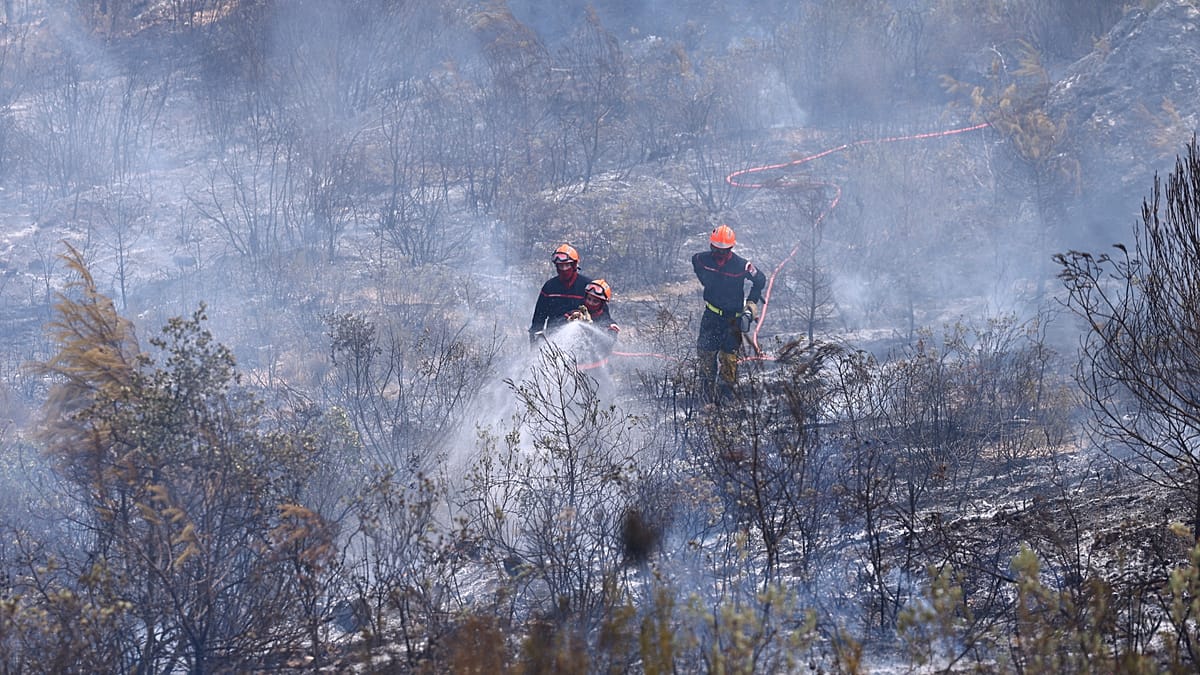
Simultaneously, wildfires burned over 490,000 hectares across the European Union by early August, compared to a 20-year average of 197,000 hectares, according to the European Forest Fire Information System. France set a record for burned area, and lost ecosystem services from these fires may add anywhere from €100 million to €4.6 billion in damages. In southern Europe, extreme conditions drove large blazes, including an incident near Bordeaux that forced more than 200,000 people to evacuate, as reported by Thejournal.
Record-Breaking Temperatures and Scientific Context
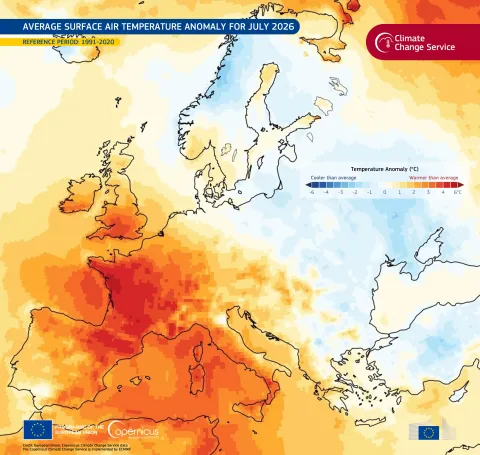
Climate data from the Copernicus Climate Change Service shows that July 2026 was the second warmest July on record in western Europe, with average surface air temperatures reaching 22.48°C—2.53°C above the 1991–2020 average and just below the record set in July 2006, according to Europa. Western Europe experienced its hottest June-July period on record, averaging 21.6°C, which is 2.79°C above normal, alongside four heatwaves since May.
Samantha Burgess, strategic lead for climate at the European Centre for Medium-Range Weather Forecasts, which runs Copernicus, noted that persistent high-pressure systems trapped heat over western Europe while amplifying widespread drought. As soils dry out, they lose their ability to provide natural cooling, allowing heat to build more readily,
Burgess said. Globally, July 2024 and July 2026 tied as the second-warmest Julys on record, trailing only July 2023.
Worth a look