
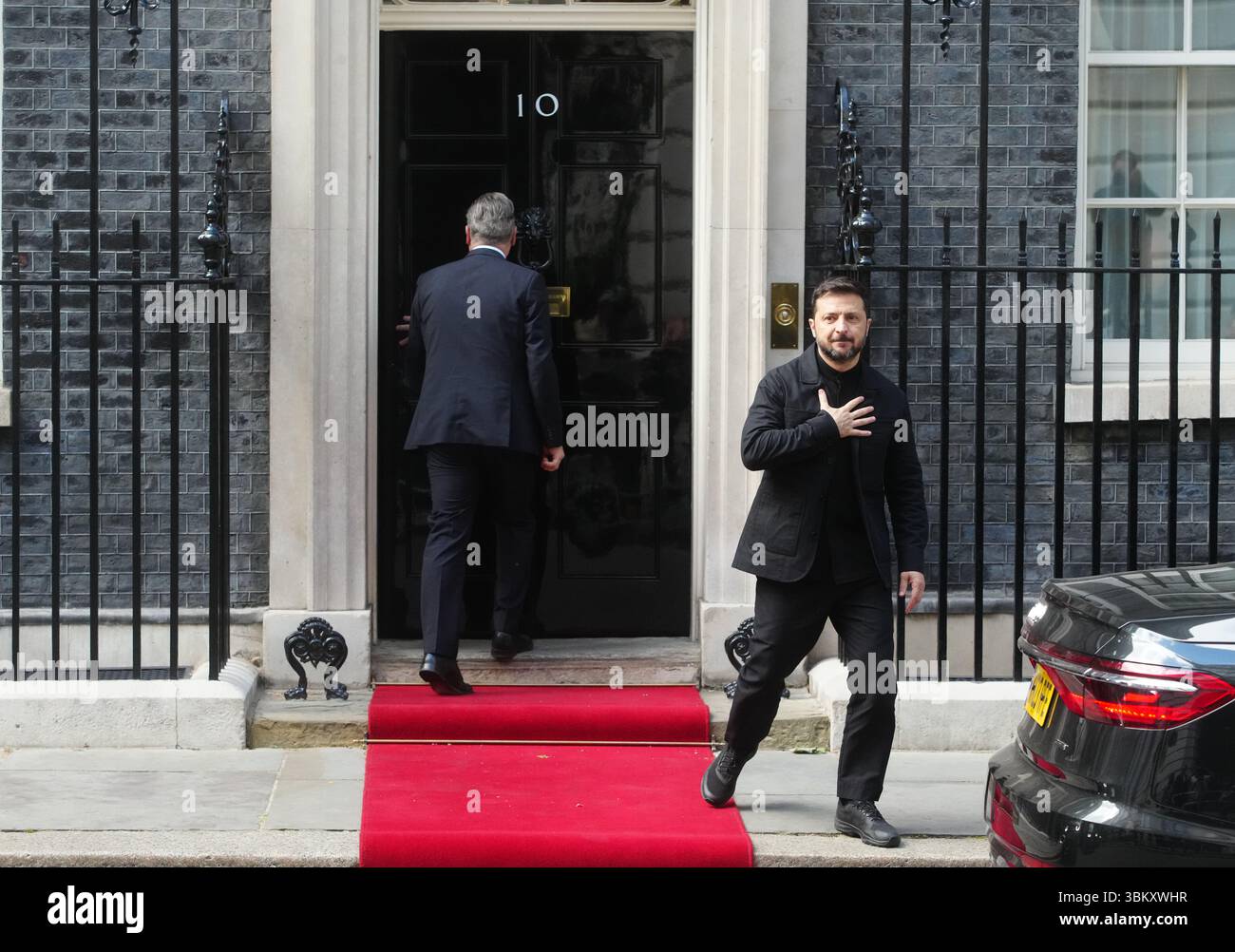
Ukrainian President Volodymyr Zelenskyy has joined leaders from the United Kingdom, France, and Germany in London to outline a collective framework for potential peace negotiations to end the war with Russia. The meeting, which took place as the conflict continues to see intensified drone and missile activity, focused on five core conditions for reaching a “just and lasting” deal, according to a joint statement released by the participating nations.
The diplomatic push comes at a time of shifting international focus, as Western allies navigate the geopolitical challenges posed by the ongoing war in Ukraine and evolving priorities in Washington. The discussions in London underscore a concerted effort to maintain a unified European position regarding the security of Ukraine and the parameters under which fighting might cease.
Establishing Conditions for Peace
The joint statement issued by President Zelenskyy, British Prime Minister Sir Keir Starmer, French President Emmanuel Macron, and German Chancellor Friedrich Merz highlights five essential conditions for a diplomatic resolution. Central to this framework is an immediate cessation of hostilities and the commencement of negotiations based on the current territorial positions held by both sides in the field. Furthermore, the leaders emphasized the necessity of providing “robust” security guarantees for Ukraine to ensure the durability of any future agreement.

The inclusion of these specific conditions reflects a strategic alignment among Kyiv’s closest European partners. By coordinating their stance, the UK, France, and Germany aim to provide a clear roadmap for what they characterize as a sustainable path toward peace. The leaders also reiterated the importance of active United States participation in this process, even as the current U.S. administration pivots its attention toward the conflict in Iran, as noted in reports regarding the meeting’s broader diplomatic context.
The Evolving Landscape of the Conflict
The diplomatic efforts in London arrive against a backdrop of increasing military intensity. Both Russia and Ukraine have recently escalated their use of long-range technology, with Russia continuing its campaign of missile and drone strikes against Ukrainian urban centers. Conversely, Ukraine has demonstrated an enhanced capability to strike deep into Russian territory, including recent drone operations targeting infrastructure in St. Petersburg, which Russian authorities have described as an unprecedented development.
The disparity between the diplomatic pursuit of a ceasefire and the reality on the front lines remains a significant point of tension. While President Zelenskyy has sought to open channels for direct negotiations—including an open letter sent to Russian President Vladimir Putin—these overtures have historically been rejected by the Kremlin. The current diplomatic alignment in London represents a renewed attempt to leverage international unity to influence the trajectory of the war, which began with the full-scale Russian invasion in February 2022.
Next Steps in International Diplomacy
The framework established by the European allies serves as a foundational document for upcoming discussions, though the path to formal negotiations remains complex. The immediate focus for the involved parties is to ensure that the proposed security guarantees and the conditions for a ceasefire are integrated into broader international policy discussions. As of early June 2026, there is no confirmed date for a follow-up summit, though officials are expected to continue bilateral consultations to maintain the momentum generated in London.
For readers looking to track the progression of these peace proposals, the official website of the President of Ukraine provides regular updates on diplomatic initiatives and government decrees. We invite our readers to share their perspectives on these developments in the comments section below, as the global community continues to monitor the search for a resolution to the conflict.
Worth a look