
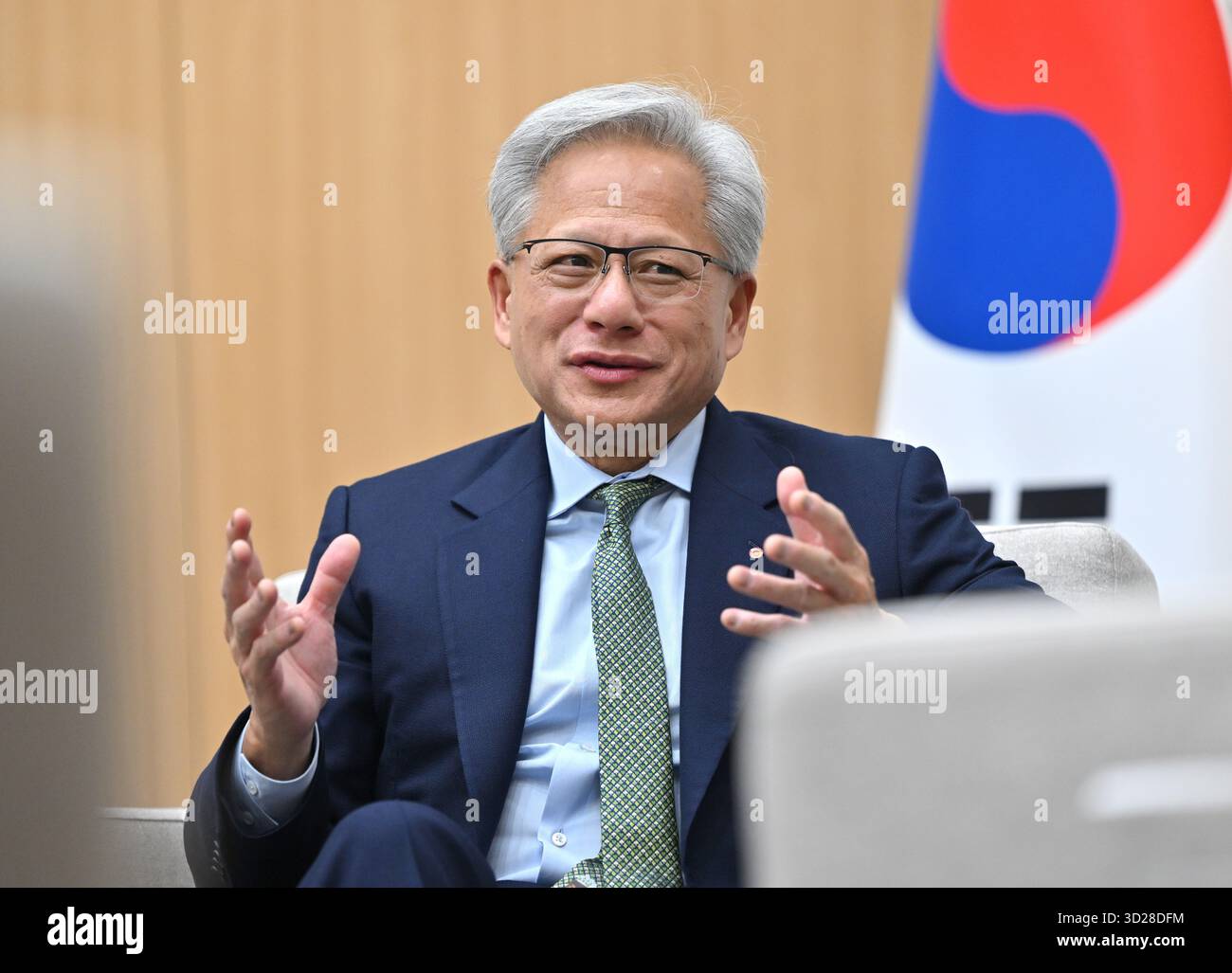
NVIDIA CEO Jensen Huang has concluded his recent visit to South Korea, leaving behind a clear message regarding the nation’s strategic position in the global artificial intelligence landscape. Speaking on the potential for future collaboration, Huang highlighted that South Korea possesses significant opportunities within the artificial intelligence infrastructure and robotics sectors. His comments underscore the growing importance of international partnerships as companies look to scale their operations in an increasingly competitive tech environment.
The visit, which drew attention from industry observers and market analysts alike, emphasized the symbiotic relationship between hardware providers and regional tech hubs. According to public statements made during his trip, Huang noted that the opportunity for South Korean enterprises to expand their overseas business reach through strategic partnerships with global leaders remains substantial. This perspective aligns with broader industry trends where AI-driven hardware demand—particularly for high-performance computing—is necessitating deeper integration across global supply chains.
AI Infrastructure and the Korean Market
The focus on South Korea’s AI infrastructure is not incidental. As the demand for generative AI and large language models accelerates, the requirement for high-bandwidth memory (HBM) and specialized processing units has brought South Korean semiconductor manufacturers to the forefront of the global conversation. Huang’s observations reflect the reality that the physical backbone of the AI revolution—data centers and localized compute capacity—relies heavily on the advanced manufacturing capabilities found within the region.
Furthermore, the integration of AI into robotics represents a frontier that Huang identified as a growth engine. By combining sophisticated AI software with South Korea’s established prowess in industrial automation and precision engineering, firms can effectively create new categories of intelligent machinery. For global tech conglomerates, the ability to tap into this ecosystem is a critical component of maintaining a competitive edge in hardware deployment.
Strategic Partnerships and Global Expansion
A core element of Huang’s dialogue involved the necessity of international cooperation. He suggested that for South Korean companies, the path to global market leadership involves leveraging their technological strengths in partnership with global AI platforms. This strategy allows domestic firms to bypass some of the traditional barriers to entry in foreign markets by embedding their technology into the foundational layers of global AI systems.
Industry analysts have long pointed to the necessity of such cross-border alliances, especially as regulatory environments and technological standards become more complex. By aligning with entities that provide the essential processing power, South Korean companies can ensure their innovations in robotics and AI hardware are globally interoperable. This visit serves as a testament to the ongoing dialogue between semiconductor giants and the manufacturing powerhouses that drive the global hardware supply chain.
Looking Ahead at Tech Integration
As the industry moves into the next phase of AI deployment, the focus is shifting from pure research to practical, scalable infrastructure. The acknowledgment of South Korea’s role in this transition highlights a shift in how global tech leaders view geographic specialization. Rather than centralizing all development, companies are increasingly looking to regional hubs that offer deep expertise in specific verticals, such as memory production and automated hardware.
For stakeholders and investors, the key indicator to watch will be the formalization of these hinted partnerships. While the visit has concluded, the momentum generated by such high-level discussions often leads to subsequent announcements regarding joint ventures, supply agreements, or collaborative research initiatives. Interested parties can monitor official corporate filings and press releases from major technology firms for updates on how these strategic discussions translate into operational realities in the coming months.
The tech landscape remains fluid, and as companies continue to refine their long-term roadmaps, the influence of these high-level summits will likely be reflected in future quarterly reports and infrastructure investment disclosures. We invite our readers to share their thoughts on the evolving role of international partnerships in the AI sector in the comments section below.
Keep reading