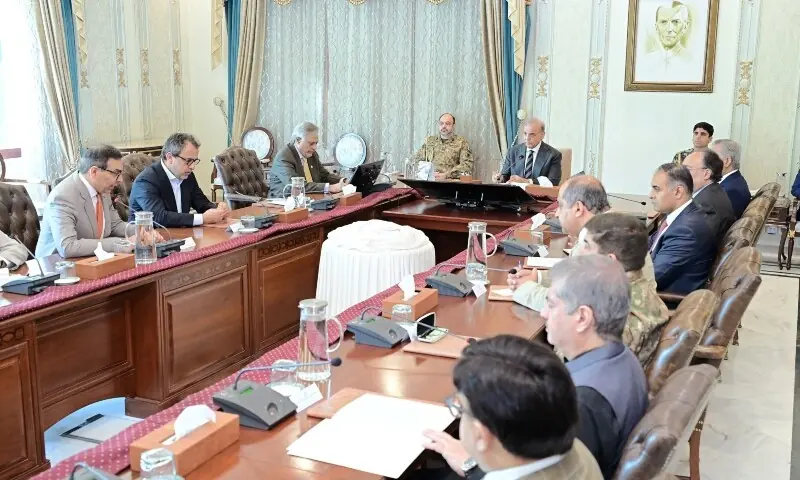
Prime Minister Shehbaz Sharif has ordered the acceleration of the privatisation process for state-owned electricity distribution companies (Discos) in a bid to reduce the financial burden on the national exchequer. During a meeting held at the Prime Minister’s Office, the premier emphasized that offloading loss-making entities remains a top government priority, according to official statements released by the government.
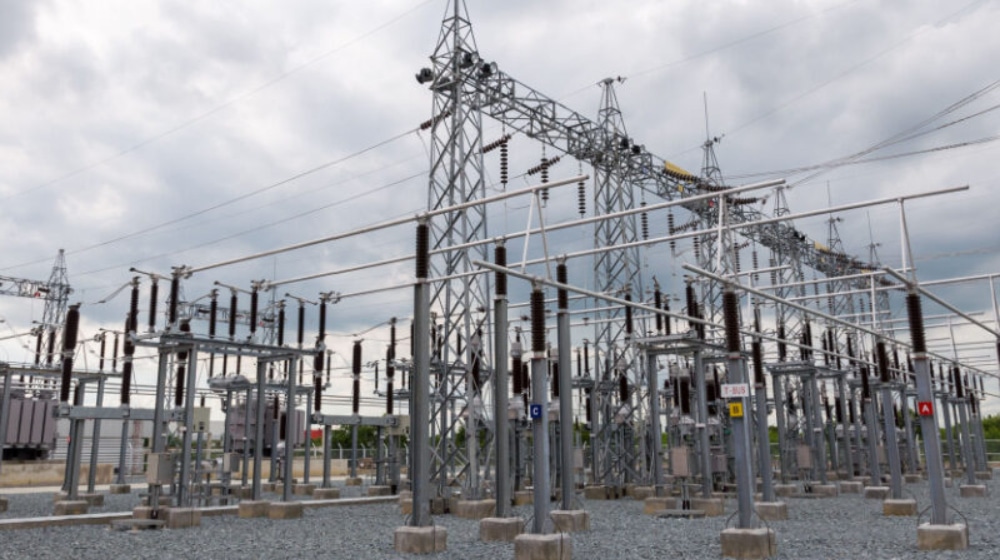
The initiative targets the initial phase of the privatisation drive, specifically focusing on the Islamabad Electric Supply Company (Iesco), Gujranwala Electric Power Company (Gepco), and Faisalabad Electric Supply Company (Fesco). These three entities serve more than 14 million consumers across critical industrial and urban centers in Punjab, the Islamabad Capital Territory, and parts of Azad Jammu and Kashmir. The government has already invited expressions of interest (EOI) from potential investors, with the Cabinet Privatisation Committee having formally approved the transaction structure for these sales, as noted by the Privatisation Commission of Pakistan.
Strategic Goals for the Power Sector
The government aims to transfer between 51% and 100% of shareholding, alongside management control, to private entities. By shifting these responsibilities to the private sector, officials hope to improve operational efficiency and curb the mounting circular debt that has long plagued Pakistan’s power infrastructure. Prime Minister Sharif underscored the necessity of establishing a robust regulatory framework to ensure that once these companies transition to private ownership, consumer interests and service standards remain protected.
The meeting was attended by key economic and legal decision-makers, including Deputy Prime Minister Ishaq Dar, Finance Minister Muhammad Aurangzeb, Power Minister Awais Leghari, and Law Minister Azam Nazeer Tarar. Their presence signals a coordinated inter-ministerial effort to clear legal and financial hurdles that have historically delayed the privatisation of the energy sector.
Attracting International Capital
To generate competitive interest in the sale, the government plans to host a series of roadshows throughout this month. These events are designed to engage potential investors from Saudi Arabia, Turkiye, and China, markets that have expressed interest in regional infrastructure projects. The Ministry of Finance has positioned these sales as a central pillar of the current administration’s broader economic reform agenda, which seeks to stabilize the fiscal deficit through the divestment of non-performing state assets.
The Privatisation Commission first initiated the formal call for expressions of interest on May 19. According to the current timeline, the deadline for submitting proposals for the partial or full acquisition of these Discos is scheduled for the first quarter of the next fiscal year. This timeline is subject to the successful completion of the ongoing due diligence processes and the finalization of the regulatory environment.
What Happens Next
The immediate next step in this process involves the scheduled roadshows aimed at international and local investors. Following these engagements, the Privatisation Commission will evaluate the interest received to proceed toward the formal bidding phase. As the government works toward the first-quarter deadline for EOI submissions, stakeholders are awaiting further details regarding the specific regulatory oversight mechanisms that will govern the private entities post-acquisition.
This development marks a significant shift in Pakistan’s energy policy, moving away from state-managed distribution toward a model intended to increase private sector participation. As the situation evolves, further updates regarding the bidding criteria and the specific terms of the regulatory framework are expected to be released through the official channels of the Privatisation Commission and the Power Division. Readers are encouraged to monitor these official portals for the most current information as the privatisation timeline progresses.
Related reading