
FIFA World Cup 2026 Kickoff: Everything to Know About the June 11 Opening
The FIFA World Cup 2026 is scheduled to officially begin on Thursday, June 11, 2026, with an opening match held at MetLife Stadium in East Rutherford, New Jersey. This tournament marks a historic shift for international football, as it will be the first edition to feature 48 participating nations instead of the traditional 32, co-hosted by the United States, Canada, and Mexico.
As the global football community prepares for the largest tournament in history, the kickoff on June 11 serves as the starting point for a month-long spectacle involving 104 matches across North America. FIFA has confirmed that the tournament will conclude on July 19, 2026, following a final match that will also take place in the United States.
Where will the 2026 World Cup opening match take place?
The opening match will be hosted at MetLife Stadium, located in East Rutherford, New Jersey, which serves the New York metropolitan area. According to official FIFA host city announcements, MetLife Stadium is one of the premier venues selected to anchor the tournament’s commencement due to its high capacity and existing infrastructure for major international events.
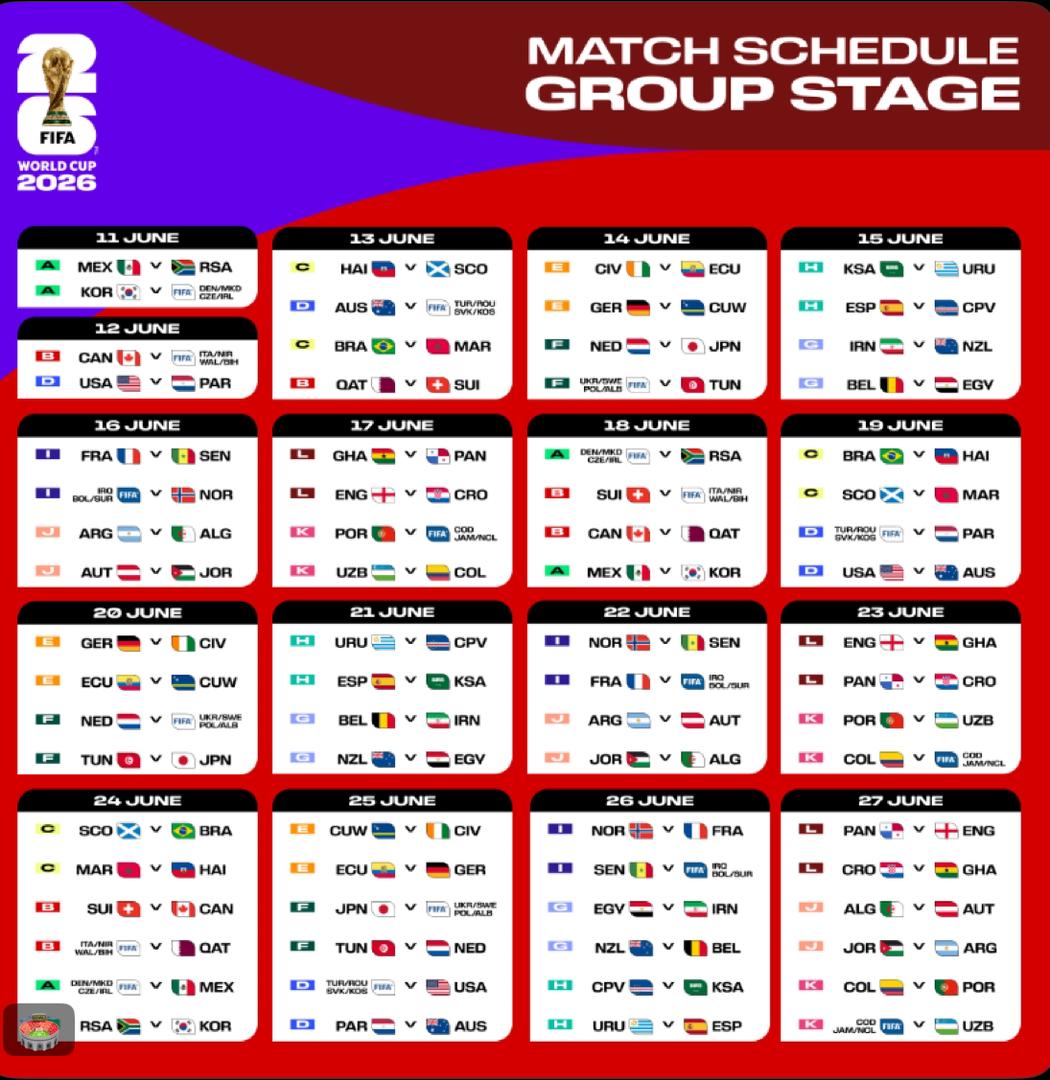
While the specific matchup for the June 11 opener will not be determined until the official tournament draw, the venue is set to accommodate a massive influx of international spectators. The selection of the New York/New Jersey region for the opening ceremony underscores the scale of the event, placing the start of the competition in one of the world’s most significant media and travel hubs.
How does the new 48-team format change the tournament?
The transition from 32 to 48 teams represents the most significant structural change to the World Cup in decades. Under the new format, the number of matches will increase from 64 to 104, providing more playing time for developing football nations and expanding the tournament’s global footprint.
The competition will be organized into 12 groups of four teams each. This structure changes the progression of the knockout stages; rather than moving directly to a Round of 16, the tournament will now feature a Round of 32. This means that even more teams will advance from the group stage, extending the duration of the competitive play and increasing the stakes for every match played in the opening weeks.
To help visualize these changes, the table below compares the traditional format with the upcoming 2026 structure:
| Feature | Previous Format (32 Teams) | 2026 Format (48 Teams) |
|---|---|---|
| Total Participating Nations | 32 | 48 |
| Total Number of Matches | 64 | 104 |
| Group Stage Structure | 8 groups of 4 | 12 groups of 4 |
| First Knockout Round | Round of 16 | Round of 32 |
Which cities are hosting the 2026 FIFA World Cup?
The 2026 tournament is a collaborative effort between three nations, utilizing a wide array of stadiums to distribute the economic and cultural impact across North America. The United States will host the majority of the matches, with 11 host cities including Atlanta, Boston, Dallas, Houston, Kansas City, Los Angeles, Miami, New York/New Jersey, Philadelphia, San Francisco, and Seattle.
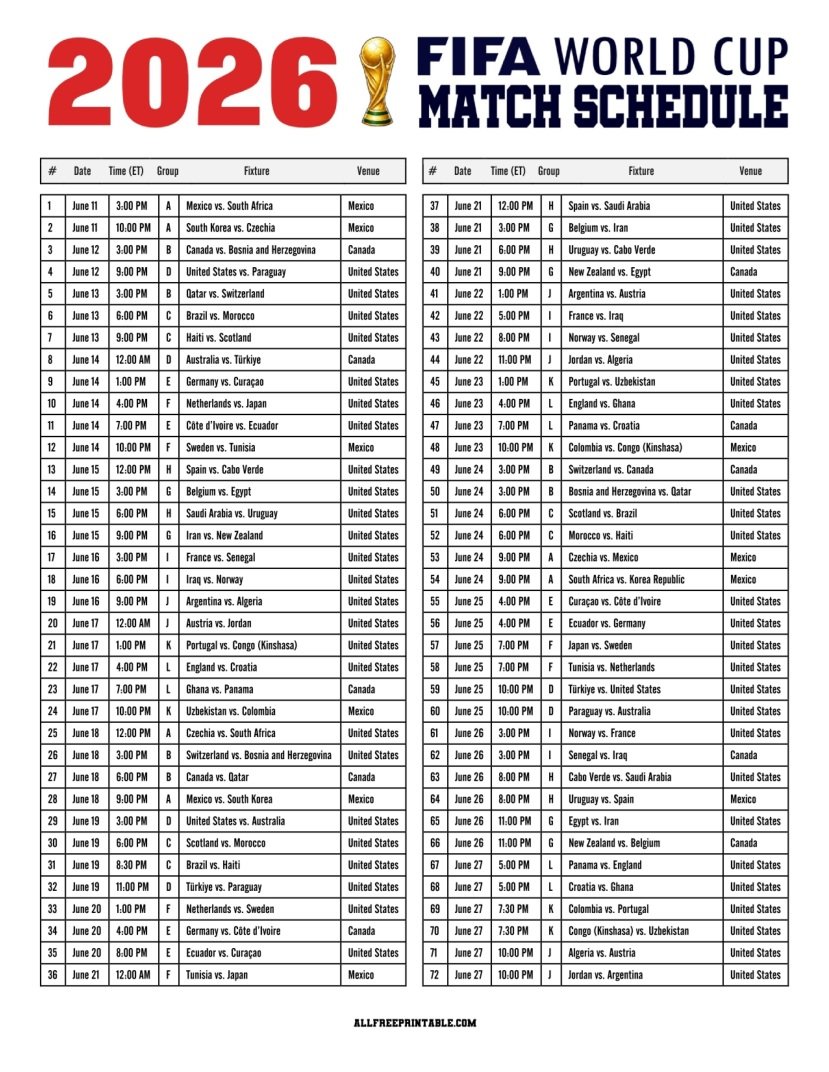
Mexico will host matches in three iconic venues: Estadio Azteca in Mexico City, Estadio BBVA in Monterrey, and Estadio Akron in Guadalajara. Canada will also play a significant role, with matches scheduled in Vancouver and Toronto. This multi-national approach requires unprecedented coordination between FIFA and the three host associations to manage travel, security, and fan logistics across vast distances.
The logistical challenge of moving teams and fans between cities like Vancouver and Mexico City is one of the primary considerations for organizers. Unlike previous tournaments held in smaller, more concentrated geographic areas, the 2026 event will require robust international travel infrastructure to support the movement of thousands of athletes and millions of supporters.
What can fans expect from the June 11 kickoff?
The opening day on June 11 is expected to be more than just a football match; it is designed as a massive cultural event. FIFA typically integrates high-production opening ceremonies into the first match, featuring musical performances and cultural displays intended to celebrate the host nations and the global spirit of the game.
For fans attending the opening match in New Jersey, the experience will involve significant local coordination. Host cities have begun discussing enhanced public transportation and fan zone activations to manage the crowds expected for the tournament’s start. The focus for organizers remains on ensuring that the influx of visitors does not overwhelm local infrastructure while maximizing the economic benefits for the host regions.
Key Takeaways for the 2026 Tournament
- Start Date: Thursday, June 11, 2026.
- Opening Venue: MetLife Stadium, East Rutherford, New Jersey.
- Format Change: Expansion from 32 to 48 teams, increasing total matches to 104.
- Host Nations: A joint hosting effort by the United States, Canada, and Mexico.
- Tournament End: The final match is scheduled for July 19, 2026.
Frequently Asked Questions
When will the specific teams for the opening match be announced?
The specific teams participating in the June 11 opening match will be determined during the official FIFA World Cup draw, which typically occurs several months before the tournament begins.

How many teams will qualify for the 2026 World Cup?
A total of 48 teams will qualify through their respective continental confederations, including expanded slots for Africa (CAF), Asia (AFC), and North America (CONCACAF).
Will the tournament be held in only one country?
No, the tournament is being co-hosted by the United States, Canada, and Mexico, making it the first World Cup to be hosted by three different nations.
Where can I find official ticket information?
Fans should monitor the official FIFA website for updates regarding ticket registration, sales phases, and hospitality packages.
The next major milestone in the countdown to the June 11 kickoff will be the finalization of the qualifying rounds across the various continental confederations, which will determine which 48 nations will take the pitch in North America.
What are your thoughts on the expansion to 48 teams? Do you think the new format will improve the tournament experience? Let us know in the comments below and share this article with your fellow football fans.
Related reading
- Kylie Jenner Collaborates on New Model Line: Everything You Need to Know
- Free Movies and Cultural Events: How to Celebrate Bogotá’s 488th Anniversary
- Cliff Vesting vs. Graded Vesting: What Your 401(k) Match Pays (daybreakwire.com)
- Sault Ste. Marie Announces Closures and Schedule Changes for Civic Holiday (archyworldys.com)