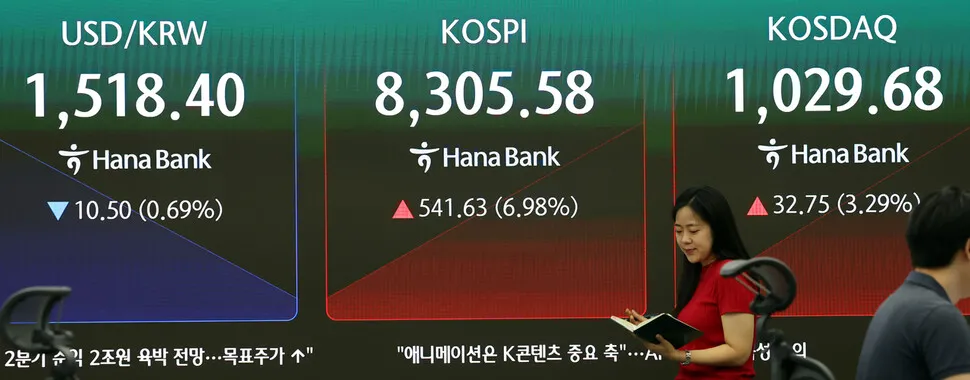
South Korean securities firms reported a combined net profit of approximately 4.3 trillion won for the first quarter of 2024, largely driven by a significant surge in domestic stock trading commissions. This performance reflects a rebound in market activity, with the total trading value across the Korea Exchange and alternative trading systems reaching 2,775 trillion won during the same period, according to data from the Financial Supervisory Service (FSS).
The reported 4.3 trillion won figure represents a notable shift in the landscape for brokerage houses, which had previously faced pressure from stagnant market conditions. As of the first quarter, the surge in transaction volume—a 333.1% increase compared to the 641 trillion won recorded in the same quarter of the previous year—has revitalized core revenue streams for major financial institutions. This growth in trading commissions, combined with gains in asset management and proprietary trading, has provided a substantial buffer against broader economic headwinds.
Market Dynamics and Trading Commission Growth
The primary driver behind the robust quarterly performance was the increase in brokerage commissions, which serve as a foundational revenue source for domestic securities companies. According to the Financial Supervisory Service, the uptick in retail and institutional participation in the equity market directly correlates with the higher fee income observed across the industry. While trading commissions remain a volatile metric, the sheer volume of activity in the first quarter of 2024 provided a stable base for profit margins.
Beyond standard brokerage fees, firms also benefited from a diversified income mix. Asset management divisions, which include fees from funds and wrap account services, contributed steadily to the bottom line. Analysts suggest that the shift in investor sentiment toward equities, spurred by market volatility and specific sector rallies, has encouraged higher turnover rates among individual investors. This “trading-heavy” environment is a critical component of the revenue jump, as higher volume naturally increases the total commission pool available to brokerage platforms.
Regulatory Environment and Institutional Performance
The introduction of alternative trading systems (ATS) has added a new layer to the domestic market structure, influencing how trades are routed and executed. The Financial Services Commission (FSC) has been monitoring these developments to ensure market stability as competition increases among trading venues. By allowing for more efficient trade execution, these systems have contributed to the record-setting 2,775 trillion won in quarterly trading value.
However, the sector is not without risks. Securities firms remain sensitive to interest rate fluctuations and the potential for market cooling in subsequent quarters. The FSS continues to emphasize the importance of liquidity management and risk assessment for firms with significant exposure to real estate project financing (PF) loans, which have been a point of concern for regulators throughout the year. The current profitability figures, while strong, are being viewed by market observers as a necessary cushion for firms currently undergoing balance sheet restructuring in the wake of the property sector downturn.
What Lies Ahead for Securities Firms
Looking toward the remainder of the fiscal year, the focus for securities firms will likely remain on diversifying income streams beyond simple brokerage commissions. With the volatility of the equity market, firms are increasingly looking toward wealth management and corporate advisory services to maintain long-term stability. The Financial Supervisory Service is expected to release further updates on sector health in its mid-year financial review, which will provide deeper insight into whether these profit levels are sustainable.
Investors and market participants should keep an eye on upcoming regulatory filings and quarterly reports, which will detail the impact of interest rate policy adjustments on brokerage revenue. As of now, the sector shows resilience, but the interplay between high trading volumes and the ongoing management of credit risks will determine the trajectory for the second and third quarters. We invite our readers to share their perspectives on the changing landscape of South Korean financial markets in the comments section below.
Related reading