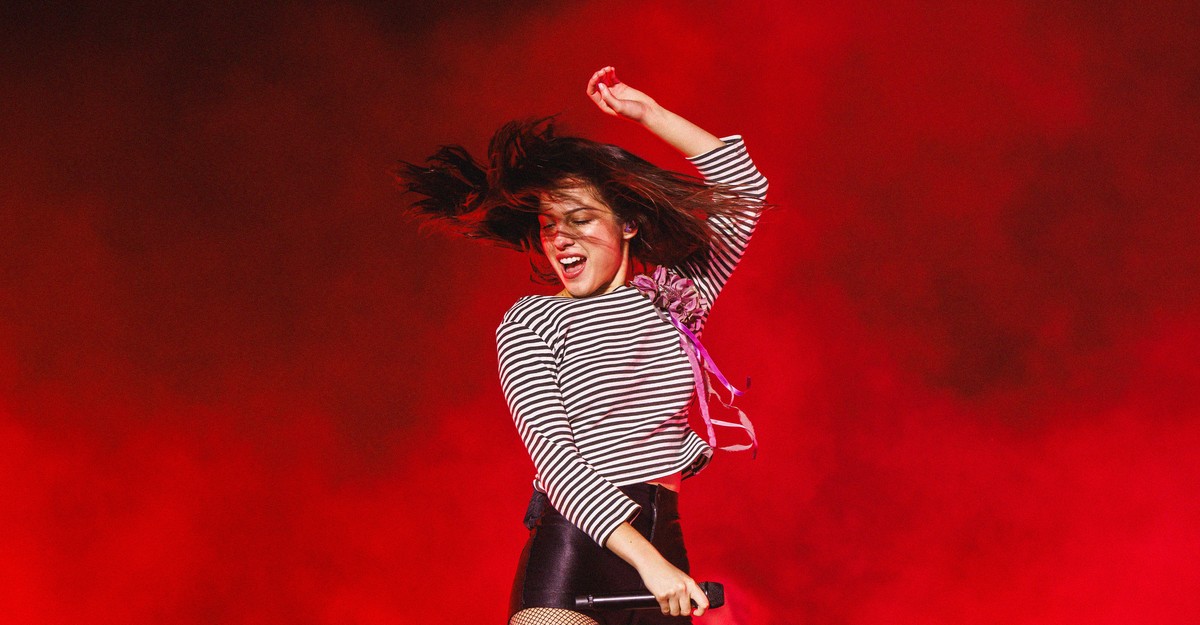
Olivia Rodrigo has transitioned from the high-energy pop-punk of her debut era into a more complex, orchestrated sonic territory that challenges the “disassociated” trends of the 2020s. By moving away from the “teenage spite” associated with her 2021 breakout, the singer-songwriter is establishing a new musical identity characterized by emotional intensity and genre-blending production.
As the music industry observes a cultural shift toward “vibing”—a trend defined by low-stakes, ambient listening—Rodrigo’s recent work represents a counter-movement toward visceral, high-stakes emotionality. This evolution, marked by her partnership with producer Dan Nigro, signals a maturation in both her lyrical themes and her commercial brand.
The Evolution of Olivia Rodrigo’s Musical Identity
The trajectory of Olivia Rodrigo’s career is defined by a rapid transition from Disney-affiliated pop to a dominant position in the “heartbreak pop” genre. Her debut studio album, Sour, released on May 20, 2021, utilized pop-punk and bedroom-pop aesthetics to capture a specific teenage zeitgeist. Critics and market analysts noted that the album’s success was driven by its relatability and the raw, “spiteful” energy of tracks like “drivers license.”
:max_bytes(150000):strip_icc():focal(749x0:751x2)/olivia-rodrigo-tout-101524-144948a4782a4095b613aad1c3f88ff1.jpg "The Evolution of Olivia Rodrigo’s Musical Identity")
However, her follow-up, Guts, released on September 8, 2023, demonstrated a significant shift in both sonic architecture and lyrical depth. While Sour leaned heavily into the angst of adolescence, Guts explored more complex, often “messier” emotional landscapes. This shift has been facilitated by her ongoing collaboration with producer Dan Nigro, whose work has helped Rodrigo navigate between punk-inspired grit and more stately, orchestrated arrangements.
Industry observers suggest that this evolution is not merely stylistic but strategic. By expanding her sound to include elements of 1980s new wave, ’90s alt-rock, and 2000s indie, Rodrigo is broadening her demographic appeal, moving beyond the Gen Z core to capture older listeners who resonate with her retro-leaning influences.
Moving Beyond the ‘Teen Spite’ Narrative
A central theme in the analysis of Rodrigo’s artistry is her departure from the “teenage spite” that defined her early career. Early critics often categorized her songwriting as a form of “bottled” teenage rebellion—intense, but often thin in its emotional scope. As she has matured, her songwriting has moved toward what many describe as a more “adult” form of emotional expression.
:max_bytes(150000):strip_icc():focal(739x368:741x370)/olivia-rodrigo-dan-nigro-050924-2-bc126c7b98394a4b950d6be43fe1debb.jpg "Moving Beyond the 'Teen Spite' Narrative")
This transition involves a movement from simple “post-breakup disses” to a more nuanced exploration of the modern romantic crisis. While she operates within the lineage established by artists like Taylor Swift—who mastered the art of the semi-confessional breakup anthem—Rodrigo is increasingly engaging with the tensions of modern dating, including the impact of social performance and digital stalking on personal security.
The thematic depth of her recent work suggests a willingness to embrace “unstable” territory. Rather than providing the easygoing, background-friendly music that dominates much of contemporary streaming, Rodrigo’s newer compositions often demand active, sometimes uncomfortable, engagement from the listener. This “brain on, heart open” approach serves as a direct contrast to the prevailing culture of emotional disassociation.
Sonic Architecture and the Role of Dan Nigro
The technical evolution of Rodrigo’s sound is inseparable from her work with producer Dan Nigro. Together, they have moved away from the singular pop-punk focus of her early singles toward a more diverse, “cinematic” sonic palette. This evolution is characterized by several key musical shifts:
- Genre Blending: Integrating elements of jangle-pop, synth-driven new wave, and orchestral ballads.
- Dynamic Range: Moving from “bedroom-pop intimacy” to “screamed choruses” and sweeping, anthemic crescendos.
- Referentiality: Utilizing musical nods to 1980s and 1990s icons to ground her modern sound in established alternative traditions.
While some critics have noted that the heavy use of nostalgia can occasionally feel imitative, the consensus remains that the production serves to “dress up” complex neuroses—such as obsession and self-hatred—in a sophisticated, polished framework. This allows Rodrigo to maintain her pop accessibility while delivering much heavier thematic content.
The Cultural Impact of ‘Feeling’ in a ‘Vibing’ Era
The rise of Olivia Rodrigo occurs at a peculiar cultural moment. The 2020s have been characterized by a trend toward “vibing”—a term used to describe music that is designed to be unobtrusive, often serving as a soundtrack to digital consumption rather than a focal point of attention. This is often accompanied by a sense of emotional disassociation, fueled by the repetitive nature of streaming algorithms and the “numbing” effect of social media.

Rodrigo’s music acts as a disruption to this trend. By prioritizing “feeling” over “vibing,” her work forces a confrontation with the “here and now.” Her lyrics often tackle the “terrifying thrill” of intense emotion, making her a central figure in a movement of artists who are reclaiming vulnerability in the pop mainstream.
For the music industry, this represents a significant market opportunity. There is a demonstrated demand for “active” listening experiences that offer genuine emotional catharsis, a need that Rodrigo is uniquely positioned to meet as she continues to refine her musical language.
Key Takeaways: The Rodrigo Evolution
- Genre Shift: Transitioning from pop-punk and bedroom-pop to a blend of new wave, alt-rock, and indie.
- Lyrical Maturity: Moving from adolescent spite to complex, adult explorations of romance and insecurity.
- Production Strategy: Utilizing Dan Nigro to create a “cinematic” sound that balances pop accessibility with alternative depth.
- Cultural Positioning: Acting as a counterweight to the “disassociated” and “background” listening trends of the 2020s.
As Rodrigo continues to develop her artistry, the industry will be watching for her next major official announcement regarding new releases or tour schedules. For further updates on global music market trends and artist developments, follow our business and culture sections.
What do you think of Olivia Rodrigo’s musical shift? Does her new sound resonate more than her debut? Let us know in the comments below and share this article with your network.
Keep reading