
Conflicting reports regarding the details of a purported ceasefire agreement between the United States and Iran have created significant diplomatic uncertainty, as various media outlets present divergent accounts of the deal’s terms, timing, and location. While some reports suggest a potential signing of a peace memorandum in Geneva as early as mid-June, other accounts describe a 60-day cessation of hostilities and the immediate reopening of the Strait of Hormuz. Neither the U.S. State Department nor the Iranian government has officially confirmed the existence of such an agreement.
The discrepancy in reporting has led to what observers are calling a “Rashomon” effect, where the same alleged diplomatic event is being characterized in fundamentally different ways by international news agencies. These conflicting narratives have complicated efforts to assess the actual state of negotiations between Washington and Tehran, particularly as regional stakeholders monitor the potential for renewed stability or a shift in the existing geopolitical balance.
Conflicting Reports on Ceasefire Terms and Timelines
The lack of consensus among reporting agencies has centered on two primary versions of the proposed agreement. One set of reports, citing claims attributed to CNN, suggests that the agreement involves a 60-day ceasefire across all active fronts. This version of the deal reportedly includes a provision for the immediate reopening of the Strait of Hormuz to international maritime traffic, a move intended to stabilize global energy markets.

In contrast, other reports, including those attributed to Reuters, have focused on a different diplomatic framework. These accounts suggest that a peace memorandum could be signed in Geneva, Switzerland, as early as June 14. Unlike the 60-day ceasefire model, this version of the agreement emphasizes a formal memorandum of understanding rather than a temporary pause in military operations.
The divergence in these details—specifically the distinction between a temporary 60-day cessation of hostilities and a formal memorandum signed in a neutral third-party location—has left analysts unable to determine whether the negotiations are focused on immediate de-escalation or long-term diplomatic restructuring. As of this report, no official documents have been released by the Swiss government or the participating nations to verify the June 14 timeline.
Political Friction and Allegations of Deception
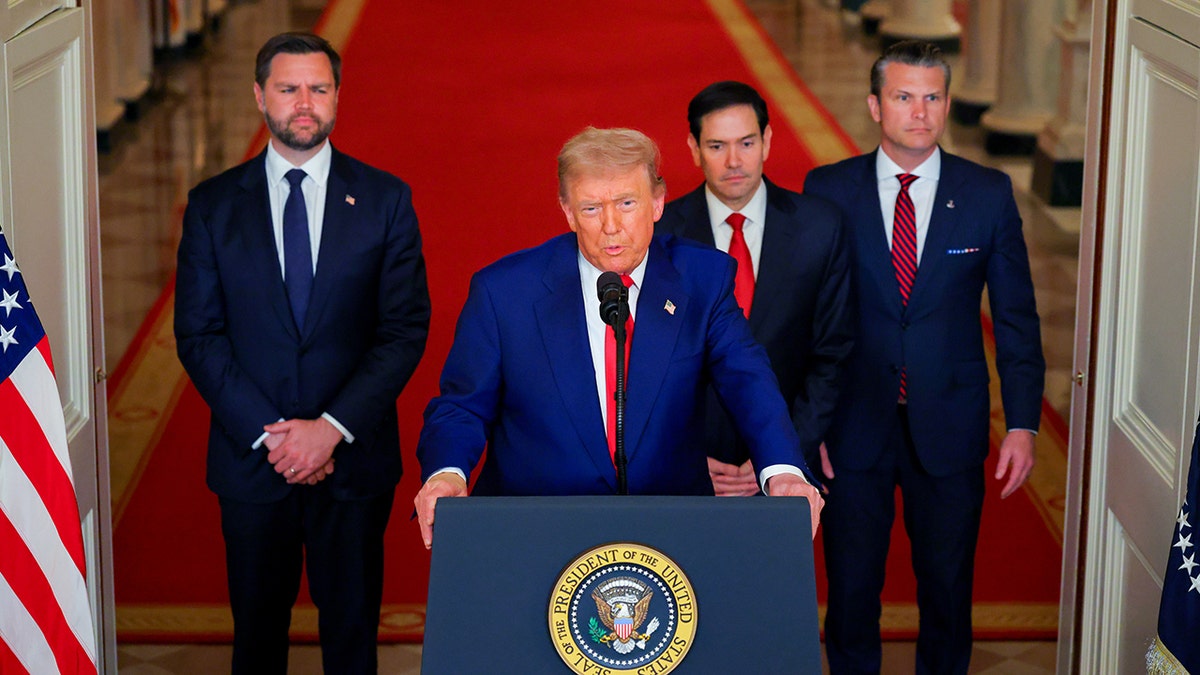
The reported diplomatic developments have triggered immediate political backlash, most notably from former President Donald Trump. According to reports from various media outlets, Trump has criticized the purported deal, labeling it “pathetic and weak.” He has further accused the Iranian government of engaging in deceptive practices throughout the negotiation process.
Trump’s criticisms appear to target the perceived lack of concessions from Tehran and the potential for the agreement to fail to address core security concerns. These allegations of “lying” by the Iranian side have added a layer of political volatility to an already uncertain situation. While these statements reflect the political rhetoric surrounding the negotiations, they also highlight the deep-seated mistrust that continues to define the relationship between the United States and the Islamic Republic of Iran.
The tension between the reported diplomatic progress and the vocal political opposition underscores the difficulty of achieving a sustainable agreement. For any ceasefire to hold, it must navigate not only the technical requirements of military de-escalation but also the intense political scrutiny within both the United States and Iran.
The Strategic Importance of the Strait of Hormuz
Central to the reported ceasefire terms is the status of the Strait of Hormuz, a narrow waterway that serves as one of the world’s most critical maritime chokepoints. If the version of the deal involving the immediate reopening of the Strait is accurate, it would have immediate implications for global energy security. Approximately 20% of the world’s total oil consumption passes through this passage, making any disruption to its flow a matter of global economic concern.
A verified reopening of the Strait would likely lead to a stabilization of oil prices, which have historically been sensitive to tensions in the Persian Gulf. However, the uncertainty surrounding the 60-day ceasefire means that markets remain cautious. The distinction between a “reopening” and a “stabilization of transit” is significant for shipping companies and energy importers who require long-term certainty to resume normal operations.
Maritime security experts note that any agreement involving the Strait must include specific protocols for vessel protection and transit rights to prevent accidental escalations. Without these concrete details, the reported “immediate reopening” remains a speculative element of the ongoing media reports.
Regional Responses and Diplomatic Pressure
The potential for a shift in US-Iran relations has prompted urgent diplomatic activity among Middle Eastern nations. Reports indicate that several regional powers have held emergency communications with U.S. officials to influence the direction of the negotiations. These leaders have reportedly sought to prevent any diplomatic outcomes that might undermine regional security or favor certain geopolitical interests over others.
The involvement of these third-party stakeholders highlights the regional dimension of the US-Iran standoff. For many Middle Eastern governments, a ceasefire is not merely a bilateral matter between Washington and Tehran but a factor that impacts regional defense postures, trade routes, and the balance of power among local actors. The reported “emergency calls” suggest that regional leaders are actively working to ensure that any eventual agreement aligns with their own national security priorities.
This multilateral pressure adds another layer of complexity to the negotiations. A successful agreement would likely need to account for the concerns of regional neighbors to ensure it does not inadvertently trigger new conflicts or power shifts in the Persian Gulf.
Comparative Analysis of Reported Agreement Details
The following table summarizes the primary discrepancies found in the current reporting regarding the potential US-Iran agreement:
| Feature | Reported via CNN (Alleged) | Reported via Reuters (Alleged) |
|---|---|---|
| Primary Mechanism | 60-day ceasefire across all fronts | Formal Peace Memorandum |
| Key Location | Not specified/Active combat zones | Geneva, Switzerland |
| Target Date | Immediate implementation | As early as June 14 |
| Maritime Focus | Immediate reopening of Strait of Hormuz | Not explicitly highlighted in this version |
This comparison illustrates why the term “Rashomon” has been applied to the situation. The two versions of the story present different goals: one focused on a temporary pause in violence and maritime transit, and the other on a formalized diplomatic document signed in a neutral venue.
Status of Official Verification
At this stage, the existence of a finalized agreement remains unconfirmed by official government channels. The lack of a joint statement from the U.S. State Department and the Iranian Foreign Ministry means that the details circulating in the media must be treated as reported claims rather than established facts. In international diplomacy, “memorandums” and “ceasefires” are often subject to intense back-channel negotiation long before they are formally announced, which can contribute to the spread of conflicting information.
Journalists and analysts are currently awaiting official confirmation or the publication of a formal text from one of the negotiating parties. Until such a document is produced, the specific terms regarding the Strait of Hormuz, the June 14 date, and the 60-day duration remain part of a developing and unverified narrative.
The next critical checkpoint in this developing story will be the potential June 14 date in Geneva. Observers will be watching for any official diplomatic movement in Switzerland or formal statements from the U.S. or Iranian embassies that could validate or refute the current reports.
What are your thoughts on the potential impact of a US-Iran ceasefire on global energy markets? Share your perspective in the comments below and share this article to keep your network informed.
Keep reading
- Flash Floods Hit After Intense Heat: 70mm of Rain Causes Severe Street Flooding
- US Navy Rear Admiral Montgomery Proposes ERAM Alternative for Ukraine
- Trump Pushes SAVE Act to Mandate Voter ID and Proof of Citizenship (newsdirectory3.com)
- Tariff vs. Price Floor: What Trump's New Solar Rule Does (daybreakwire.com)