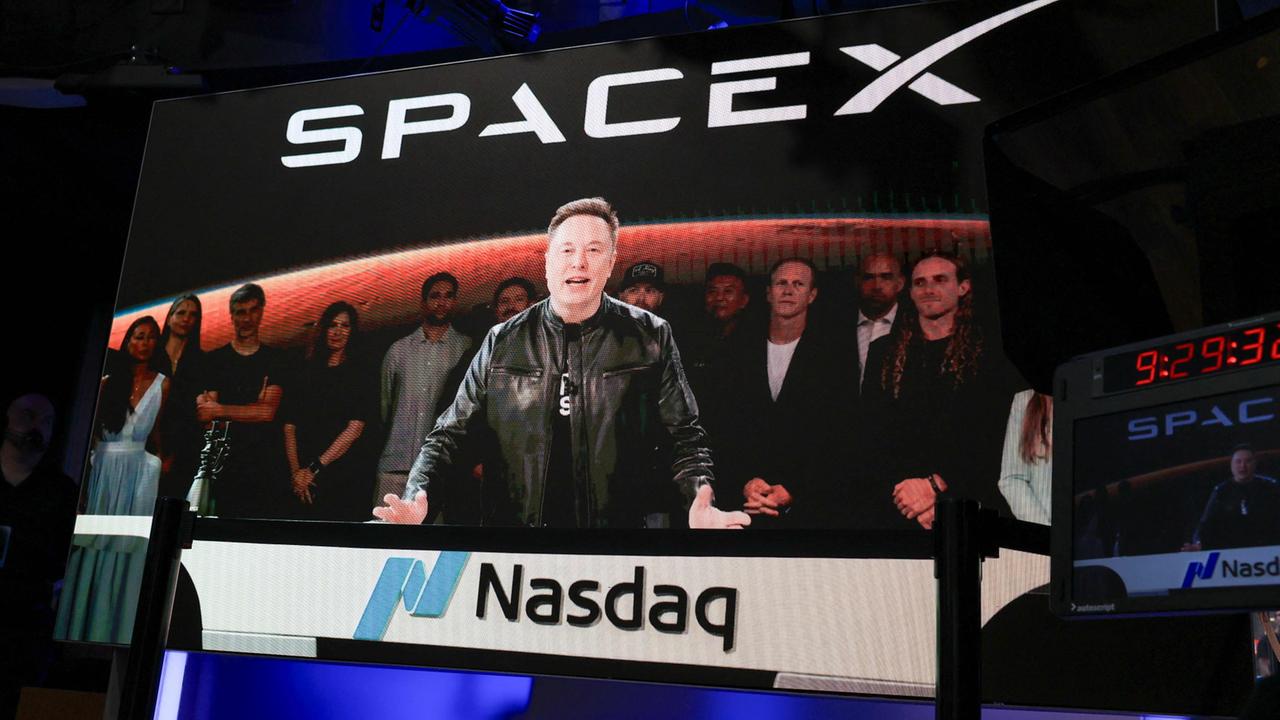
SpaceX, the aerospace manufacturer led by Elon Musk, maintains a private valuation exceeding $200 billion, yet the company continues to navigate complex financial challenges as it balances massive capital expenditure for its Starship program and Starlink satellite constellation. While speculation regarding a potential initial public offering (IPO) frequently surfaces in financial markets, the company has not filed a registration statement with the U.S. Securities and Exchange Commission, and leadership has consistently prioritized long-term operational autonomy over public equity markets.
The discrepancy between the company’s massive private-market valuation—which reached approximately $210 billion in a tender offer completed in June 2024—and its underlying operational costs remains a focal point for global investors. Unlike publicly traded aerospace competitors, SpaceX operates as a private entity, allowing it to absorb the significant research and development costs associated with reusable launch systems without the quarterly earnings pressure typical of the New York Stock Exchange or Nasdaq.
The Financial Reality Behind the Valuation
SpaceX’s valuation has surged primarily due to the rapid scaling of its Starlink satellite internet service and the technical milestones achieved by its Starship launch vehicle. According to Reuters, the company’s valuation reached $210 billion following a tender offer in mid-2024, reflecting investor confidence in its dominance of the commercial launch market. Despite this, the company’s capital-intensive nature means that liquidity remains tethered to private funding rounds and internal cash flow.

The company, officially incorporated as Space Exploration Technologies Corp., does not publicly disclose its profit-and-loss statements as a private firm. However, industry analysts often point to the high burn rate associated with the development of the Starship rocket, which is intended for lunar and Martian missions. Unlike traditional aerospace firms that rely on government cost-plus contracts, SpaceX’s business model depends on high-frequency launch cadences to achieve economies of scale, a strategy that requires consistent, massive capital deployment.
Why an IPO Remains Unlikely
Elon Musk has historically expressed skepticism regarding the benefits of taking SpaceX public. In various public forums, Musk has suggested that the fiduciary requirements of a public company could hinder the long-term, high-risk mission of colonizing Mars. For public companies, the U.S. Securities and Exchange Commission mandates rigorous quarterly reporting and disclosure requirements that would force SpaceX to reveal sensitive technical and operational data to competitors.

Furthermore, the volatility inherent in rocket development—where testing often results in vehicle loss—is frequently poorly received by public market investors focused on short-term stability. By remaining private, SpaceX retains the flexibility to pursue iterative design, where failures are treated as data-gathering exercises rather than catastrophic earnings misses. For investors seeking exposure to the space sector, the absence of a SpaceX IPO has driven interest toward alternative assets, including diversified space ETFs and publicly traded satellite operators.
Starlink as a Revenue Driver
The most significant pillar of the company’s valuation is Starlink, its low-Earth orbit satellite internet network. According to data tracked by Bloomberg, the service surpassed 3 million active subscribers globally as of May 2024. This growth provides the recurring revenue stream necessary to offset the costs of launching hundreds of satellites per year.

The integration of Starlink into the broader SpaceX ecosystem creates a unique business model: the company uses its own rockets to deploy its own infrastructure, effectively cutting out the launch costs that would otherwise be paid to third-party providers. This vertical integration is a primary reason for the company’s market dominance. However, the regulatory environment for satellite constellations remains in flux, with organizations like the Federal Communications Commission continuously updating guidelines regarding orbital debris and spectrum usage, which could impact future operational costs.
What Investors Should Monitor Next
While an immediate IPO is not on the horizon, stakeholders are monitoring several key indicators to assess the company’s financial trajectory. These include the success of upcoming Starship test flights, which are necessary to lower the cost-per-kilogram of payload delivery, and the continued expansion of the Starlink subscriber base in emerging markets.
The next major checkpoint for the industry will be the continued procurement of launch contracts by the U.S. Space Force and NASA. As SpaceX continues to secure high-value government contracts, the company’s financial stability will likely remain robust, even without the involvement of public shareholders. Investors interested in tracking the company’s progress can monitor official filings from the NASA Office of Inspector General and the U.S. Space Force, which provide regular updates on mission success and contract fulfillment.
The global space economy continues to evolve rapidly. We invite our readers to share their analysis on whether the private-market model is the superior path for aerospace innovation in the comments section below.
- Divorce, Mortgages, and Children: Legal Implications Explained
- Two Bodies Found in Arizona Backyard; Police Search for Missing Parents
- Why Museums Still Ban Your Camera Flash, Even Though It's Harmless (daybreakwire.com)
- California CPUC Rulemaking May Boost Behind-the-Meter Batteries and DERs (news-usa.today)