At least eight U.S. states have confirmed they will not participate in the “Great American State Fair,” a 16-day exhibition on the National Mall scheduled to begin on June 25, 2026. Officials from Connecticut, Illinois, Massachusetts, North Carolina, Maine, Oregon, Washington, and Pennsylvania have cited budget constraints and concerns regarding the event’s structure as primary reasons for their decision to opt out of the federal celebration, which is part of the broader “Freedom 250” initiative commemorating the nation’s upcoming 250th anniversary.
The federal task force organizing the event has maintained that every state and territory will still be represented in some capacity, whether through tourism boards, private sector partners, or cultural organizations. As the event approaches, the withdrawal of these state governments highlights a growing tension between federal planning for the semiquincentennial and the fiscal priorities of individual states.
The “Great American State Fair” was conceived as a central pillar of the administration’s plan to mark 250 years of American history. According to event organizers, the fair is designed to feature more than 150 exhibits intended to “showcase the very best of America.” However, the requirement for states to fund their own participation—including staffing and exhibit maintenance for the duration of the multi-week showcase—has emerged as a significant barrier for several state administrations.
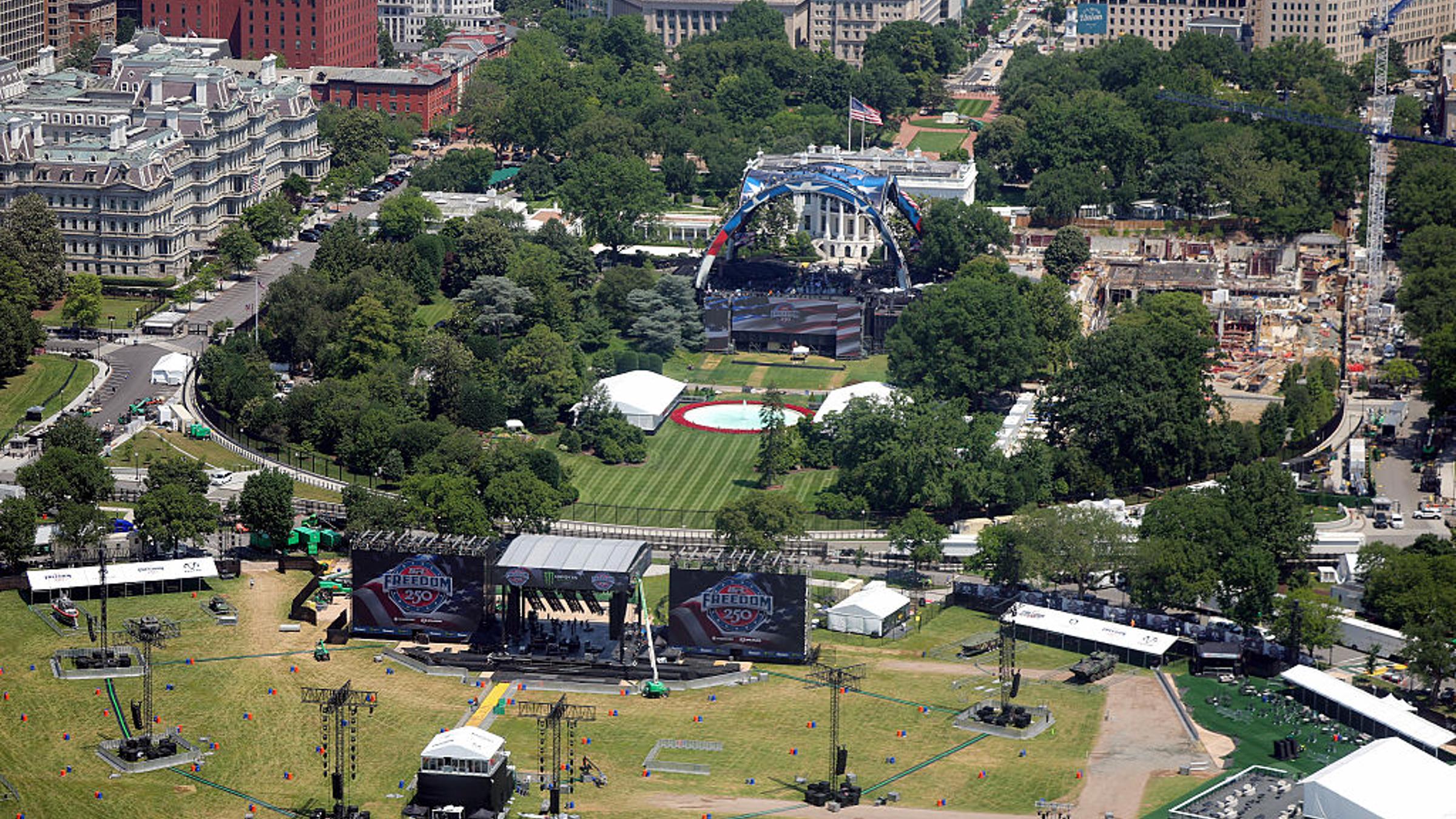
Preparations continue for the Ultimate Fighting Championship Freedom 250 event on the White House South Lawn on June 12, 2026 in Washington, DC. President Donald Trump is hosting a series of fighting matches on the South Lawn on Flag Day and his 80th birthday, June 14, which the White House is calling “a once-in-a-generation celebration of the American fighting spirit.” —(Photo by Kevin Dietsch/Getty Images)
Financial and Logistical Hurdles for Participating States
Budgetary concerns are the most frequently cited reason for non-participation among the states that have declined the invitation. For many, the cost of mounting a professional-grade exhibition in Washington, D.C., was deemed inconsistent with existing state fiscal planning. North Carolina, for instance, would have faced an estimated cost of $100,000 to maintain a presence on the National Mall. Michele Walker, a communications director for the state, stated that North Carolina decided early in the process that it lacked the capacity to participate, choosing instead to focus resources on local celebrations, including an event at the State Capitol in Raleigh on July 4.
Similarly, officials in Connecticut noted that the federal requirement for states to “foot the bill,” including the costs associated with staffing a multi-week exhibition, influenced their decision. Cathryn Vaulman, director of communications for Governor Ned Lamont, confirmed that the choice to decline participation was rooted strictly in resource management. This sentiment was echoed by other state offices that have opted to prioritize their own internal America 250 commissions and local programming.
Shifting Perceptions of Federal Anniversary Events
Beyond fiscal challenges, some states have expressed concern regarding the perceived partisan nature of the celebrations. Oregon Governor Tina Kotek’s office issued a statement through an ABC affiliate, noting that the state withdrew due to both the cost of participation and “growing concerns that the event in Washington, D.C. is shaping up to be a more partisan affair than originally presented.”

Massachusetts Governor Maura Healey, a vocal critic of the administration, has been particularly critical of the financial expectations placed on states. In a recent interview with Boston Public Radio, Healey described the request for taxpayer funding to support the federal fair as “ridiculous,” arguing that the administration is prioritizing a singular event that many states are choosing to bypass. While her office confirmed that Massachusetts would not be attending, it declined to provide further specific reasons for the withdrawal.
Alternative Representations for Withdrawn States
Despite the formal withdrawal of several state governments, organizers assert that the fair will still provide a comprehensive view of the country. In some instances, private or non-governmental entities are stepping in to fill the gap. Illinois serves as a notable example; while state officials confirmed to CNN they would not be participating, the Peoria Riverfront Museum is expected to represent the state at the fair.
The Illinois Department of Natural Resources clarified that no state funds were used to facilitate the museum’s participation, including travel, registration, or exhibit design. According to Natalie Boscia, vice president of PR for Enjoy Illinois, the state office of tourism was not involved in the selection of the museum as a representative entity, leaving the nature of that partnership under the purview of the federal Freedom 250 task force. This dynamic underscores a broader effort by organizers to ensure that all 56 states and territories maintain a physical presence on the Mall, regardless of the level of direct involvement from governors’ offices.
What Happens Next
As the June 25 opening date nears, the focus for many states has shifted entirely to local and regional commemorations. The America 250 commissions in states like Oregon and North Carolina continue to finalize plans for summer-long festivities that are independent of the federal events in the District of Columbia. For the federal task force, the challenge remains to finalize the remaining exhibits and manage the logistics of a 16-day event on the National Mall. Further updates regarding the final list of exhibitors and the full schedule of programming are expected to be released through official government channels as the launch date approaches.