
Creating a comprehensive peanut allergy emergency action plan is the most effective way to reduce uncertainty and delay when a child experiences a life-threatening allergic reaction. According to Dr. David A. Hill, a pediatric allergist and immunologist at Children’s Hospital of Philadelphia (CHOP), this written document serves as a vital tool for parents, teachers, school nurses, and caregivers to recognize symptoms and execute life-saving steps quickly. Because peanut allergies are unpredictable, experts emphasize that the plan must be a practical, regularly reviewed document that is shared with everyone in the child’s daily life.
The primary objective of an emergency action plan is to ensure that caregivers—regardless of their medical training—can identify the signs of anaphylaxis and administer epinephrine without hesitation. When a child is at risk of a severe reaction, having a clear, rehearsed strategy can prevent critical delays in treatment. Medical professionals, including Dr. Stanislaw J. Gabryszewski of the CHOP division of allergy and immunology, underscore that epinephrine is safe and effective, and should be used promptly if a reaction meets the criteria for anaphylaxis.
Essential Information for Your Child’s Medical Plan
An effective emergency action plan must be individualized to the child and kept easily accessible at all times. According to guidance from the Food Allergy Research & Education (FARE) organization, the plan should include a recent, clear photograph of the child to assist emergency responders. Beyond basic identification like the child’s full name, age, and weight, the document must list all known food allergies. Dr. Gabryszewski notes that while peanuts are a common trigger, children with allergies may also react to other proteins such as milk, soy, egg, wheat, tree nuts, fish, shellfish, or sesame.
The plan should also document any co-existing conditions, specifically asthma, which the Allergy and Asthma Foundation of America identifies as a significant risk factor for more severe anaphylactic reactions. Including the child’s doctor’s contact information and a detailed list of emergency contacts ensures that parents or guardians can be reached immediately. Because the plan is intended for use in high-stress moments, it should explicitly outline the child’s history of anaphylaxis and any specific symptoms they have exhibited during past reactions.
Recognizing Mild Versus Severe Allergic Symptoms
Understanding the difference between mild and severe symptoms is critical for timely intervention. A mild reaction typically involves only one system or organ, such as the skin or gut, and may manifest as a few isolated hives, mild nausea, an itchy mouth, or a runny nose. While these symptoms are uncomfortable, they are generally not life-threatening. However, as Dr. Hill emphasizes, a child who has only experienced mild symptoms in the past remains at risk for a severe, systemic reaction in the future.

Anaphylaxis, by contrast, is a medical emergency that can involve multiple body systems simultaneously. The Mayo Clinic defines anaphylaxis as a severe, potentially life-threatening reaction that can occur within seconds or minutes of exposure. Caregivers should be trained to look for indicators such as:
- Difficulty breathing, wheezing, or a repetitive cough
- Swelling of the lips, tongue, or throat
- Pale or bluish skin tone
- A sudden feeling of faintness, dizziness, or a weak pulse
- Widespread hives across the body
- Severe vomiting or diarrhea
- A sense of impending doom or confusion
If a child exhibits symptoms in two or more organ systems, or if they have trouble breathing or swallowing, the situation should be treated as anaphylaxis, even if blood pressure appears normal or the airway does not seem fully obstructed.
When and How to Administer Epinephrine
The most crucial instruction in any emergency action plan is the immediate use of epinephrine at the first sign of a severe reaction. According to the American Academy of Pediatrics, there is no substitute for epinephrine during an anaphylactic event. The emergency plan must clearly state the specific dose required for the child’s weight, the location of the medication, and instructions for use. Caregivers should be encouraged to practice with a trainer device so that they are comfortable with the administration mechanism, whether it is an autoinjector or a nasal spray.
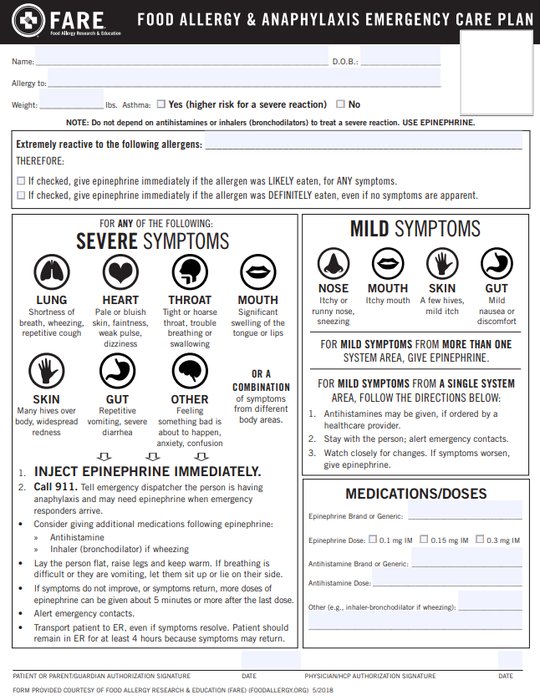
Dr. Gabryszewski advises that when in doubt, it is generally safer to use epinephrine than to wait for symptoms to worsen. The plan should also specify if a second dose of epinephrine may be required if symptoms persist or reappear before professional medical help arrives. Because the medication is designed to be used by non-medical personnel, the instructions must remain straightforward, focusing on the “when” and “how” without excessive technical jargon that could cause confusion during an emergency.
Steps to Take After Epinephrine Administration
Administering epinephrine is the first step in a larger medical response. Because anaphylactic symptoms can return or persist even after the initial dose of medication, the Cleveland Clinic confirms that the patient must receive further evaluation by medical professionals. The emergency action plan must explicitly instruct the caregiver to call 911 or the local equivalent for emergency services immediately after administering the epinephrine.
When calling for help, the caller should specifically inform the dispatcher that the child is experiencing anaphylaxis. This ensures that responding paramedics are prepared to provide advanced care, such as oxygen or additional cardiovascular support, upon arrival. After the immediate emergency is addressed, the child will likely need to be monitored in a clinical setting to ensure the reaction has fully resolved and that there is no secondary “biphasic” reaction, which is a return of symptoms after the initial episode has improved.
Families are encouraged to review their child’s action plan with school personnel, daycare providers, coaches, and extended family members annually or whenever the child’s medical status changes. For the most current templates and updates on allergy management, parents can consult the official resources provided by the Food Allergy Research & Education (FARE) organization. If you have questions about your child’s specific plan, discuss them with your pediatrician during your next scheduled appointment.
Related reading