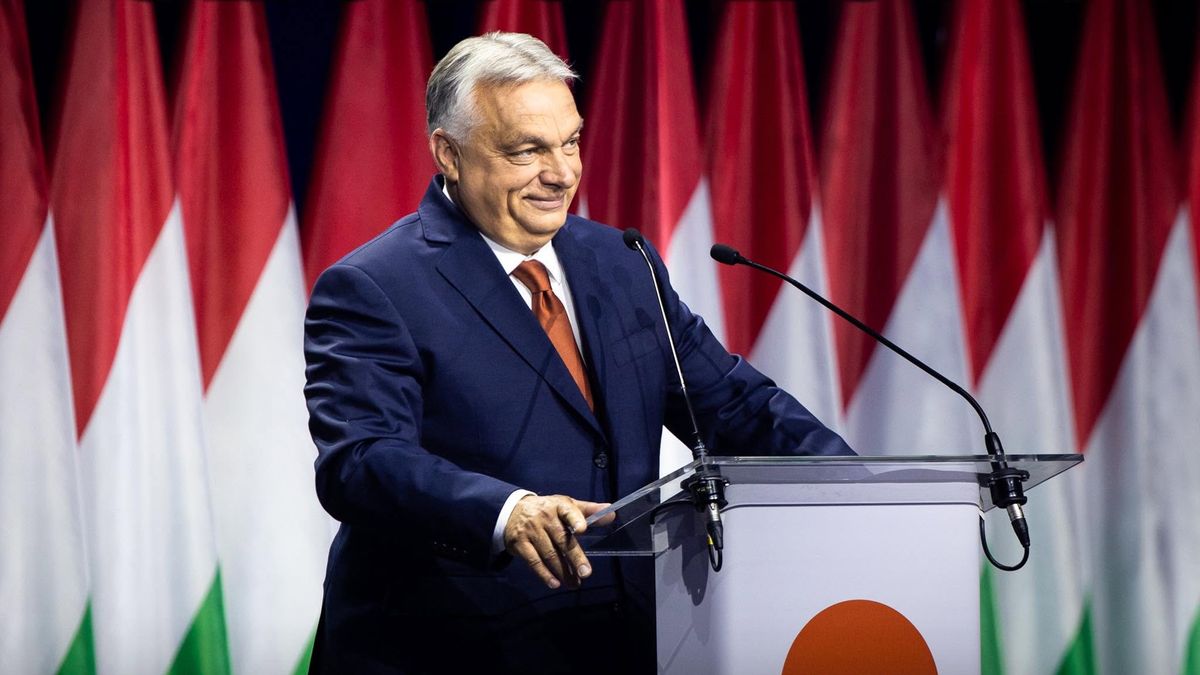
Viktor Orbán Re-elected as Fidesz Leader Amid Intensifying Rhetoric Against Brussels
Viktor Orbán has been re-elected as the leader of Hungary’s ruling Fidesz party, following a party congress where he signaled a continued defiance against the European Union. During his address to delegates, Orbán characterized the political struggle against EU interference as a fight for national sovereignty, warning that a failure to resist Brussels’ influence could result in a government directed from the European capital.
The re-election secures Orbán’s control over the Fidesz party apparatus, reinforcing his position as the dominant force in Hungarian politics. His victory comes at a time of heightened friction between Budapest and the European Commission, specifically regarding rule-of-law disputes and the freezing of EU funds. Orbán’s rhetoric centered on the idea that the current political trajectory must prevent the establishment of a “Brussels-led” administration in Hungary, which he framed as a threat to the country’s autonomy.
Fidesz Leadership Reaffirmed at Party Congress
The Fidesz congress served as a platform for Orbán to consolidate his mandate. According to reports from the event, the party leadership moved to re-elect Orbán to helm the organization, a move that signals stability for the ruling party’s internal structure. In his speech to the assembly, Orbán utilized highly defiant language, stating, “I will never give up,” as he addressed the challenges facing his administration.
The congress focused heavily on the concept of “national resistance.” Orbán argued that the party must undergo certain changes to remain effective, yet he maintained that his core leadership is essential to navigating the current geopolitical climate. The decision to retain his leadership reflects the party’s commitment to his “sovereignty-first” approach, which has become the cornerstone of Fidesz’s platform in both domestic and European elections.
The Rhetoric of Sovereignty and the Brussels Conflict
A central theme of Orbán’s recent political communications is the tension between Budapest and the European Union. Orbán has frequently warned that the EU is attempting to impose its will on member states through financial and legal pressure. He framed the political landscape as a choice between a sovereign Hungarian government and what he described as a “temporary” or “imposed” administration based on Brussels’ directives.

This rhetoric is tied to the ongoing dispute over the European Union’s rule-of-law mechanism. The European Commission has previously withheld billions of euros in cohesion funds from Hungary, citing concerns over judicial independence and anti-corruption measures. Orbán has countered these claims by asserting that the EU is using financial leverage to force political changes that undermine Hungary’s right to self-determination. This standoff has turned Hungary into a primary focal point for debates regarding the limits of EU authority over its member states.
The impact of this conflict extends beyond mere political posturing. The freezing of funds has direct implications for Hungary’s national budget and infrastructure projects. Analysts note that Orbán’s strategy is to turn these financial disputes into a domestic rallying cry, positioning Fidesz as the sole protector of Hungarian interests against “external” European bureaucrats.
Regional Tensions: Hungary and Slovakia
The political shifts within Hungary are also influencing relations with neighboring countries. Specifically, the rapport between Hungary and Slovakia has experienced significant strain. Political analysts, including Hungarian commentator Blažek, have noted that bilateral relations between the two nations are currently at a low point, suggesting that the political climate in the region is increasingly polarized.

The friction is largely driven by differing stances on regional security, migration, and the influence of the European Union. As Orbán strengthens his grip on Fidesz, his alignment with other nationalist movements in Central Europe may further complicate diplomatic efforts within the Visegrád Group (V4). The diverging political directions of Budapest and Bratislava highlight a growing fragmentation within the Central European bloc.
Comparison of Political Stances: Fidesz vs. European Union
The following table outlines the primary areas of disagreement between the Hungarian government and the European Union institutions.
| Issue | Fidesz/Orbán Position | European Union Position |
|---|---|---|
| Rule of Law | Claims EU interference undermines national sovereignty. | Mandates strict adherence to judicial independence standards. |
| EU Funding | Argues funds are being used as political blackmail. | States funds are withheld due to corruption and legal concerns. |
| Sovereignty | Prioritizes national policy over EU-wide directives. | Emphasizes the supremacy of EU law in shared competencies. |
| Migration | Advocates for strict border controls and rejection of quotas. | Promotes managed migration and solidarity mechanisms. |
What Happens Next for the Orbán Administration?
With his leadership reaffirmed, Orbán is expected to double down on his confrontational stance toward the European Commission. The immediate political focus will likely remain on the recovery of frozen EU funds and the upcoming legislative cycles in both Budapest and Brussels. The Fidesz party’s ability to maintain internal unity while navigating these external pressures will determine the stability of the Hungarian government in the coming months.
Observers will be watching for any shifts in how the Hungarian government engages with the European Parliament, particularly as new political coalitions form within the EU. The outcome of these diplomatic and legal battles will set a precedent for how much influence the European Union can exert over the domestic policies of its member states.
The next major milestone in this political trajectory will be the upcoming discussions within the European Council regarding the allocation of the Multiannual Financial Framework (MFF) and the specific conditions for Hungary’s fund release.
We invite you to share your thoughts on this developing story. How do you think the tension between Hungary and the EU will reshape European politics? Leave a comment below and share this article with your network.