
Garmin appears to be preparing for the release of a new wearable device, with recent regulatory filings suggesting the product may lack ANT+ connectivity, a standard feature for the manufacturer’s ecosystem. An official listing for an unnamed device has appeared on the IMDA Integrated Regulatory Information System in Singapore, a move that typically precedes a commercial launch. While the device is confirmed for Bluetooth compatibility, the absence of ANT+ support could signal a shift in Garmin’s strategy for its upcoming, rumored “Cirqa” fitness band, potentially narrowing its utility compared to the company’s existing watch lineup.
The potential omission of ANT+—a proprietary wireless protocol used by Garmin to sync data with heart rate monitors, cycling power meters, and gym equipment—is notable because it has long been a staple of the brand’s hardware identity. By contrast, competitors like the Fitbit Air and the Whoop Strap 5.0 do not utilize ANT+, relying instead on Bluetooth and internal sensors. If the Cirqa enters the market without this capability, it may face stiff competition from established screenless trackers that prioritize AI-driven insights over traditional peripheral connectivity.
The device’s certification status, while not explicitly naming the “Cirqa,” points to a product designed for the health and fitness market. As of this writing, Garmin has not issued a formal press release or product specification sheet confirming the device’s name or its final feature set. The regulatory filing provides a baseline for the product’s connectivity standards, but it does not account for software-based features or the full scope of the hardware’s internal sensors.
Garmin’s Competitive Landscape and AI Strategy
The wearable market for screenless trackers is currently dominated by devices that emphasize recovery metrics and artificial intelligence. Whoop has established a significant presence with its Whoop Coach, an AI-powered assistant that has undergone several iterations of refinement. Similarly, Google has integrated its Gemini AI model into the Fitbit ecosystem via the Google Health Coach, providing users with personalized wellness feedback.
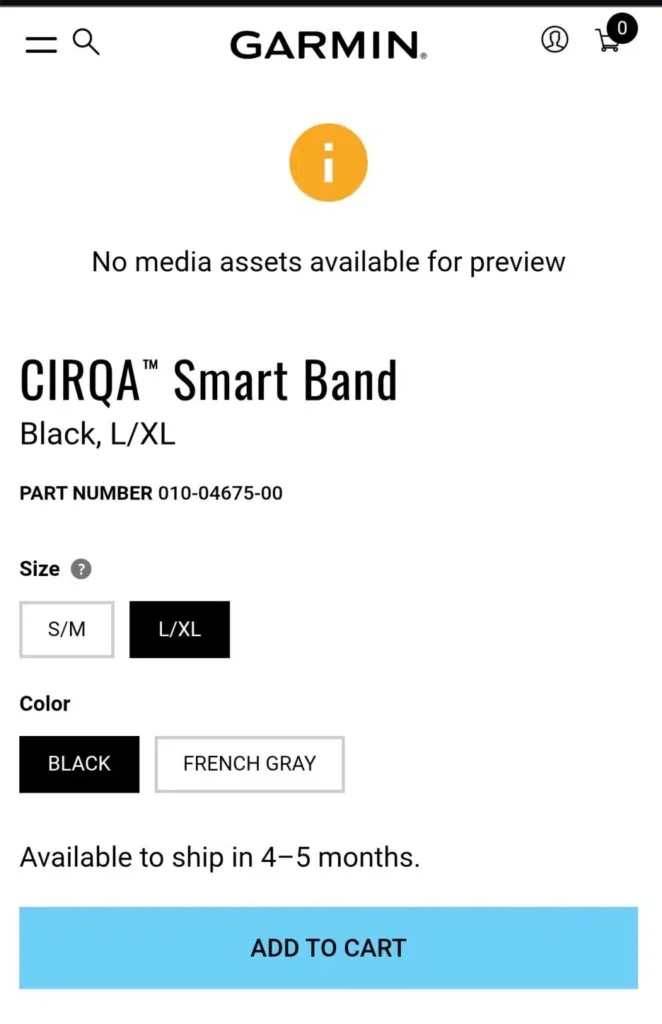
Garmin’s own approach centers on the Garmin Connect+ platform, which provides users with performance insights and health data. Although this service is relatively new—having launched roughly one year ago—it represents a central pillar of the company’s digital strategy. The rumored Cirqa is expected to function as a standalone health tracker, but reports suggest it is being engineered to complement existing Garmin watches, similar to how the Fitbit Air functions alongside the Pixel Watch.
The following figure illustrates the current focus of major fitness tracking brands:
Technical Specifications and Market Positioning
One of the primary questions surrounding the Cirqa is how it will justify its rumored pricing, which some industry analysts suggest could be significantly higher than competing products from Google. Without built-in GPS or ANT+ support, the value proposition for the device likely rests on its sensor accuracy and its integration with the broader Garmin ecosystem. Automated workout tracking—a feature that often requires manual input on current Garmin watches—is reportedly a key focus for this new hardware.
The reliance on Bluetooth as the sole connectivity protocol suggests a move toward a more simplified, consumer-friendly interface. However, for power users who depend on external sensors for training, the lack of ANT+ could be a significant deterrent. In the absence of an official announcement from Garmin, the exact feature set remains subject to change as the company nears a final production release.
What Happens Next
The IMDA certification serves as a primary indicator that the product has passed essential regulatory hurdles for distribution in the Singaporean market. While this is a critical step, it does not confirm a specific release date or regional availability. Consumers looking for official updates should monitor Garmin’s official newsroom for future product announcements and detailed technical specifications.
As the company prepares to pull back the curtain on its latest wearable, the industry will be watching to see how Garmin balances its legacy of high-performance technical features with the growing consumer demand for seamless, AI-integrated health tracking. We encourage readers to share their thoughts on the evolution of fitness wearables in the comments below.