
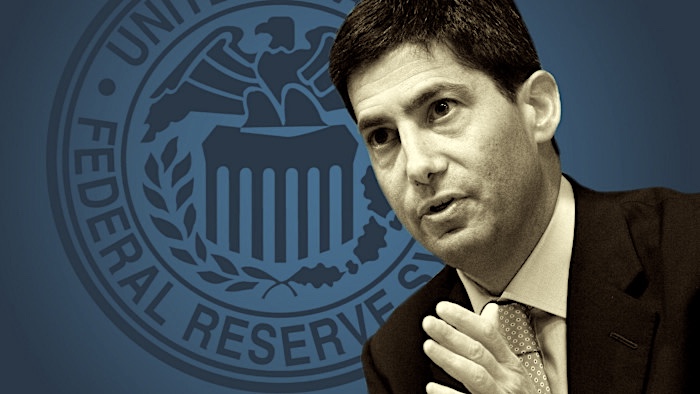
Kevin Warsh’s emergence as a central figure in U.S. economic policy marks a significant transition for global financial markets, as investors calibrate their expectations for the Federal Reserve’s upcoming interest rate decisions. The prospect of a leadership shift at the central bank has introduced a new layer of complexity for traders, particularly within the volatile cryptocurrency and foreign exchange sectors, where uncertainty regarding future monetary tightening remains high.
According to reports from the Federal Reserve, the institution is currently navigating a delicate balance between persistent inflationary pressures and the potential for a cooling labor market. As market participants analyze the implications of potential leadership changes, the focus has intensified on the independence of the Fed’s decision-making process, especially in light of ongoing public discourse regarding executive branch influence on monetary policy, as noted in recent financial reporting.
Monetary Policy and the Fed’s Independence
The Federal Reserve operates under a dual mandate to promote maximum employment and stable prices. Market analysts are closely monitoring how any new leadership might approach these objectives while maintaining the institution’s institutional autonomy. Concerns regarding the intersection of political pressure and central bank independence have become a focal point for institutional investors, who rely on the predictability of the Federal Open Market Committee (FOMC) to price risk across asset classes.

Recent data from the Bureau of Labor Statistics indicates that while inflation has decelerated from its 2022 peaks, it remains above the Fed’s 2% target. This environment forces the committee to weigh the risks of premature rate cuts against the potential for an economic slowdown. The market’s reaction to these signals has been reflected in the performance of global equity indices, which have experienced intermittent volatility as traders adjust their portfolios in anticipation of the next FOMC meeting.
Impact on Currency and Digital Asset Markets
The EUR/USD exchange rate has served as a primary barometer for global sentiment regarding U.S. monetary policy. As the dollar fluctuates based on interest rate differentials, the euro has faced technical resistance near its 20-day exponential moving average. Currency traders are currently prioritizing the “higher for longer” interest rate narrative, which tends to support the dollar, against the reality of slowing growth in the Eurozone.

Cryptocurrency markets, often viewed as a hedge against fiat currency debasement or a speculative play on liquidity, have reacted sharply to these macroeconomic shifts. Digital assets have historically shown high sensitivity to changes in the federal funds rate, as higher rates increase the opportunity cost of holding non-yielding assets. Investors are now watching to see if a shift in Fed leadership signals a more hawkish or dovish stance on liquidity, which would directly influence market capitalizations across the crypto ecosystem.
Evaluating Market Sentiment and Expectations
Financial analysts are contrasting current market expectations with historical precedents of leadership transitions at the Federal Reserve. Unlike periods of relative stability, the current environment is marked by high geopolitical tensions and fiscal policy uncertainty. According to analysis from Bloomberg Markets, the pause in the recent global equity rally underscores a broader “wait-and-see” approach among institutional fund managers.
The following table outlines the primary factors currently influencing market volatility:
| Factor | Market Impact |
|---|---|
| Interest Rate Projections | High volatility in bond yields and currency pairs. |
| Leadership Transition | Increased focus on central bank independence. |
| Inflation Data | Determines the pace of future FOMC adjustments. |
What Happens Next for Investors
The next critical checkpoint for global markets is the publication of the FOMC meeting minutes and the subsequent press conference, where the committee’s forward guidance will be scrutinized for any shifts in tone. Investors are advised to monitor official releases from the Federal Reserve Press Office for verified updates on interest rate policy and economic projections.
As the financial landscape continues to evolve, market participants remain focused on how the intersection of political rhetoric and data-dependent policy will shape the economic environment for the coming fiscal year. Readers are encouraged to share their perspectives on these developments in the comments section below and follow our ongoing coverage of global market trends.
- US and European Markets Rise on Middle East Peace Hopes and AI Optimism
- MC Mong Accused of Threatening Baekhyun and Representative Cha Over Gambling Debts
- Trump’s Former Lawyer Clears Key Hurdle for Attorney General Role (world-today-news.com)
- New Study Links GLP-1 Medications Like Wegovy and Ozempic to Health Risks (archyde.com)