
Anthropic, the artificial intelligence research company behind the Claude model series, is seeing a surge in business adoption even as it navigates increasing regulatory scrutiny from the Trump administration. Recent spend data from the corporate card and expense management platform Ramp indicates that despite public friction between the company and federal oversight bodies, enterprise clients continue to integrate Anthropic’s tools into their daily operations at a rapid pace.
This trend suggests that corporate demand for sophisticated large language models may be decoupling from the political headwinds facing the AI sector. While Anthropic has frequently found itself in the spotlight regarding safety standards and government compliance, the practical utility of its software for tasks like data analysis, coding, and automated documentation appears to outweigh these external pressures for many commercial users.
The current landscape for AI firms involves a complex web of executive orders and policy mandates. In October 2023, the Biden-Harris administration issued an Executive Order on the Safe, Secure, and Trustworthy Development and Use of Artificial Intelligence, which established new standards for AI safety and security. Since taking office, the Trump administration has signaled a shift in approach, with various officials expressing intentions to revisit or rescind parts of that regulatory framework to foster a more permissive environment for domestic tech innovation, as noted in recent reporting by Reuters regarding the administration’s stated policy goals.
Commercial Adoption Trends in the Face of Regulation
For organizations, the primary driver for adopting Claude remains its performance in complex reasoning and its safety-focused architecture. Data processed through platforms like Ramp, which tracks corporate spending across thousands of businesses, highlights that spending on AI services remains a priority for IT budgets. According to industry analyses of software spending, companies are increasingly diversifying their AI providers rather than relying on a single vendor, a move that benefits Anthropic as it competes for market share against OpenAI and Google.

The friction between the AI industry and the government often centers on the “compute” threshold—the amount of processing power used to train models—and the subsequent reporting requirements mandated by the Department of Commerce. Under the Defense Production Act, companies are required to disclose safety test results to the government for models that exceed a certain level of training power. Anthropic has consistently maintained that it supports safety guardrails, positioning itself as a “safety-first” organization, which has historically helped it build trust with enterprise clients concerned about data privacy and hallucination risks.
Why Enterprise Clients Prioritize Stability
For a Chief Information Officer or a software lead, the choice of an AI provider is rarely driven by headlines, but rather by reliability and integration capability. Anthropic’s focus on long-context windows—the ability for the model to “read” and “remember” massive amounts of data in a single session—has been a major differentiator. When businesses evaluate vendors, they look for uptime, API stability, and compliance with existing data governance policies.
The “beef” with the government, as characterized by some observers, typically involves debates over open-source vs. closed-source models and the potential for regulatory capture. However, for a mid-sized enterprise using Claude to automate customer support or internal knowledge management, these high-level political debates are secondary to the model’s ability to reduce labor hours. As of early 2025, firms in the professional services and legal sectors continue to report that the specific nuance of the Claude 3.5 Sonnet model provides a competitive advantage in document synthesis, according to official company updates on their product roadmap.
What Happens Next for AI Policy
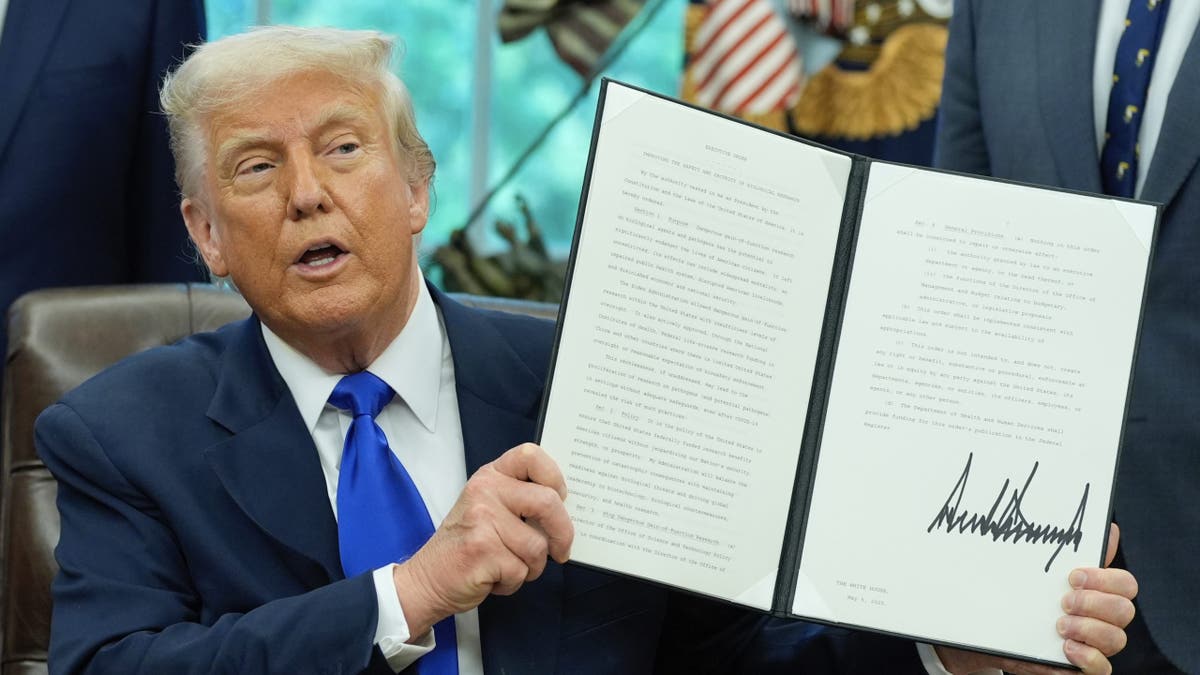
The regulatory environment remains in a state of transition. The Trump administration’s stated intent to roll back the 2023 executive order is expected to culminate in new guidance for federal agencies later this year. According to the White House official records, any changes to existing AI policy will be coordinated through the Office of Science and Technology Policy, which continues to monitor the development of frontier models.
For Anthropic, the path forward involves balancing its commitment to “Constitutional AI”—an approach where models are trained to follow a set of human-defined principles—with the need to remain competitive in a rapidly evolving market. Whether the potential deregulation will lead to a surge in even more powerful models or a period of consolidation remains to be seen. Industry observers are looking toward the next quarterly earnings reports and government filings from the major AI labs to see if the recent growth in business adoption persists throughout the fiscal year.
Readers interested in the latest developments regarding federal AI compliance and industry standards can monitor the National Institute of Standards and Technology (NIST) AI Resource Center for updates on safety frameworks. We invite our readers to share their experiences with enterprise AI adoption in the comments below.