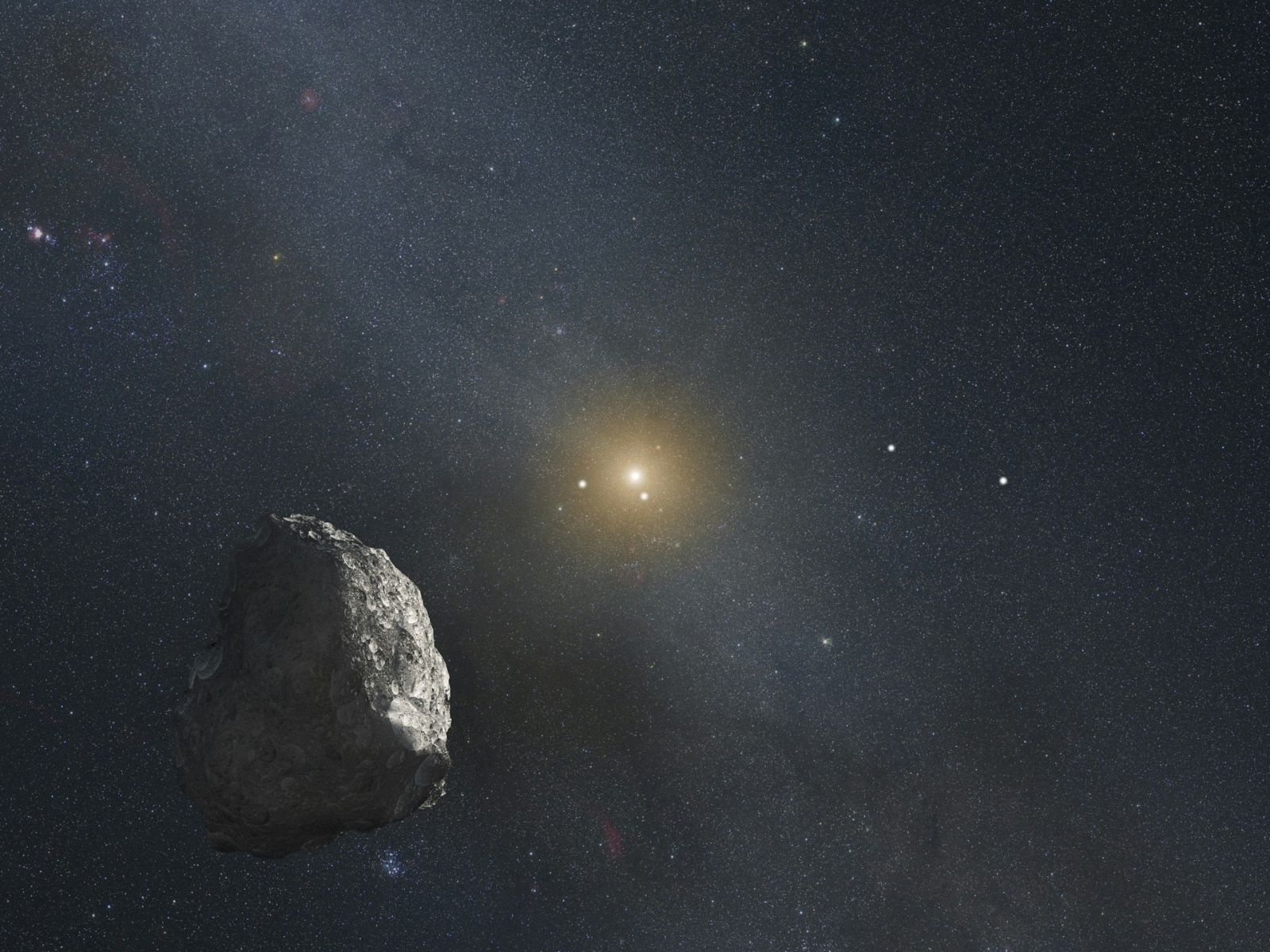
A strangely shaped asteroid has captured the attention of astronomers across the globe, revealing complex geological features that challenge conventional models of solar system formation. According to recent astronomical observations and research data, the peculiar celestial body exhibits an irregular morphology and distinct surface characteristics that set it apart from typical near-Earth objects. Researchers utilizing advanced ground-based telescopes and radar facilities are working to map its precise dimensions and rotation rate.
The discovery highlights the ongoing challenges scientists face when attempting to categorize the vast population of minor planets and debris inhabiting our solar system. While standard asteroid models often assume relatively uniform gravitational settling or simple spherical shapes shaped by hydrostatic equilibrium, this newly scrutinized object demonstrates that chaotic collisions and gravitational tidal forces can produce deeply asymmetric structures. Planetary scientists emphasize that understanding these anomalies provides critical windows into the early dynamical history of the planetary disk.
Detailed lightcurve analyses and radar imaging campaigns are currently underway to determine whether the object is a contact binary—two distinct bodies fused together by a gentle collision—or a monolith carved out by repeated impacts. The investigation involves international observation networks sharing astrometric data to refine the object’s orbit and assess its long-term trajectory. As data collection continues, researchers are comparing the thermal inertia and albedo of this anomalous rock with other known populations in the main belt and near-Earth space.
Observational Methods and Radar Imaging
To decode the structural peculiarities of the asteroid, astronomers rely on a combination of optical photometry and planetary radar systems. Facilities such as the Goldstone Solar System Radar and international radio telescope arrays transmit powerful microwave signals toward the target, measuring the precise echo delay and Doppler frequency shift. This technique allows researchers to construct three-dimensional shape models without requiring a dedicated spacecraft flyby.
Initial radar echoes indicate significant surface roughness and abrupt topographic variations, including potential cliff faces and deep depressions. These features suggest that the asteroid’s internal strength must be sufficient to support steep slopes without collapsing under its own weak gravity. Furthermore, spectroscopic observations aim to determine the compositional taxonomy of the body, distinguishing between carbonaceous, silicate-rich, or metallic mineral assemblages that could explain its unusual resistance to tidal disruption.
Implications for Solar System Evolution
The presence of deeply irregular asteroids serves as a physical archive of the violent collisional history that characterized the formation of the inner and outer solar system over four billion years ago. By examining how these shapes endure over astronomical timescales, dynamicists can model the collisional cascade that grinds larger planetesimals down into dust and smaller meteoroids.
Researchers note that studying such outliers helps refine hazard assessment frameworks for near-Earth objects. Understanding the internal density distribution and structural cohesion of oddly shaped bodies is vital if space agencies ever need to design deflection missions that rely on kinetic impactors. A structurally fractured or loosely bound contact binary reacts very differently to an external impact compared to a solid monolithic rock.
Next Steps in Asteroid Tracking
Astronomers will continue monitoring the asteroid during its upcoming orbital perihelion passage, when increased solar illumination provides better conditions for optical spectroscopy and thermal infrared measurements. Official orbital updates and astrometric data are published through the Minor Planet Center, allowing the global scientific community to contribute further observations and refine dynamical models.
We welcome your thoughts on this discovery. Please share your comments below or join the discussion on social media.