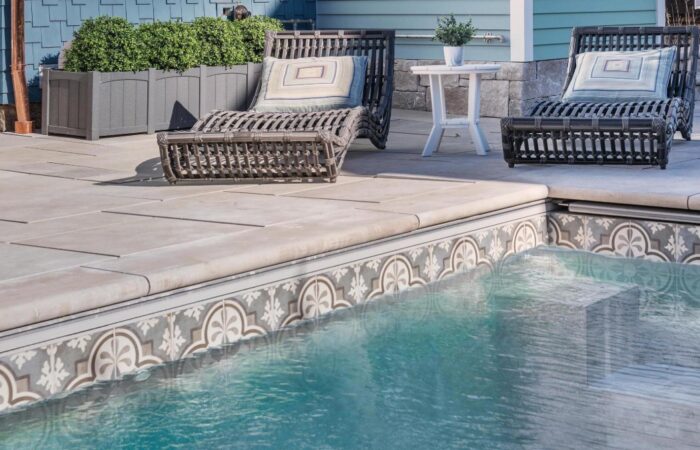
For homeowners in Mercer County, New Jersey, maintaining a swimming pool requires attention to more than just water chemistry and filtration systems. Pool coping repair and replacement serves as a critical maintenance task for preserving the structural integrity of the pool shell, preventing water infiltration, and ensuring user safety. According to the New Jersey Pool Managers Association, neglect of the edge materials surrounding a pool can lead to significant long-term costs, as the coping acts as the primary barrier between the deck and the pool structure.
The coping, which refers to the material that caps the edge of a swimming pool, is subjected to constant environmental stress in the Northeast, including freeze-thaw cycles that characterize Mercer County winters. As noted by the Association of Pool & Spa Professionals, these temperature fluctuations can cause stone, brick, or concrete coping to shift, crack, or pull away from the pool beam. When these gaps form, water can seep behind the shell, leading to erosion of the soil foundation and potential damage to the pool’s plumbing or structural integrity.
Understanding the Role of Pool Coping
Beyond its aesthetic contribution to a backyard landscape, pool coping performs a vital engineering function. It locks the liner or the interior finish of the pool in place and provides a finished edge for swimmers to grip. When the coping is compromised—manifesting as loose stones, crumbling mortar, or sharp, uneven edges—it creates a direct safety hazard, potentially leading to injuries. Furthermore, as reported by the New Jersey Department of Community Affairs regarding residential property safety, maintaining the structural components of a pool is often a requirement for homeowners’ insurance compliance and liability mitigation.

Homeowners often face a choice between localized repair and full replacement. Localized repair involves replacing individual broken stones or re-pointing mortar joints, which can be an effective short-term fix if the underlying structure remains sound. However, if the coping is severely degraded or the pool shell has shifted significantly, full replacement is generally recommended by industry professionals to ensure a long-term watertight seal.
Signs Your Pool Needs Attention
Identifying the need for professional intervention early can prevent more expensive repairs down the road. Property owners should monitor their pool perimeter for several specific warning signs:
- Visible cracks or voids: Any separation between the coping and the pool beam or the pool deck suggests that moisture is entering the structure.
- Loose or shifting stones: If coping stones move under pressure, the mortar bed has likely failed, which can lead to larger structural shifts.
- Efflorescence: The appearance of a white, powdery substance on the coping or adjacent deck indicates that water is leaching minerals from the mortar or concrete, signaling an ongoing moisture issue.
- Spalling or crumbling: Surface degradation of concrete coping often indicates that the material has reached the end of its functional lifespan.
Selecting Materials for the Mercer County Climate
When replacing coping in New Jersey, climate resilience is a primary consideration. The USDA Natural Resources Conservation Service highlights that regional soil composition and extreme seasonal temperature shifts require materials that can handle expansion and contraction. Common choices include natural stone, such as bluestone or travertine, and pre-cast concrete pavers.

Natural stone offers durability and aesthetic appeal but requires periodic sealing to prevent water absorption. Pre-cast concrete provides a more uniform look and can be engineered with non-slip surfaces, which are essential for safety in high-traffic areas. Homeowners are encouraged to consult with licensed contractors who are familiar with local building codes, as specific safety standards for pool decks and edges are enforced at the municipal level throughout Mercer County.
Next Steps for Property Maintenance
For those planning maintenance, the next recommended step is to schedule an inspection with a certified pool contractor. It is advisable to obtain at least three estimates and verify that the contractor holds the necessary licenses required by the State of New Jersey for home improvement work. Homeowners can verify contractor credentials through the New Jersey Division of Consumer Affairs database to ensure they are working with a registered professional.
As the swimming season approaches, addressing these structural concerns now can prevent mid-summer disruptions. If you have experience with pool renovations or have questions about local maintenance standards, please share your thoughts or inquiries in the comments section below.
Worth a look