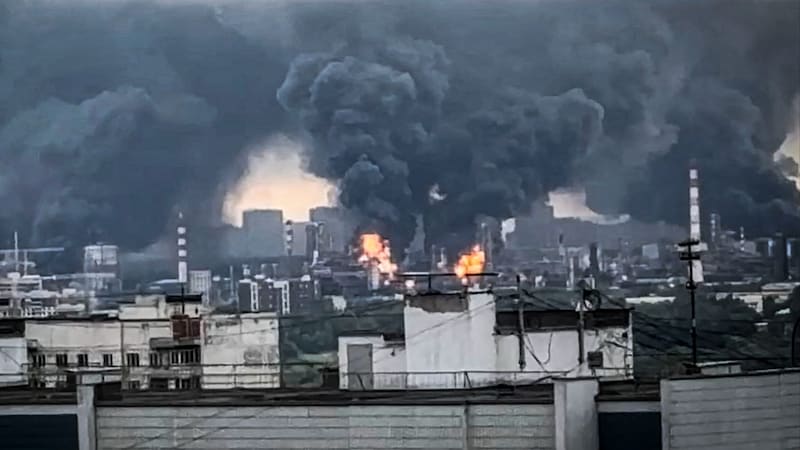
Ukrainian long-range drones targeted an oil refinery near Moscow on Wednesday, marking one of the deepest strikes into Russian territory since the conflict began in February 2022. Regional officials reported that air defense systems intercepted the incoming unmanned aerial vehicles, though local accounts of fire and debris underscore the ongoing vulnerability of critical energy infrastructure located within the Moscow region.
The strike on the facility, located in the Moscow Oblast, follows a pattern of escalating drone operations aimed at degrading the Russian Federation’s industrial capacity. According to Reuters, Russian air defense units destroyed multiple drones during the early morning hours, preventing a direct hit on the primary processing units of the refinery. While local authorities initially reported no casualties, the incident forced temporary operational adjustments at the site, which remains a key component of the region’s fuel supply chain.
Strategic Context of Energy Infrastructure Strikes
The targeting of oil refineries is a calculated component of Ukraine’s broader military strategy to limit Russia’s ability to fuel its military operations. By striking facilities deep behind the front lines, Kyiv aims to disrupt the logistics of the Russian war effort and decrease the export revenue that sustains the state budget. As reported by the Financial Times, such operations have successfully reduced Russian refinery throughput by several percentage points throughout 2024, forcing the Kremlin to implement temporary bans on gasoline exports to stabilize domestic prices.
These strikes are increasingly utilizing indigenous drone technology. Unlike earlier phases of the conflict where Ukraine relied heavily on Western-supplied munitions, recent operations feature locally manufactured, long-range, fixed-wing drones. These systems are designed to bypass sophisticated electronic warfare environments, such as those protecting the Russian capital. The Radio Free Europe/Radio Liberty analysis indicates that the ability to reach Moscow-region targets demonstrates a significant leap in the operational range and navigation capabilities of the Ukrainian drone fleet.
Regional Impact and Public Response
Residents in the Moscow suburbs reported hearing explosions and observing smoke near the facility shortly after 3:00 a.m. local time. While the Russian Ministry of Defense stated that all drones were neutralized, the governor of the Moscow region, Andrei Vorobyov, acknowledged that debris caused localized damage to surrounding infrastructure. Emergency services were deployed to the site to contain potential fires, a standard procedure for industrial sites targeted during the ongoing conflict.

The persistence of these attacks has changed the perception of safety in central Russia. For much of the war’s duration, the capital region was largely insulated from the physical impacts of the conflict. However, the increased frequency of drone incursions in 2024 has led to more frequent closures of Moscow’s major airports, including Sheremetyevo and Domodedovo, as a precaution against potential civilian aviation risks. The Moscow Times has documented dozens of instances where air traffic was suspended for safety, causing significant delays for domestic and international travelers.
Future Escalations and Monitoring
The primary question remains how the Russian military will adapt its defensive posture to protect high-value industrial targets. Currently, Russian officials are increasing the density of short-range air defense systems, such as the Pantsir-S1, around key refineries. However, the sheer size of the Russian Federation makes it difficult to provide comprehensive coverage for every critical asset. Experts suggest that as Ukraine continues to refine its drone swarm tactics, the burden on Russian air defense resources will only grow.
The next major checkpoint in this development will be the release of updated satellite imagery and monthly production figures from the Russian energy sector. These data points are expected to clarify the extent of the damage to the refinery’s secondary processing units. Readers interested in the latest developments regarding energy market stability and regional security updates can monitor the official statements provided by the International Energy Agency regarding global fuel supply chains and regional impacts.
We will continue to provide updates as more verified information becomes available from the site. Please share your thoughts in the comments section below and consider subscribing for our daily intelligence briefing on global affairs.
Worth a look