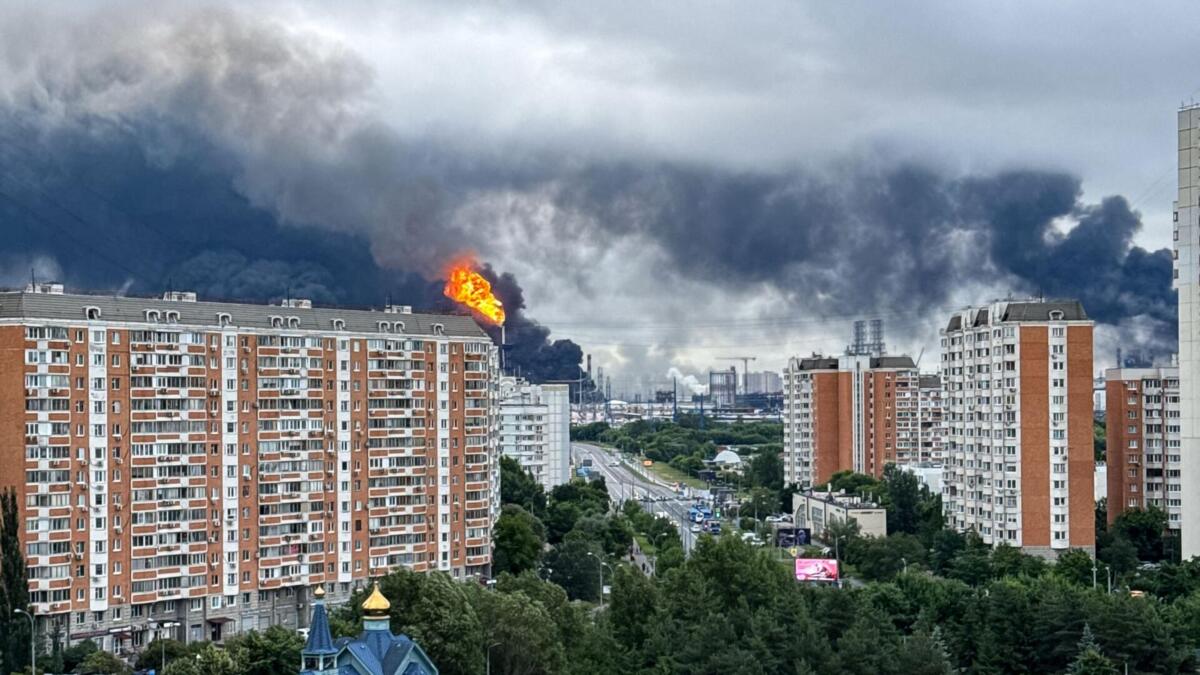
Ukrainian forces launched a series of long-range drone strikes targeting Moscow and surrounding regions, marking a significant escalation in aerial hostilities. According to reports from the Russian Ministry of Defense, air defense systems intercepted dozens of unmanned aerial vehicles (UAVs) across several provinces, including the Moscow region, during the early hours of the operation. The strikes represent one of the largest coordinated drone efforts directed at the Russian capital since the start of the full-scale conflict in February 2022, as confirmed by statements from regional governors and military officials.
The strategic objective behind these recent incursions appears to be the disruption of critical energy infrastructure and logistics. Independent reporting and official statements from both sides indicate that the campaign has increasingly focused on oil refineries and storage facilities deep within Russian territory. While the Kremlin maintains that the majority of these drones were neutralized, the scale of the deployment signals a shift in tactical capabilities, forcing Russian authorities to reassess the vulnerability of their domestic energy sector to long-range asymmetric warfare.
Strategic Impact on Russian Energy Infrastructure
The primary focus of recent Ukrainian drone activity has been the Russian oil refining industry. Analysts note that these strikes are not merely symbolic but are designed to create tangible economic pressure by targeting the supply chain of refined petroleum products. According to data provided by the Reuters news agency, consistent attacks on refineries have forced Russia to increase imports of gasoline from neighboring Belarus to mitigate potential domestic shortages. This reliance on external fuel sources highlights the sensitivity of the Russian economy to targeted sabotage of its industrial backbone.
The geographical reach of these drones has expanded significantly, with incidents reported hundreds of kilometers from the Ukrainian border. By forcing the Russian military to divert air defense assets away from the front lines to protect internal industrial sites, Ukraine is effectively stretching the defensive capacity of the Russian Federation. This dynamic creates a multi-front challenge for the Kremlin, which must balance the defense of its borders with the protection of vital domestic infrastructure that sustains its war economy.
Geopolitical Context and International Support
The intensification of drone strikes coincides with critical diplomatic efforts by Ukrainian President Volodymyr Zelenskyy to secure sustained Western military and financial assistance. During recent summits, including discussions involving G7 leaders, the focus has remained on providing Ukraine with the necessary air defense systems and long-range capabilities to protect its own cities while maintaining pressure on Russian logistical hubs. As reported by the Financial Times, the ongoing conflict has reached a stage where both nations are heavily invested in the “war of attrition,” with neither side showing signs of de-escalation as the summer season begins.
The broader international community remains divided on the use of long-range weapons against targets within internationally recognized Russian borders. While Kyiv asserts that these strikes are a necessary response to the ongoing bombardment of Ukrainian civilian infrastructure, some Western allies have expressed caution regarding the potential for escalation. Despite these concerns, the operational tempo of the drone campaign remains high, with Ukraine continuing to develop its own domestic UAV technology to bypass reliance on foreign-supplied munitions, a development monitored closely by global intelligence agencies.
Operational Challenges for Air Defense
Moscow’s defensive response relies on a layered network of surface-to-air missile systems, including the S-400 Triumf and the Pantsir-S1, which are tasked with intercepting low-flying, slow-moving targets. However, the sheer volume of drones used in recent “swarms” has tested the limits of these systems. Military experts cited by the BBC have pointed out that drones are significantly cheaper to produce than the interceptor missiles required to destroy them, creating an unfavorable cost-benefit ratio for the Russian defense budget.
The persistence of these attacks suggests that Ukraine has successfully integrated intelligence-gathering with rapid drone deployment. By utilizing satellite imagery and local reconnaissance to identify gaps in Russian radar coverage, Ukrainian operators have managed to strike high-value targets with increasing frequency. The inability of the Russian military to entirely prevent these incursions has led to heightened security protocols in Moscow, including the temporary suspension of flights at major international airports during periods of high alert, as documented by local aviation authorities.
Future Outlook and Civilian Toll
As the conflict enters its third year, the human impact remains the most pressing concern for the international community. While the drone strikes on Moscow are primarily aimed at industrial and military targets, the ongoing Russian bombardment of Ukrainian cities continues to result in significant civilian casualties and the destruction of residential areas. The cycle of retaliation underscores the volatility of the current situation, with both governments signaling that they view these aerial campaigns as vital components of their broader strategic goals.
The next major checkpoint in this conflict will likely involve the implementation of new international sanctions or military aid packages discussed at upcoming diplomatic forums. Observers are also waiting for the next quarterly report from the International Energy Agency regarding the stability of the global oil market, which may provide further insight into the long-term effectiveness of the strikes on Russian refinery output. Readers are encouraged to monitor updates from official government portals and verified international news outlets for the latest developments regarding regional security and humanitarian aid efforts.
Related reading