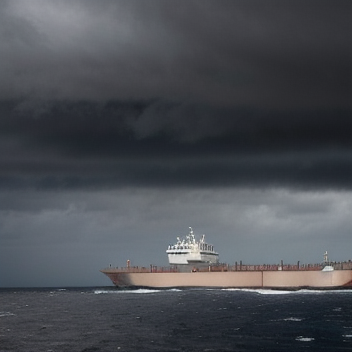
The UK government’s strategy to disrupt the Russian “shadow fleet” through blacklisting and sanctions faces significant logistical hurdles, as the vast number of vessels operating outside Western insurance and regulatory frameworks makes physical seizure nearly impossible. While the UK and its G7 allies have increased the number of sanctioned vessels and entities, the sheer scale of the maritime network used to bypass the $60-per-barrel oil price cap remains a primary challenge for international enforcement.
The “shadow fleet”—a collection of aging tankers with opaque ownership and minimal insurance—has become the primary mechanism for Russia to export crude oil above the price limits set by the G7 and the European Union. According to maritime analysts and recent reports from Reuters, these vessels operate by utilizing non-Western insurance providers and “flags of convenience” to avoid the regulatory oversight that typically governs international shipping.
While the UK has expanded its list of sanctioned ships, the gap between regulatory blacklisting and the physical seizure of assets remains wide. Experts suggest that while blacklisting makes it difficult for these tankers to access Western ports or services, it does little to stop the actual movement of oil in international waters, where jurisdiction is often murky.
How does the Russian shadow fleet bypass sanctions?
The Russian shadow fleet functions by decoupling oil shipments from the Western financial and maritime infrastructure. Under the G7 price cap agreement, services such as maritime insurance, financing, and shipping are only permitted if the oil is sold at or below $60 per barrel. To circumvent this, shadow fleet operators utilize several specific tactics:
- Opaque Ownership: Ships are often registered to shell companies in jurisdictions with minimal transparency, making it difficult for authorities to identify the ultimate beneficial owner.
- Non-Western Insurance: Instead of using International Group of P&I Clubs (Protection and Indemnity), which provide the bulk of global maritime insurance, these vessels often rely on state-backed or unregulated insurers.
- Ship-to-Ship (STS) Transfers: Tankers frequently transfer oil between vessels in the open ocean, often in high-risk areas, to mask the origin of the cargo and break the audit trail.
- Flag Hopping: Vessels frequently change their registration (flagging) to countries that do not strictly enforce G7 sanctions.
This decentralized approach creates a “whack-a-mole” scenario for regulators. When one vessel or shipping company is added to a sanctions list, the network often reorganizes under a new corporate identity almost immediately.
Why are physical seizures of tankers so rare?
The difficulty in seizing a tanker lies in the intersection of international law and maritime geography. Unlike land-based assets, a ship is a mobile entity that moves through various legal jurisdictions. Most shadow fleet activity occurs in international waters, where no single nation has the authority to board or seize a vessel without specific legal grounds or the consent of the flag state.
Furthermore, the legal process required to move from a sanction to a physical seizure is immense. For the UK to seize a vessel, it must prove that the ship is directly involved in violating specific sanctions laws, a task complicated by the complex layers of shell companies used by Russian operators. Even when a vessel is blacklisted, it can often continue to sail as long as it avoids ports and services governed by the sanctioning authorities.
The discrepancy between the number of vessels targeted by sanctions and the number of vessels actually intercepted highlights the limits of maritime enforcement. While regulators can effectively “blacklist” hundreds of ships—rendering them uninsurable and unwelcome in major ports—the physical interception of a moving tanker in the middle of the ocean remains a rare and high-risk operation.
Sanctions vs. Seizures: Understanding the difference
To understand the current geopolitical struggle, it is necessary to distinguish between the two primary tools used by the UK and G7 allies. One is a regulatory barrier, while the other is a physical enforcement action.
| Feature | Sanctions (Blacklisting) | Physical Seizure |
|---|---|---|
| Primary Goal | Economic isolation and restriction of services. | Direct removal of the asset from operation. |
| Mechanism | Prohibiting Western insurance, banking, and port access. | Legal confiscation of the vessel by law enforcement. |
| Difficulty | Relatively high (requires constant updating of lists). | Extremely high (requires jurisdiction and physical presence). |
| Immediate Impact | Increases operating costs and reduces market access. | Removes the specific vessel from the global supply. |
What are the consequences of UK maritime blacklisting?
While blacklisting may not result in the immediate physical capture of a ship, the economic repercussions are significant. When the UK’s Office of Financial Sanctions Implementation (OFSI) adds a vessel to its list, that ship becomes a “pariah” in the legitimate maritime economy. This has several cascading effects:

First, it limits the vessel’s ability to secure reputable insurance. Without P&I coverage, many major ports will refuse entry to the vessel due to the environmental and liability risks. Second, it restricts the vessel’s access to the global banking system. Most international transactions for fuel, crew wages, and maintenance are conducted in major currencies like the US dollar or the Euro; sanctioning a vessel often triggers automatic freezes by banks to avoid secondary sanctions.
However, these measures also drive the shadow fleet further into the margins. As more vessels are blacklisted, the “shadow” network becomes more insulated from Western influence, relying more heavily on non-Western technology, non-Western insurance, and non-Western financial systems. This creates a bifurcated global shipping market: one highly regulated and transparent, and another opaque and high-risk.
What is the future of G7 oil enforcement?
The effectiveness of the oil price cap depends on the continued cooperation of the G7 nations and the ability of maritime authorities to close loopholes in ship-to-ship transfers and ownership transparency. Current efforts are shifting toward more sophisticated data analytics to track vessel movements and identify suspicious patterns in real-time.
The UK and the US have indicated that they will continue to target the “enablers” of the shadow fleet—the shipbrokers, insurers, and management companies that facilitate these voyages. By targeting the service providers rather than just the individual ships, authorities hope to make the shadow fleet’s operations too expensive and too risky to maintain.
The next major checkpoint for these enforcement efforts will be the periodic reviews of the price cap mechanisms by the G7, where member states will assess the impact of current sanctions and decide whether to tighten restrictions or expand the list of sanctioned entities.
What are your thoughts on the effectiveness of maritime sanctions? Do you believe regulatory blacklisting is enough to curb the shadow fleet? Let us know in the comments below and share this article with your network.