
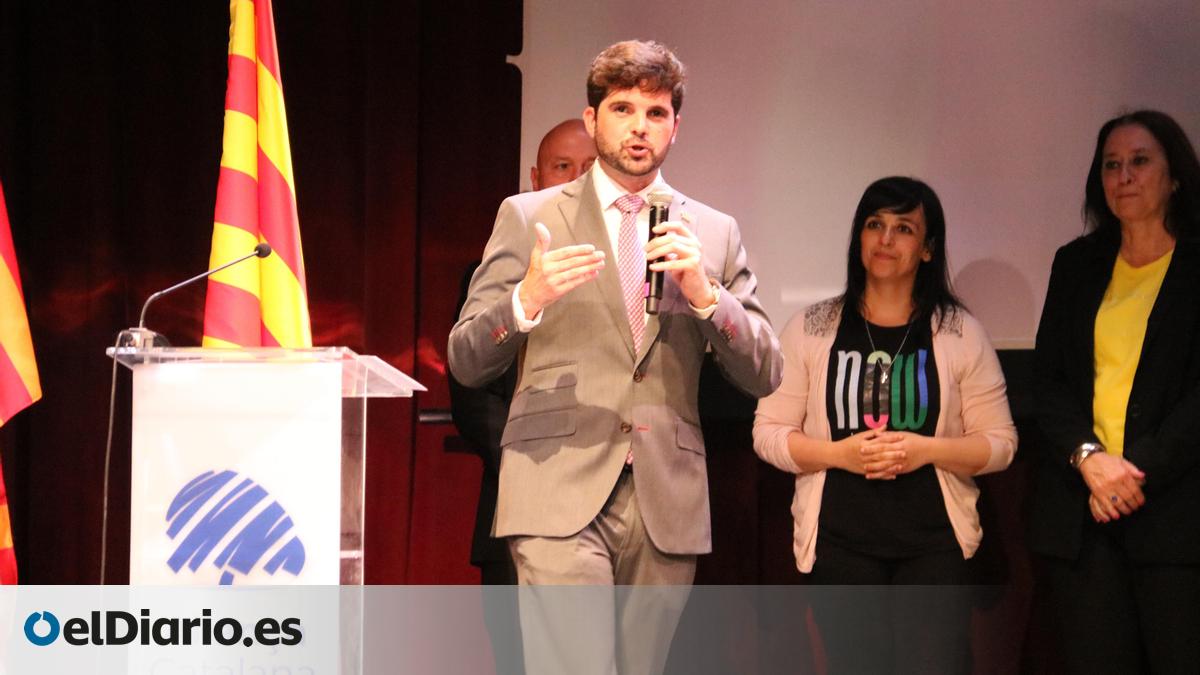
Aliança Catalana has officially announced Jordi Aragonès as its candidate for the upcoming mayoral election in Barcelona, concluding a prolonged search for a representative in the Catalan capital. The party, which advocates for Catalan independence and securitist immigration policies, introduced Aragonès during a public event held at the El Born Centre de Cultura i Memòria, a site historically associated with the 1714 Siege of Barcelona and the subsequent Catalan independence movement.
Jordi Aragonès, 33, serves as a prominent ideologue within the party structure and is a cousin of the former President of the Generalitat de Catalunya, Pere Aragonès. His selection marks a strategic decision by the party leadership, led by Sílvia Orriols, to field a core member of their organization rather than a more recognizable media figure, following reportedly unsuccessful attempts to recruit other high-profile individuals for the candidacy. The announcement was confirmed during a campaign event where the party outlined its platform, emphasizing concerns over housing and public security within the city.
Background and Political Strategy
The selection of Jordi Aragonès follows a period of organizational challenges for Aliança Catalana, which has sought to expand its influence beyond its base in Ripoll. According to public records, the party secured its first parliamentary presence in the 2024 Catalan regional elections, though it did not obtain a seat in the Barcelona constituency during that cycle. The party’s expansion strategy for the 2027 municipal elections focuses on positioning itself as an alternative to existing pro-independence and right-wing political forces.

During the event at El Born, Aragonès articulated his campaign priorities, citing housing shortages and public safety as primary issues affecting the capital. He argued that current municipal policies have failed to address these concerns, attributing the challenges to immigration and what he termed “woke” political frameworks. His rhetoric centered on the preservation of Catalan identity and the implementation of restrictive policies regarding housing access, which he proposed should be prioritized for long-term residents. These views align with the broader ideological platform of Aliança Catalana, which has been characterized by its emphasis on national identity and strict border control measures.
The Changing Electoral Landscape in Barcelona
The municipal election in Barcelona is expected to be a crowded contest, with several major parties already confirming their candidates. Incumbent Mayor Jaume Collboni is set to lead the Partit dels Socialistes de Catalunya (PSC) ticket, while other major parties have also solidified their leadership. Elisenda Alamany represents Esquerra Republicana de Catalunya (ERC), and Gerardo Pisarello is the primary candidate for the Comuns. The Partido Popular (PP) is expected to maintain its current leadership under Daniel Sirera.
The potential impact of Aliança Catalana on the final results remains a subject of analysis. Recent municipal barometers, which serve as indicators of voter intent, suggest a shifting dynamic among the right-leaning electorate. Data from these surveys indicate that Junts per Catalunya may face a significant decline in support, with some projections suggesting that a portion of that electorate could migrate toward Aliança Catalana. While specific polling numbers fluctuate, analysts note that the party’s ability to enter the city council would represent a notable shift in the composition of the municipal government, potentially establishing it as a primary force on the right.
Party Expansion and Regional Goals
Aliança Catalana has been systematically announcing its candidates for various municipalities across Catalonia, with a particular focus on mid-sized cities. On April 23, the party revealed several heads of lists, including Jonathan Cortijo in Reus, Arnau Liesa in Figueres, and Eduard Rel in Tortosa. The inclusion of figures like Rel—a former local leader of the PSC—highlights the party’s efforts to diversify its candidate base beyond its original founding members.

The party’s activities in Barcelona serve as a focal point for its broader 2027 electoral goals. Despite the party’s acknowledgement that it faces significant competition in the capital, the decision to run a high-ranking internal figure like Aragonès indicates a commitment to establishing a presence in the city’s political arena. As of the most recent party disclosures, Aliança Catalana maintains a registered membership of approximately 346 individuals in Barcelona, with a regional total for the county reaching 416. These figures underscore the party’s current organizational scale as it prepares for the upcoming electoral cycle.
The next major milestone in the municipal electoral calendar is the selection process within Junts per Catalunya, which is scheduled to conclude its internal primaries this weekend. The announcement of the Junts candidate will provide further clarity on the competitive landscape ahead of the 2027 vote. For updates on candidate filings and official election declarations, voters and stakeholders are encouraged to monitor the official portal of the Junta Electoral Central, which oversees electoral transparency and registration in Spain.