
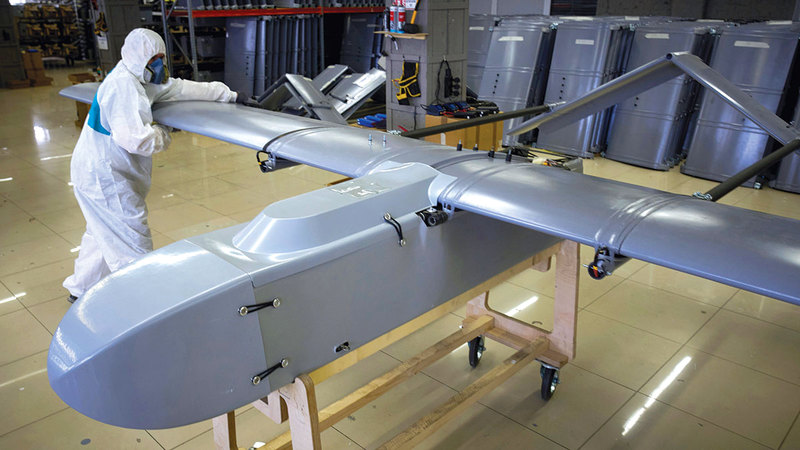
Ukraine has begun deploying specialized interceptor drones designed specifically to neutralize Iranian-made Shahed loitering munitions, marking a significant shift in the technical landscape of the ongoing conflict. These counter-drone systems aim to provide a more cost-effective and precise alternative to expensive surface-to-air missile batteries, which have been heavily utilized to intercept low-cost Shahed-136 and Shahed-131 drones.
The deployment of these interceptor units comes amid heightened security tensions across Europe. While reports of drone-related airspace incidents have increased, particularly near NATO’s eastern borders, security officials in Finland have emphasized the necessity of heightened surveillance and air defense readiness. This surge in drone activity has forced a reassessment of regional airspace security as both Russian and Ukrainian technologies increasingly dominate the tactical environment.
The evolution of drone warfare is no longer confined to reconnaissance or simple strike missions. The introduction of specialized interception technology and the pivot of drone manufacturing toward global markets suggest a long-term industrialization of unmanned aerial systems (UAS). As the conflict continues, the ability to counter massed drone swarms has become a primary metric of military capability for both combatants and neighboring states.
The Mechanics of Interception: Countering the Shahed Threat
For much of the conflict, Ukraine has relied on a mix of high-end air defense systems, such as the Patriot and IRIS-T, alongside mobile machine-gun units to down Shahed drones. However, the economic disparity between a multi-million dollar missile and a drone costing only a few thousand dollars has created a significant sustainability challenge for Ukrainian defense forces.

To address this, Ukrainian engineers have developed interceptor drones. Unlike traditional reconnaissance drones, these interceptors are optimized for high-speed pursuit and kinetic impact. They are designed to identify the unique radar and thermal signatures of Shahed loitering munitions and engage them in mid-air. By using “kamikaze” style interceptors, Ukraine can neutralize incoming threats at a fraction of the cost of traditional missile interceptions.
The technical challenge of this mission involves two primary factors: speed and electronic warfare (EW) resilience. Shahed drones often operate at low altitudes to evade radar, requiring interceptors to possess advanced terrain-following capabilities. Furthermore, because Russia frequently employs electronic jamming to disrupt drone communications, these new interceptors must rely on autonomous navigation or hard-wired flight controls to ensure they can complete their mission in a contested electromagnetic environment.
Security on the NATO Frontier: Airspace Monitoring in Finland
The proliferation of drone technology has directly impacted the security posture of Finland, particularly following its accession to NATO. While recent reports have highlighted concerns regarding airspace integrity, the Finnish Defense Forces have focused on the broader threat posed by Russian military activity and drone incursions near the border.
Finland has intensified its monitoring of its eastern airspace to detect unauthorized entries by Russian unmanned aerial vehicles (UAVs) and missiles. This heightened state of alert is a response to a pattern of incidents where Russian hardware has drifted into Finnish territory, prompting rapid scrambles of Finnish F/A-18 Hornet fighter jets. The Finnish government has maintained that these incidents are a matter of national security that requires robust air defense and continuous surveillance.
The security implications for Finland extend beyond simple border patrols. As a NATO member, Finland’s airspace is now part of the collective defense framework, meaning that drone incursions are treated as potential provocations that could test the alliance’s response protocols. The integration of advanced radar systems and the expansion of drone-detection capabilities are central to Finland’s current defense strategy to ensure that any breach of sovereignty is identified and addressed immediately.
Globalizing Defense: Ukraine’s Strategic Interest in Asian Markets
As the demand for unmanned systems reaches unprecedented levels, Ukrainian drone manufacturers are looking beyond European borders to scale their production capabilities. There is growing interest from manufacturers and defense stakeholders in Asia, specifically in Japan and Taiwan, regarding the sharing of drone technology and manufacturing expertise.
This pivot toward Asian markets is driven by several factors:
- Technological Synergy: Asian tech hubs possess advanced semiconductor and sensor manufacturing capabilities that are critical for the next generation of autonomous drones.
- Production Scaling: To maintain a continuous supply of drones to the front lines, Ukraine requires industrial-scale production lines that can operate independently of European supply chain constraints.
- Geopolitical Alignment: Nations in the Indo-Pacific region, particularly Taiwan, are themselves navigating complex security environments involving drone-heavy defense strategies, creating a natural area for cross-border technical exchange.
While official defense contracts are often subject to strict export controls and diplomatic negotiations, the movement of technical knowledge and the establishment of international partnerships are becoming a cornerstone of Ukraine’s long-term defense industrial strategy. This globalized approach aims to ensure that the technological edge maintained by Ukrainian forces is not lost to the sheer volume of Russian attrition warfare.
Shifting Battlefield Dynamics: New Russian Drone Tactics
The effectiveness of Ukrainian interceptors is being tested by evolving Russian tactics. Russian forces have moved away from predictable flight paths, increasingly utilizing “swarm” tactics designed to overwhelm air defense networks. By launching multiple drones simultaneously from different directions, Russia attempts to saturate the tracking capabilities of both automated systems and human operators.
Additionally, there are reports of Russia integrating more sophisticated electronic warfare suites into their drone operations. These systems are designed to “blind” the GPS and communication links of both Ukrainian interceptors and their own offensive drones, making autonomous flight a necessity rather than a luxury. This ongoing “electronic arms race” is driving rapid innovation in both offensive and defensive unmanned technologies.
Comparison of Drone Engagement Strategies
| Feature | Traditional Air Defense | Interceptor Drone Strategy |
|---|---|---|
| Primary Cost | High (Millions per intercept) | Low (Thousands per intercept) |
| Target Type | Missiles, Jets, Large UAVs | Small, Low-altitude Loitering Munitions |
| Engagement Range | Long-range / High-altitude | Short-range / Low-altitude |
| Sustainability | Limited by stockpile levels | High due to mass production potential |
Frequently Asked Questions
Why are interceptor drones being used instead of missiles?
The main reason is cost-effectiveness. Using a multi-million dollar missile to destroy a $20,000 Shahed drone is economically unsustainable in a prolonged conflict. Interceptor drones provide a way to defend airspace without depleting expensive missile inventories.

How does Finland’s NATO membership affect its drone security?
Finland’s membership integrates its airspace monitoring into NATO’s collective defense. Any significant airspace violation is now viewed through the lens of alliance security, requiring coordinated responses and high-readiness air defense protocols.
What is the role of Asian technology in this conflict?
Ukraine is seeking to partner with Asian nations to access advanced components, such as high-end chips and sensors, and to learn scalable manufacturing techniques that can keep pace with the high attrition rates of modern drone warfare.
The next major checkpoint for regional security will be the upcoming NATO defense ministerial meetings, where the integration of unmanned systems into collective air defense strategies is expected to be a primary agenda item.
What are your thoughts on the impact of drone technology on modern sovereignty? Share your comments below and share this article to join the conversation.