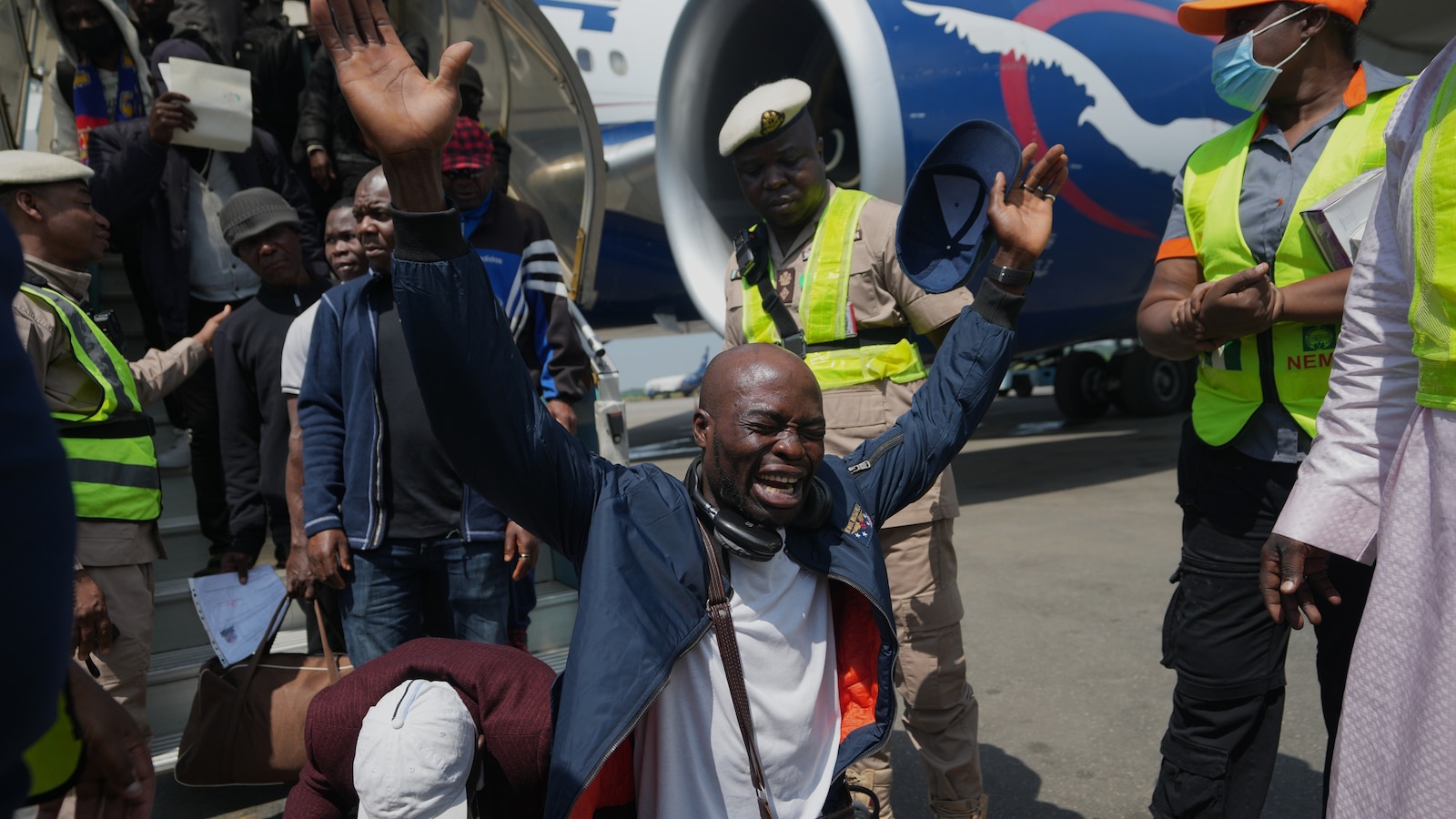
Nigerian migrants returning from South Africa following periodic outbreaks of xenophobic violence and anti-migrant sentiment continue to face significant economic instability upon their arrival home. Many individuals who sought financial opportunities abroad find that the structural economic challenges they departed to escape—including high unemployment and limited access to capital—remain largely unchanged, creating a cycle of displacement and precarious resettlement. According to reports from the International Organization for Migration (IOM), reintegration programs are often overstretched, leaving returnees to navigate the domestic labor market with few resources or social safety nets.
The movement of citizens between the two nations is frequently punctuated by regional tensions. In late 2019, the Nigerian government facilitated the voluntary evacuation of hundreds of its citizens following a wave of civil unrest and targeted attacks against foreign-owned businesses in South Africa. While these evacuations were framed as a protective measure, the long-term economic outcomes for those who returned have proven difficult to sustain. Data from the World Bank indicates that Nigeria’s domestic economy continues to grapple with inflationary pressures and a volatile job market, which directly impacts the ability of returnees to re-establish stable livelihoods.
Economic Barriers to Reintegration
For many returnees, the expectation of a fresh start in Nigeria is often met with the reality of limited formal employment opportunities. Those who spent years working in South Africa’s informal sectors—often in retail, construction, or technical trades—frequently discover that their accumulated skills do not easily translate into the current Nigerian economic climate. Without access to micro-credit or government-backed vocational training, returnees often report that they are unable to start the small businesses they envisioned upon their return.
The challenge is further compounded by the lack of centralized data on the specific needs of returnees. Although the Federal Government of Nigeria has previously pledged support for citizens returning from volatile regions, the implementation of these initiatives remains inconsistent. Observers note that without a structured transition plan that includes psychological support and financial literacy training, returnees are at a high risk of falling back into the same economic conditions that prompted their initial migration.
The Impact of Xenophobic Sentiment on Migration Patterns
The decision to return to Nigeria is rarely made in a vacuum; it is often a reaction to external pressures in the host country. South Africa has experienced multiple cycles of anti-migrant protests, which have historically targeted foreign nationals from various African countries, including Nigeria. These events create an environment where foreign-owned businesses are frequently looted or destroyed, forcing owners to decide between staying in a hostile environment or liquidating their assets at a loss to return home.

According to the Human Rights Watch reports on South Africa, the failure of local authorities to consistently address the root causes of xenophobic violence has left migrants in a state of perpetual insecurity. This instability acts as a “push factor,” driving individuals back to Nigeria even when they lack a viable economic plan for their return. The resulting migration is therefore often characterized by a loss of capital, as returnees are frequently unable to repatriate their savings or transport their business equipment safely.
Defining the Future of Regional Labor Mobility
The broader conversation regarding this trend touches on the limitations of the African Continental Free Trade Area (AfCFTA) and other regional agreements aimed at fostering labor mobility. While these frameworks are designed to encourage economic integration, the reality on the ground is often restricted by nationalist rhetoric and domestic economic protectionism. As noted by the African Union, the free movement of people is a cornerstone of the continent’s development goals, yet it remains a point of friction when domestic labor markets are under pressure.
For the individuals caught in this cycle, the focus is less on international policy and more on immediate survival. Many are forced to rely on extended family networks, which are themselves under strain due to the broader economic situation in Nigeria. The lack of formal, scalable reintegration programs means that the burden of care falls disproportionately on local communities, rather than state institutions.
Next Steps for Policy and Support
There is no immediate federal policy shift expected to address the specific economic vulnerabilities of returnees in the current legislative session. The Nigerian government continues to focus on broader industrial growth, which proponents argue will eventually create the jobs necessary to absorb returnees, though critics suggest this approach lacks the targeted support needed for those who have lost their livelihoods abroad.

For those currently seeking assistance, the IOM maintains a presence in Nigeria and provides information on voluntary return and reintegration assistance. Engaging with these official channels remains the most reliable way for returnees to access whatever limited resources may be available. Readers interested in the ongoing developments surrounding migration policy and economic reintegration are encouraged to monitor updates from regional oversight bodies and share this information with those who may be navigating the return process.
Related reading