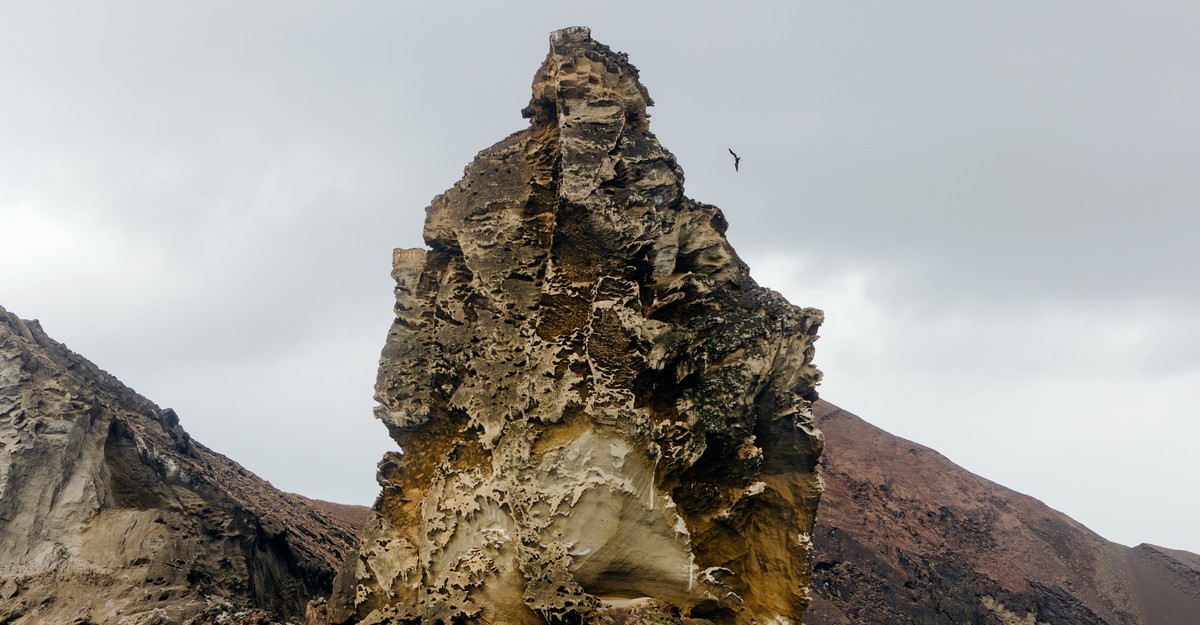
The Galápagos Islands, a UNESCO World Heritage Site and the only place on Earth where species like the giant tortoise and marine iguana thrive, are at a crossroads. Once a pristine laboratory of evolution that inspired Charles Darwin’s theory of natural selection, the archipelago now hosts over 300,000 annual visitors whose presence risks disrupting the delicate balance of this fragile ecosystem. According to the Galápagos National Park Directorate, visitor numbers have surged by 40% in the past decade, while invasive species and climate change threaten endemic flora and fauna. The challenge today is not just preserving what remains, but reversing decades of ecological damage while sustaining the islands’ economic lifeline.
Darwin’s 1835 visit to the Galápagos—where he famously observed finches with varying beak shapes—was pivotal in shaping modern biology. Yet the islands he described as “barren” and “desolate” have since become one of the most biodiverse places on Earth, thanks to their isolation and unique volcanic origins. “The Galápagos is a living museum where every species tells a story of adaptation,” says Dr. Rakan Zahawi, executive director of the Charles Darwin Research Station. “But that story is being rewritten by human activity.”
Why the Galápagos Is More Than Just Darwin’s Finches
While Darwin’s finches remain the archipelago’s most famous residents, the Galápagos is home to 1,800 species found nowhere else, including 13 endemic land birds, 28 land reptiles, and 30 marine mammals. The islands’ isolation—1,000 kilometers off Ecuador’s coast—allowed species to evolve in remarkable ways. Marine iguanas, for example, developed salt-excreting glands to survive on a diet of seaweed, while flightless cormorants lost the ability to fly in favor of diving. “Darwin didn’t fully grasp the scale of what he was witnessing,” says Dr. Zahawi. “He spent just five weeks here, but his observations laid the foundation for modern evolutionary biology.”

Yet the very traits that make these species unique—like their lack of fear of humans—also make them vulnerable. When Darwin arrived, whalers and buccaneers were the only human threats. Today, tourism brings economic benefits but also ecological risks. A 2023 study in Nature found that visitor activity has altered the behavior of blue-footed boobies, causing them to nest closer to human settlements. Meanwhile, invasive species like the blackberry and the avian vampire fly (Philornis downsi) are pushing native species to the brink. The Galápagos penguin, the only penguin species found north of the equator, has seen its population drop by 20% since 2010 due to warming ocean currents.
How Tourism Is Reshaping the Islands
Ecuador’s government has responded by tightening regulations. The entrance fee to the Galápagos National Park rose from $100 to $200 in 2022, with revenues funding conservation programs. Visitors must now complete a bio-security declaration and are restricted to designated paths. “We’re trying to strike a balance between protecting the islands and supporting local communities,” says Galápagos Governor Gustavo Manrique. “But the pressure is immense.”

On Santa Cruz Island, where I encountered a 600-pound tortoise attempting to cross the main highway, the contrast between Darwin’s era and today is stark. In 1835, Darwin noted the tortoises’ “extreme tameness,” even riding them for amusement. Today, touching or feeding wildlife is strictly prohibited, and visitors must maintain a six-foot distance. The El Chato Ranch, one of the few places where tortoises roam freely, now limits interactions to photos only. “We’ve learned the hard way that even well-intentioned visitors can cause harm,” says ranch owner Sebastián Cruz. “A single piece of bread can kill a tortoise.”
Despite these measures, the ecological footprint of tourism remains significant. A 2024 report by the UN Environment Programme found that cruise ships—responsible for 60% of visitors—generate 12,000 tons of waste annually. The government has since banned single-use plastics and imposed stricter waste management rules on tour operators.
The Conservation Race: Can Science Reverse the Damage?
The Charles Darwin Research Station is leading efforts to restore the islands’ ecosystems. One of its most promising projects involves biocontrol, a method that uses natural predators to combat invasive species. For the Asian blackberry (Rubus niveus), which chokes out native scalesia forests, scientists are testing a fungus that disrupts its growth without harming other plants. “We’re not just trying to undo the past,” says Dr. Zahawi. “We’re learning how to manage ecosystems in a way that allows them to heal.”
Another critical focus is the Philornis downsi fly, whose larvae parasitize bird nests. The research station has collaborated with 24 institutions to develop a parasitic wasp that preys on the fly’s larvae, reducing chick mortality by up to 80% in test areas. “This is the first time we’ve seen a real turning point in conservation here,” says Dr. Zahawi. “But it requires constant vigilance.”
One of the most symbolic conservation stories is that of Lonesome George, the last Pinta Island tortoise, who died in 2012 at age 100. His subspecies was driven to extinction by feral goats introduced by fishermen in the 1950s. Today, his preserved remains are housed in the research station, a reminder of what’s at stake. “George wasn’t just a tortoise,” says Andrea Carvajal Román, the station’s entomologist. “He was a symbol of what we stand to lose if we don’t act.”
What Happens Next? The Future of the Galápagos
The Galápagos’ future hinges on three key factors: stricter tourism controls, advanced biocontrol techniques, and global climate action. The Ecuadorian government has proposed reducing visitor numbers by 20% over the next five years, while expanding marine protected areas to cover 60% of the archipelago’s waters. “The Galápagos can’t be saved by Ecuador alone,” says Galápagos National Park Director Danny Rueda. “It requires international cooperation on climate change and invasive species management.”

For now, the balance between conservation and tourism remains fragile. While the islands have avoided the ecological collapse seen in other protected areas, the window for intervention is narrowing. “Darwin would be both amazed and horrified by what he’d see today,” reflects Dr. Zahawi. “Amazed by the resilience of life, and horrified by the speed at which we’ve altered it.”
Visitors to the Galápagos today are part of this dilemma. The archipelago’s allure lies in its untouched beauty, but that beauty is increasingly at risk. As one tour guide on Santa Cruz Island put it: “We’re not just here to see the wildlife. We’re here to decide what kind of future we want to leave for them.”
Key Takeaways
- Ecosystem at Risk: Over 300,000 annual visitors and invasive species threaten the Galápagos’ unique biodiversity, with some endemic species facing extinction.
- Tourism Regulations: Ecuador has increased park fees to $200 and imposed strict bio-security measures, but challenges remain in balancing conservation with economic needs.
- Biocontrol Innovations: Scientists are using fungi and parasitic wasps to combat invasive species like the blackberry and Philornis downsi fly, with early success in restoring native habitats.
- Climate Vulnerability: Warming ocean currents have reduced the Galápagos penguin population by 20% since 2010, highlighting the need for global climate action.
- Symbol of Conservation: Lonesome George’s extinction serves as a warning, while his preserved remains symbolize the urgent need to protect remaining species.
The next critical checkpoint for the Galápagos is the 2025 Galápagos Conservation Summit, where global leaders will discuss funding and policy measures to address invasive species and climate impacts. In the meantime, the Charles Darwin Research Station will continue its biocontrol trials, with preliminary results expected by mid-2025.
What do you think? Should tourism to the Galápagos be further restricted to protect its wildlife, or can the current regulations strike the right balance? Share your thoughts in the comments below.