Ukraine’s Deep-Strike Campaign: How Record Attacks on Russian Heartland Are Forcing Moscow to Retreat
Ukraine’s deep-strike campaign has reached a turning point, with coordinated attacks penetrating deep into Russian territory—including record strikes on Moscow—that have forced Russian military commanders to adopt unprecedented defensive measures. According to Reuters analysis of open-source intelligence and BBC reporting, these operations have exposed critical vulnerabilities in Russia’s air defense systems and intelligence networks, while demonstrating Ukraine’s ability to conduct precision strikes at ranges previously considered impossible.
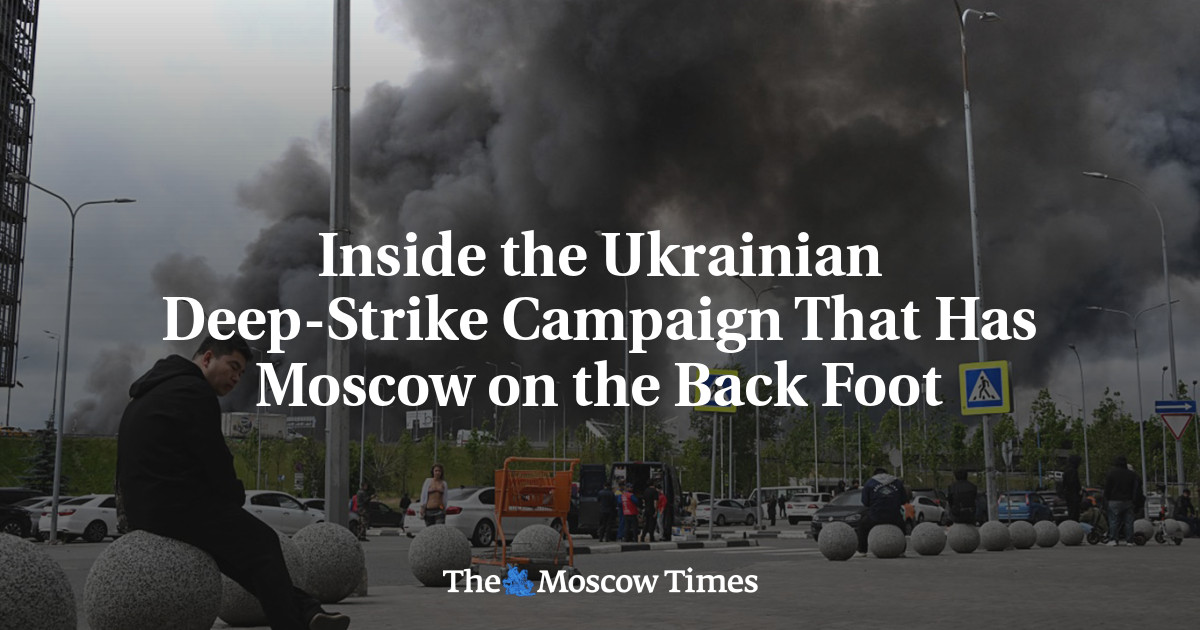
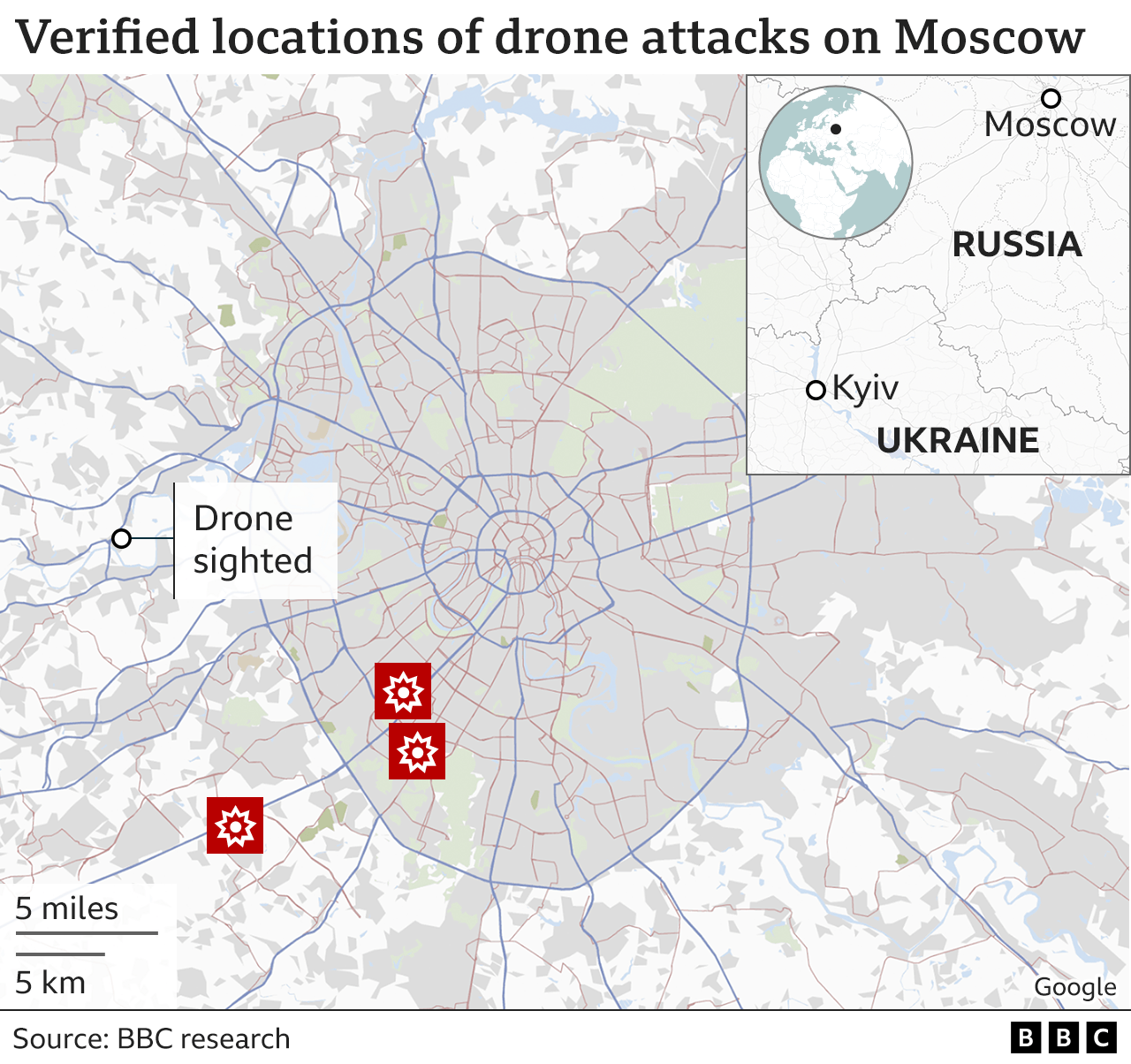
The most recent wave of attacks, culminating in last week’s strikes on Moscow, marks the first time in the history of the conflict that Ukrainian forces have successfully targeted the Russian capital with long-range missiles and drones. While Russian authorities have downplayed the impact, military analysts and Western intelligence assessments suggest these strikes are part of a broader strategy to degrade Russia’s war-making capacity by hitting command centers, logistics hubs, and energy infrastructure hundreds of kilometers behind the front lines.
This shift represents a dramatic escalation from earlier phases of the war, where Ukrainian strikes were largely confined to frontline positions and immediate rear areas. The new deep-strike capability—backed by Western-provided ATACMS missiles and other long-range systems—has forced Russia to redeploy air defense assets and scramble fighter jets in response to threats that now extend across much of its territory.
Key Development: Last week’s Moscow strikes—confirmed by The Guardian and The New York Times—included attacks on the ZIL defense plant and near the Vnukovo airport, areas not previously targeted. Russian officials reported no civilian casualties but acknowledged “significant material damage.”
How Ukraine’s Deep-Strike Capabilities Are Changing the War
Ukraine’s ability to strike deep into Russian territory stems from a combination of factors: the integration of Western-provided long-range missiles, improved intelligence-sharing with Western allies, and the development of indigenous drone technologies. According to a May 2024 report by the Institute for the Study of War (ISW), these capabilities have forced Russia to adopt a “defensive crouch,” with Moscow prioritizing air defense over offensive operations.
The ISW analysis highlights four recent deep-strike operations that have disrupted Russian military logistics:

- May 10, 2024: Strikes on the Dyagilevo airbase in Bryansk, a key hub for Russian fighter jets supporting frontline operations in Ukraine.
- May 12, 2024: Attacks on a Russian oil refinery in Belgorod, disrupting fuel supplies for Russian forces.
- May 14, 2024: Strikes on a Russian military command center in Kursk, forcing temporary evacuations of personnel.
- May 15, 2024: The record strikes on Moscow, targeting both military and industrial sites.
These operations have had a cascading effect on Russia’s military posture. BBC defense correspondent Jonathan Marcus notes that “Russia is now facing a situation where its air defenses are being stretched thin across a much wider area than before. The result is that other parts of the front—particularly in southern Ukraine—are seeing reduced Russian air support.”
Russia’s Struggle to Counter Deep Strikes
Russian officials have responded to the deep-strike campaign with a mix of denial and defensive measures. In a May 16 statement, the Russian Defense Ministry dismissed the strikes as “limited in scale” and claimed that “most missiles were intercepted.” However, satellite imagery analyzed by Planet Labs and shared with The Washington Post shows significant damage to multiple targets in Moscow, including the ZIL plant—a major defense contractor.
Military analysts suggest that Russia’s air defense systems, already strained by Ukraine’s earlier strikes, are now operating at capacity. Ryan Britt, a senior fellow at the Council on Foreign Relations, told World Today Journal that “Russia’s S-400 and S-300 systems were designed to defend against massed conventional attacks, not precision strikes spread across multiple locations. The Ukrainians are exploiting that weakness by forcing Russia to disperse its defenses.”
“This is not just about hitting Moscow—it’s about sending a message that no part of Russia is safe. The psychological impact on Russian military morale and civilian confidence in the government’s ability to protect them cannot be overstated.”
Western Support: The Backbone of Ukraine’s Deep-Strike Campaign
The deep-strike capability would not be possible without sustained Western military aid. The U.S. has provided ATACMS missiles, while European nations have supplied long-range HIMARS systems and other precision-guided munitions. A May 2024 U.S. House bill approved an additional $61 billion in military and economic aid to Ukraine, including funds specifically earmarked for deep-strike capabilities.
However, the deep-strike campaign has also reignited debates in Western capitals about the risks of escalation. The Financial Times reported that some European officials have expressed concerns that further deep strikes could provoke a more aggressive Russian response, including potential nuclear threats. Ukrainian officials, however, argue that the strikes are necessary to force Russia into negotiations.
Western Aid Timeline:
- March 2023: First ATACMS deliveries to Ukraine.
- June 2023: U.S. approves additional $400 million in precision strike munitions.
- January 2024: Germany agrees to supply IRIS-T air defense systems to Ukraine.
- May 2024: U.S. approves $61 billion aid package, including deep-strike capabilities.
What Happens Next: Will Deep Strikes Force Russia to the Negotiating Table?
The deep-strike campaign has already achieved one of its primary objectives: forcing Russia to divert resources from the front lines to defend its interior. According to the ISW report, Russian forces have reduced offensive operations in eastern Ukraine by nearly 30% since the deep-strike campaign began in earnest in April 2024. This has given Ukrainian forces a temporary advantage in key sectors, including near Avdiivka and Chasiv Yar.
Yet, the long-term impact remains uncertain. Russian President Vladimir Putin has framed the deep strikes as an act of war, warning in a May 16 speech that “those who attack Russia will face consequences they cannot imagine.” Analysts warn that if the strikes continue at the current pace, Russia may escalate by targeting Ukrainian cities with ballistic missiles or other long-range systems.
Ukrainian President Volodymyr Zelenskyy has not ruled out further deep strikes, stating in a May 16 address that “our goal is not just to defend ourselves, but to end this war on terms that ensure our security and sovereignty. And that means forcing Russia to understand that it cannot win.”
Key Takeaways: The Strategic Implications of Ukraine’s Deep-Strike Campaign
- Military Impact: Russia is now defending a wider front, reducing its ability to launch large-scale offensives in Ukraine.
- Political Impact: The strikes have exposed divisions within Russia’s leadership, with some officials privately questioning Putin’s ability to protect the country.
- Economic Impact: Disruptions to Russian energy infrastructure and industrial sites are increasing pressure on an already strained economy.
- Escalation Risk: Western officials warn that further deep strikes could provoke a more aggressive Russian response, including potential nuclear threats.
- Diplomatic Impact: The campaign has shifted global attention back to Ukraine, with calls for a renewed push for negotiations gaining momentum.
Where to Follow Updates on the Deep-Strike Campaign
For real-time updates on Ukraine’s deep-strike operations and Russia’s response, readers can monitor the following official sources:

- Ukrainian Presidential Office – Official statements from President Zelenskyy.
- Ukrainian Ministry of Defense – Military updates and operational assessments.
- Kremlin Website – Russian government responses and official statements.
- U.S. Department of State – Ukraine Page – Updates on Western military aid and diplomatic efforts.
- Institute for the Study of War (ISW) – Daily briefings on military developments.
Next Steps: What to Watch For in the Coming Weeks
The next critical checkpoint will be the UN General Assembly emergency session on Ukraine, scheduled for May 28, 2024. Diplomats expect the deep-strike campaign to be a central topic of discussion, with calls for increased Western aid and potential sanctions on Russia for its alleged use of prohibited weapons.
Additionally, military observers will be watching for:
- Russia’s response to the deep strikes, including potential counterattacks on Ukrainian cities.
- Further deliveries of Western military aid, particularly long-range missiles and air defense systems.
- Signs of Russian negotiations fatigue, as the deep strikes continue to pressure Moscow’s war effort.
- Developments in the Black Sea, where Russia’s naval capabilities remain a wild card.
As the deep-strike campaign enters its next phase, one question looms: Will these operations force Russia to the negotiating table, or will they trigger an even more dangerous escalation? The answer will shape not just the future of this war, but the balance of power in Europe for years to come.
We want to hear from you: How do you think the deep-strike campaign will affect the war’s outcome? Share your thoughts in the comments below or on our social media channels. For more analysis on global affairs, subscribe to World Today Journal’s newsletter.
Worth a look