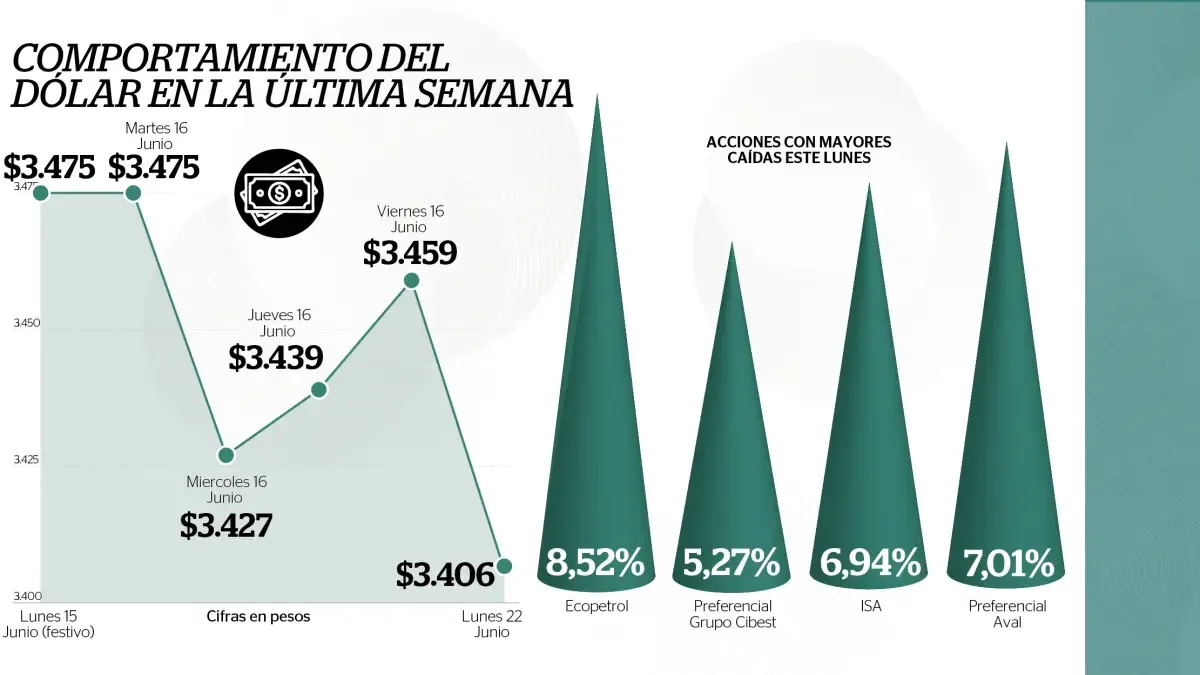
The Colombian peso strengthened against the U.S. dollar in late June, with the exchange rate hitting its lowest level of the year amid heightened market attention surrounding political and economic discourse. Financial analysts tracking the Colombian foreign exchange market have observed increased volatility, noting that shifts in investor sentiment often follow high-profile public statements regarding fiscal policy and national leadership. According to data from the Central Bank of Colombia (Banco de la República), the daily reference rate serves as the primary benchmark for these fluctuations, reflecting both internal political dynamics and broader global trends in emerging market currencies.
Market Response to Political Discourse
Recent shifts in the currency market have been attributed by some analysts to the public engagement of prominent political figures, a phenomenon colloquially termed by market observers as the “Abelardo effect.” While financial markets typically respond to macroeconomic indicators such as inflation rates, interest rate decisions by the Banco de la República, and commodity prices, the current climate has seen a heightened sensitivity to political rhetoric. This trend underscores the role of political stability as a core component of investor confidence in Latin American markets.

When public figures command significant media attention, their commentary on economic policy can trigger short-term capital movements. Financial experts emphasize that while these movements are often reactionary, they reflect the underlying anxiety of investors regarding the country’s long-term fiscal trajectory. According to reports from the International Monetary Fund (IMF), structural reforms and consistent policy frameworks remain the most critical factors for sustained currency stability, far outweighing the impact of individual political statements.
Understanding Currency Volatility in Colombia
The Colombian peso is classified as a floating currency, meaning its value is determined by supply and demand in the foreign exchange market. When demand for the U.S. dollar drops—often due to increased foreign direct investment or improved terms of trade—the peso appreciates. Conversely, uncertainty surrounding domestic policy can lead to capital flight, causing the peso to depreciate. The Financial Superintendence of Colombia monitors these transactions to ensure market integrity and transparency, particularly during periods of high volatility.

Recent market data indicates that the peso’s performance is also heavily influenced by the price of oil, Colombia’s primary export. As global energy markets fluctuate, the national income derived from oil exports shifts, directly impacting the availability of foreign currency within the domestic economy. Investors frequently cross-reference the daily peso-to-dollar exchange rate with global crude oil benchmarks to assess the country’s current account position.
Comparison of Market Indicators
Market observers have noted a divergence in how different segments of the economy react to currency fluctuations. While institutional investors focus on long-term government bonds and equity markets, retail consumers and small businesses often look to exchange houses for immediate liquidity. According to the National Administrative Department of Statistics (DANE), the cost of imported goods, which is directly tied to the exchange rate, serves as a vital indicator for domestic inflation levels.
The following table outlines the key variables that traders and analysts monitor when evaluating the impact of political and economic events on the Colombian peso:
| Indicator | Impact on Currency | Primary Monitor |
|---|---|---|
| Central Bank Interest Rates | High | Banco de la República |
| Crude Oil Prices | Very High | Global Energy Markets |
| Political Stability | Moderate/High | Market Sentiment |
| Inflation (CPI) | Moderate | DANE |
What Happens Next for Investors
Market participants are now looking toward the next scheduled meeting of the Board of Directors of the Banco de la República to gauge the future path of monetary policy. The bank’s decisions regarding interest rates will be the primary driver of currency valuation in the coming quarter. Investors are advised to monitor official releases from the central bank rather than relying solely on market speculation or individual political commentary.

As the economic landscape evolves, maintaining a diversified portfolio remains the standard recommendation for those exposed to emerging market currency risks. For real-time updates on the official exchange rate and market regulations, stakeholders should consult the official portal of the Central Bank of Colombia. We invite our readers to share their observations on these market trends in the comments section below.
Related reading