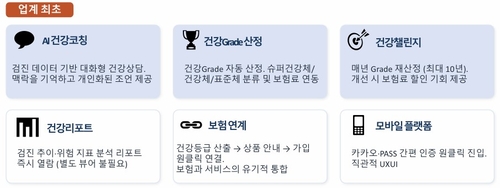
DB Life Insurance has introduced a new cancer insurance product featuring an artificial intelligence-based health coaching system, marking a significant shift in how South Korean insurers utilize personal health data for policy management. The company, a subsidiary of the DB Group, announced that it has applied for an insurance patent for this proprietary technology, which adjusts health-related rankings annually to determine premium discounts for policyholders.
This development comes as South Korean financial institutions increasingly integrate digital health tracking with traditional risk assessment models. According to the company’s official product disclosure, the AI system continuously monitors and analyzes user health information, allowing for a dynamic adjustment of premiums based on objective health markers. By incentivizing policyholders to maintain or improve their health status, the insurer aims to reduce long-term medical claims while providing more personalized coverage options.
How the AI Coaching Model Functions
The core of this new insurance offering lies in its data-driven feedback loop. Policyholders are categorized into specific health tiers—ranging from standard levels to higher-performance classes—based on clinical data and activity metrics. The AI platform processes this information to generate personalized health coaching suggestions, which are delivered to the user through a mobile interface. As verified by the Financial Supervisory Service (FSS), such products must undergo rigorous scrutiny to ensure that algorithmic decision-making remains transparent and that consumer privacy is protected under the Personal Information Protection Act.
The system is designed to re-evaluate a policyholder’s status on an annual basis. If a user’s health metrics show improvement—such as better blood pressure control, weight management, or increased physical activity—the AI system updates their health tier, which in turn triggers a recalculation of their insurance premiums. This “dynamic pricing” model represents a departure from traditional fixed-rate policies, where premiums are typically established only at the time of initial enrollment and remain static throughout the duration of the contract.
Regulatory and Technical Considerations
The application for an insurance patent indicates that DB Life Insurance is seeking exclusive rights to the specific methodology used to weigh health data and calculate the resulting premium adjustments. In the South Korean insurance market, obtaining a patent for a new product structure—often referred to as a “Special Review Request”—grants the insurer a period of exclusivity, preventing competitors from launching identical products for a set duration, typically ranging from three to twelve months as determined by the Korea Life Insurance Association.
From a technical standpoint, the integration of AI into health insurance requires robust data security protocols. Because the system processes sensitive medical information, the insurer must comply with strict guidelines regarding data encryption and the anonymization of user records. Experts in medical informatics note that the success of such programs depends on the accuracy of the underlying datasets and the ability of the AI to distinguish between temporary health fluctuations and long-term improvements in a policyholder’s health status.
The Broader Impact on Preventative Care
This initiative aligns with a global trend in the insurance industry toward “preventative underwriting.” By shifting from a purely reactive model—which only pays out upon a diagnosis—to a proactive model that encourages healthy behaviors, insurers are attempting to mitigate the rising costs of cancer treatment. According to reports from the World Health Organization (WHO), early intervention and consistent health monitoring are primary factors in improving patient outcomes and reducing the economic burden of chronic diseases.
For the consumer, the impact is two-fold: the potential for reduced financial costs through premium discounts and the benefit of receiving actionable health advice. However, critics of AI-driven insurance models often point to concerns regarding “data bias,” where certain demographics might be unfairly penalized if the algorithm is not properly calibrated. DB Life Insurance has stated that its system is designed to provide fair assessments, though the company will be required to submit ongoing performance reports to regulatory bodies to ensure compliance with fair competition laws.
Future Steps and Market Outlook
The next phase for this product involves the final approval of the patent application and the subsequent rollout of the AI coaching app to the broader public. While the company has released initial details regarding the structure of the tiered health system, specific numerical thresholds for moving between tiers have not yet been fully disclosed in public filings. Interested policyholders should monitor the official DB Life Insurance website for updates on the product launch date and detailed terms of service.
As the South Korean insurance market continues to digitize, the performance of this AI-based cancer insurance will likely serve as a benchmark for other providers. If the program proves successful in both reducing claims and increasing customer engagement, it is expected that similar “health-tech” insurance products will proliferate across the industry. Readers are encouraged to share their thoughts on the integration of AI in healthcare and insurance in the comments section below.
Keep reading