The U.S. Food and Drug Administration (FDA) has approved sacituzumab govitecan-hziy (Trodelvy) for the first-line treatment of patients with locally advanced or metastatic triple-negative breast cancer (TNBC). This regulatory decision expands the drug’s use to include patients who have not yet received chemotherapy for metastatic disease, providing a new option for a subtype of breast cancer that lacks estrogen, progesterone, and HER2 receptors.
This approval follows results from a Phase 3 clinical trial that compared the antibody-drug conjugate to standard physician-selected chemotherapy. According to Gilead Sciences, the manufacturer of Trodelvy, the drug demonstrated a significant improvement in clinical outcomes for patients facing this aggressive form of cancer. The expansion into the first-line setting marks a shift in how clinicians approach metastatic TNBC management.
Triple-negative breast cancer remains one of the most difficult subtypes to treat because it does not respond to hormonal therapies or HER2-targeted drugs. Because these tumors grow and spread quickly, early intervention with effective systemic therapy is a primary goal for oncology teams. The FDA’s approval of sacituzumab govitecan-hziy provides a targeted mechanism to attack these cells earlier in the disease progression.
How does sacituzumab govitecan target triple-negative breast cancer cells?
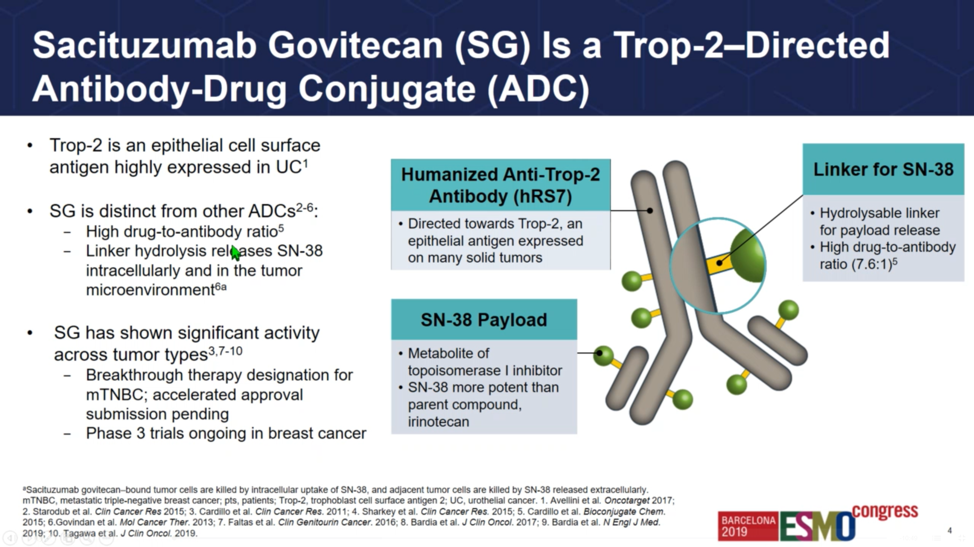
Sacituzumab govitecan-hziy belongs to a class of medications known as antibody-drug conjugates (ADCs). This technology functions like a precision-guided missile designed to deliver high doses of chemotherapy directly to cancer cells while minimizing exposure to healthy tissue. The drug consists of three primary components: a monoclonal antibody, a chemical linker, and a cytotoxic payload.
The monoclonal antibody component is engineered to recognize and bind to Trop-2, a protein that is frequently overexpressed on the surface of many tumor cells, including those in triple-negative breast cancer. Once the antibody attaches to the Trop-2 protein on the cancer cell, the entire conjugate is internalized by the cell. Inside the cell, the chemical linker breaks, releasing the cytotoxic payload, which in this case is SN-38, a potent topoisomerase I inhibitor.
By delivering the SN-38 payload directly inside the tumor cell, the drug disrupts the cell’s ability to replicate its DNA, eventually leading to cell death. This targeted approach aims to increase the concentration of the medication within the tumor while attempting to reduce the systemic toxicity often associated with traditional, non-targeted chemotherapy. According to medical researchers, the efficacy of this mechanism is largely dependent on the density of Trop-2 expression within the patient’s tumor.
What were the results of the clinical trials for first-line use?
The FDA approval was based on data from a Phase 3 clinical trial involving patients with locally advanced or metastatic TNBC who had not previously received chemotherapy for their metastatic disease. The study compared the efficacy of sacituzumab govitecan against a control group receiving standard chemotherapy chosen by their physicians.
The trial results indicated that patients receiving sacituzumab govitecan achieved superior progression-free survival (PFS) compared to those receiving standard chemotherapy. Progression-free survival measures the length of time during and after treatment that a patient lives with the disease, but the cancer does not get worse. Additionally, the trial reported improved objective response rates (ORR), which measures the proportion of patients whose tumor size decreased by a predefined amount.
To understand the clinical impact, it is helpful to compare the performance of the ADC against the traditional standard of care used in these trials:
| Metric | Sacituzumab Govitecan (Trodelvy) | Standard Chemotherapy |
|---|---|---|
| Primary Goal | Targeted Trop-2 delivery | Systemic cell toxicity |
| Clinical Benefit | Improved Progression-Free Survival (PFS) | Baseline standard of care |
| Mechanism | Antibody-Drug Conjugate (ADC) | Non-targeted cytotoxic agents |
While the trial showed clear advantages in PFS and ORR, clinicians continue to monitor long-term overall survival (OS) data to determine the full extent of the drug’s impact on life expectancy. The ability to provide a more effective treatment at the first stage of metastatic disease could potentially alter the standard treatment algorithms used by oncologists worldwide.
Who is eligible for this new treatment?
The FDA approval specifically targets patients with locally advanced or metastatic triple-negative breast cancer. Eligibility is defined by the absence of prior chemotherapy for metastatic disease, meaning these patients are “chemotherapy-naive” in the metastatic setting. This is a critical distinction, as it allows the drug to be used as a frontline defense rather than a “salvage” therapy used only after other treatments have failed.
Patients must also have confirmed pathology showing the triple-negative subtype, characterized by the lack of estrogen receptor (ER), progesterone receptor (PR), and human epidermal growth factor receptor 2 (HER2) expression. Because TNBC is often more aggressive and has a higher tendency to metastasize to organs like the lungs or brain, early access to targeted therapies is a significant development for this patient population.
Oncologists will determine suitability based on a patient’s overall health, performance status, and the specific characteristics of their tumor. While Trop-2 expression is the target, the FDA approval does not currently require a specific Trop-2 testing threshold, though the biological availability of the target remains central to how the drug functions.
What side effects are associated with Trodelvy?
As with any intensive cancer treatment, sacituzumab govitecan-hziy carries risks of side effects. Because the drug delivers a potent chemotherapy payload, even with targeted delivery, some amount of the medication enters the bloodstream and affects healthy cells. The FDA-approved prescribing information lists several common adverse reactions that patients and caregivers must monitor.
Neutropenia, a condition where there is a low level of neutrophils (a type of white blood cell that helps fight infection), is one of the most frequent side effects reported in clinical trials. Low neutrophil counts can increase the risk of serious infections, requiring doctors to perform regular blood tests to monitor patient safety. Other hematologic issues, such as anemia and thrombocytopenia (low platelet counts), may also occur.
Gastrointestinal issues are also common among patients receiving this treatment. Clinical data has identified diarrhea and nausea as significant side effects. Managing these symptoms often requires proactive medical intervention, including dietary adjustments or anti-diarrheal medications, to ensure the patient can remain on the treatment schedule without interruption. Additionally, some patients may experience fatigue or changes in appetite. Healthcare providers typically implement rigorous monitoring protocols to catch and manage these side effects before they become severe.
The management of these risks is a key component of the treatment plan. Oncologists often adjust dosages or implement temporary pauses in treatment if blood counts drop too low or if gastrointestinal symptoms become unmanageable, a practice known as dose modification.
The introduction of sacituzumab govitecan into the first-line setting represents a significant shift in the management of metastatic triple-negative breast cancer. As clinical practice evolves, medical professionals will continue to evaluate how this ADC integrates with other emerging therapies and whether it becomes the new standard for patients newly diagnosed with metastatic disease.
For the latest updates on oncology drug approvals and clinical trial results, patients and providers are encouraged to monitor official announcements from the FDA and Gilead Sciences. If you found this report helpful, please share it with your network or leave a comment below with your thoughts on this development.
Related reading
- WHO, DRC Fast-Track Multi-Arm Vaccine Trial as Ebola Outbreak Risks Becoming Largest on Record
- Smartphone Ban in French High Schools 2026: How to Choose the Right Mobile Plan for Your Teen
- Free Cancer Wellness & Exercise Program: Rebuild Strength and Health (archyworldys.com)
- The Office Star Lucy Davis Announces Incurable Breast Cancer Diagnosis (world-today-news.com)