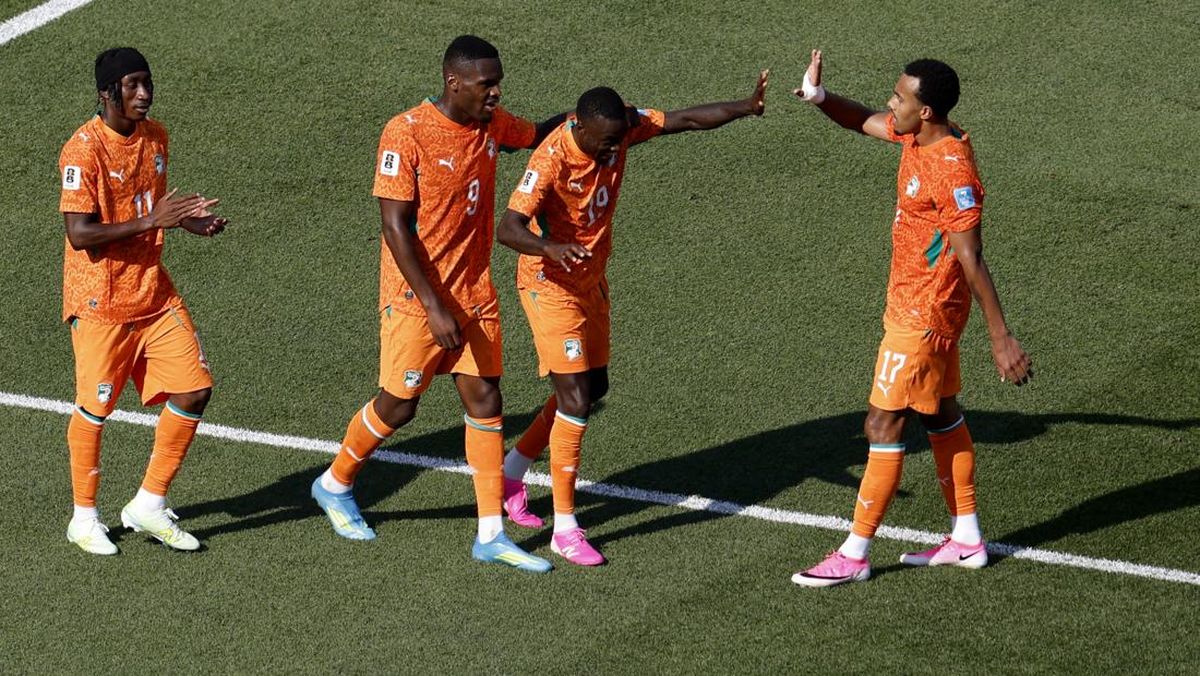
The 2026 FIFA World Cup will expand to 48 participating nations, marking the largest tournament in the history of the competition. This expansion changes the fundamental structure of the event, moving away from the traditional 32-team format used in previous editions to accommodate more nations from various continental confederations.
While recent online discussions have incorrectly suggested that teams have already secured spots in the Round of 32, the qualification process is currently active and ongoing across all six major football confederations. As of now, only the three host nations—the United States, Canada, and Mexico—have officially guaranteed their participation in the tournament.
How many teams will qualify for the 2026 FIFA World Cup?
The 2026 tournament will feature 48 teams instead of the 32 teams seen in the 2022 Qatar World Cup. According to FIFA, this expansion is designed to increase the global reach of the sport and provide more competitive opportunities for developing football nations. The additional 16 slots will be distributed among the continental confederations based on a revised allocation system.
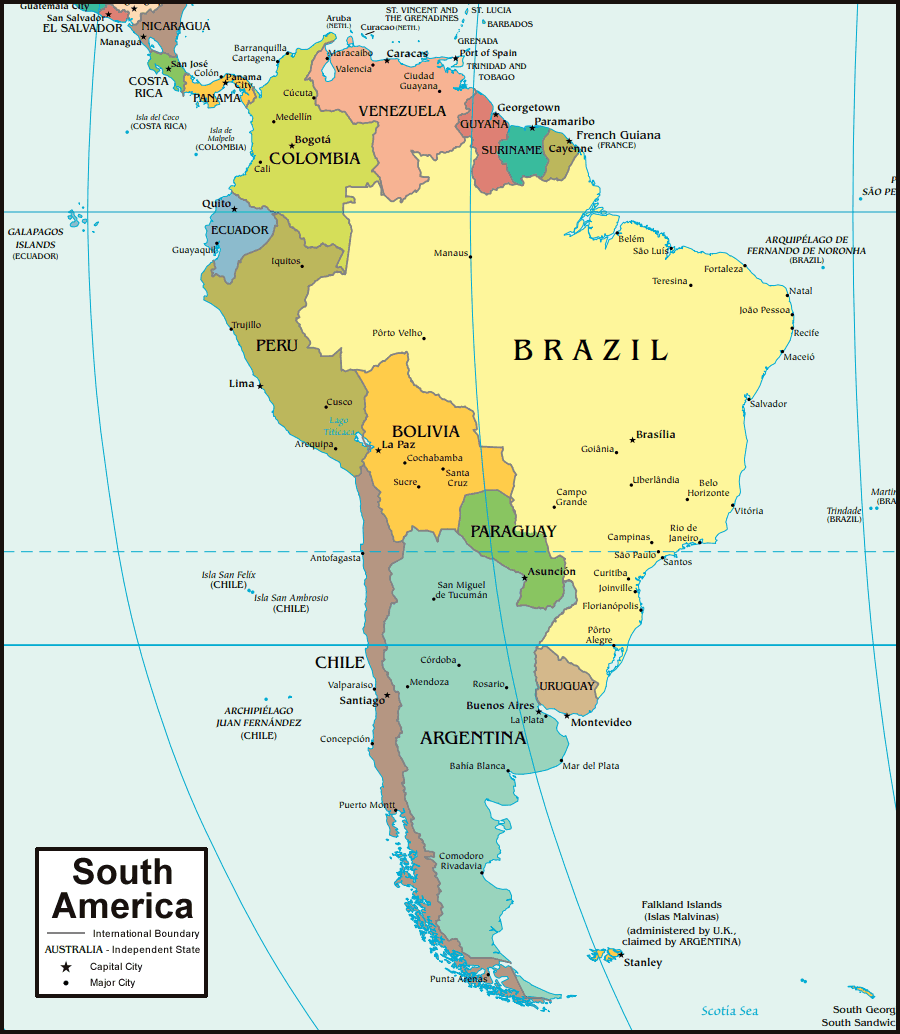
The allocation of the 48 slots is distributed as follows:
- Asia (AFC): 8.5 slots
- Africa (CAF): 9.5 slots
- North, Central America, and Caribbean (CONCACAF): 6.5 slots (including the three hosts)
- South America (CONMEBOL): 6.5 slots
- Oceania (OFC): 1 slot
- Europe (UEFA): 16 slots
The “.5” designations indicate that certain confederations will participate in inter-confederation play-off tournaments to determine the final participants. This system ensures that the most competitive teams from across the globe have a pathway to the final tournament, even if they do not win their respective regional qualifying groups.
What is the new 48-team tournament format?
The shift to a 48-team field necessitates a complete overhaul of the tournament’s group stage and knockout progression. Under the new regulations, the 48 qualified nations will be divided into 12 groups of four teams each. This structure replaces the previous format of eight groups of four teams.
In the group stage, teams will compete in a round-robin format within their assigned groups. To advance to the knockout phase, the following criteria will be applied:
- The top two teams from each of the 12 groups will automatically advance to the Round of 32.
- The eight best third-place teams across all 12 groups will also advance to the Round of 32.
This “best third-place” rule is a significant departure from previous years, where only group winners and runners-up progressed. This change increases the stakes for every match in the group stage, as a third-place finish can still result in advancement to the knockout rounds.
How does the Round of 32 work under the new rules?
The introduction of the Round of 32 creates a larger knockout bracket, requiring more matches to determine the eventual champion. Once the 32 teams are identified—comprising 24 group leaders and runners-up plus eight third-place finishers—the tournament will proceed through a standard single-elimination format.
The knockout stages will follow this sequence:
- Round of 32: 32 teams competing in 16 matches.
- Round of 16: 16 winners advancing to 8 matches.
- Quarter-finals: 8 winners advancing to 4 matches.
- Semi-finals: 4 winners advancing to 2 matches.
- Third-place play-off: Contested by the losers of the semi-finals.
- Final: The two remaining teams competing for the trophy.
Because the number of matches increases, the tournament schedule will be more intensive. FIFA has confirmed that the tournament will span approximately 39 days, with a total of 104 matches played across the host nations of the United States, Canada, and Mexico.
Which nations have already secured spots for 2026?
Currently, no teams have qualified through the regional qualifying processes, as most confederations are still in the preliminary or mid-stage rounds of their respective tournaments. The only teams with confirmed participation are the host nations, which receive automatic entry into the tournament regardless of their qualifying performance.
The hosts are:
- United States: Hosting matches in cities including New York/New Jersey, Los Angeles, and Dallas.
- Mexico: Hosting matches in Mexico City, Guadalajara, and Monterrey.
- Canada: Hosting matches in Toronto, Vancouver, and Montreal.
For all other nations, the path to the 2026 World Cup depends on their performance in continental qualifiers. For example, in South America (CONMEBOL), the qualification process is already underway, with teams competing in a league-style format to secure one of the 6.5 available slots. In Asia (AFC), qualifying rounds are progressing through various stages to determine which nations will represent the continent.
Comparison of Tournament Formats: 2022 vs. 2026
| Feature | 2022 FIFA World Cup (Qatar) | 2026 FIFA World Cup (North America) |
|---|---|---|
| Total Teams | 32 | 48 |
| Number of Groups | 8 groups of 4 | 12 groups of 4 |
| Advancement from Group Stage | Top 2 from each group | Top 2 from each group + 8 best 3rd-place teams |
| First Knockout Round | Round of 16 | Round of 32 |
| Total Matches Played | 64 | 104 |
Regional Qualification Progress and Outlook
The road to 2026 is being navigated differently by each confederation. Because the qualification timelines vary, fans must monitor specific regional schedules to see which teams are moving closer to the final tournament.

CONMEBOL (South America): The South American qualifiers are among the most rigorous, utilizing a long-form league system where teams play each other home and away. This format is designed to ensure that only the most consistent performers reach the World Cup.
AFC (Asia): The Asian qualifying process involves multiple rounds, starting with preliminary knockout stages followed by group stages. This tiered system allows smaller nations to compete for the chance to advance to higher-level qualifying groups.
UEFA (Europe): European qualification typically involves a group stage followed by play-off rounds. With 16 slots available, Europe remains the confederation with the highest number of participating nations, reflecting its high density of competitive footballing talent.
CAF (Africa): African qualification is structured through multiple rounds of group play. The expansion to 9.5 slots provides a significant boost to African representation, potentially allowing more nations from the continent to participate in the global showcase.
The next major milestones in the qualification process will be determined by the specific schedules released by each confederation. Fans should look for upcoming matchdays in the CONMEBOL and AFC qualifying windows to track the movement of the rankings.
For the latest official updates on qualifying standings and match schedules, supporters can visit the official FIFA website or the respective confederation portals.
What are your thoughts on the expansion to 48 teams? Will it improve the quality of the tournament or dilute the competition? Share your views in the comments below and share this article with your fellow football fans.
Related reading