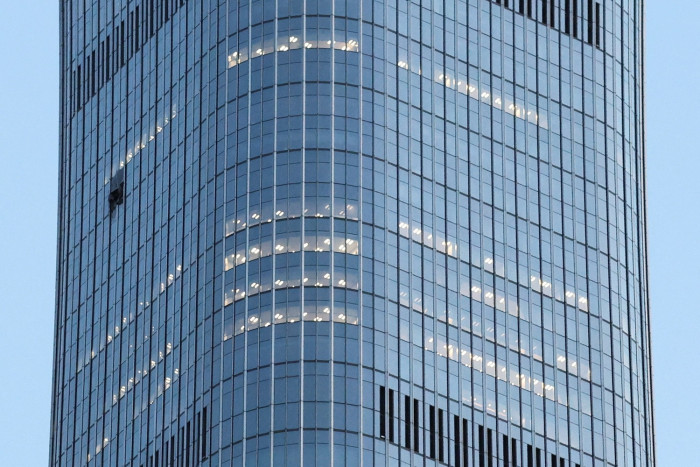
A small aircraft reportedly impacted the exterior of the CITIC Tower in Beijing on Friday, prompting a significant security response in the city’s central business district. While local authorities have yet to issue a comprehensive official statement regarding the nature of the craft or the cause of the incident, eyewitness reports and social media documentation indicate that police cordoned off several blocks surrounding the 528-meter skyscraper, which serves as the headquarters for the CITIC Group.
The incident at the CITIC Tower, also known as China Zun, occurred during afternoon hours, leading to immediate traffic diversions in the Chaoyang District. According to reports from observers on the ground, law enforcement personnel restricted access to the immediate perimeter of the building and actively discouraged bystanders from capturing photographic or video evidence of the structure’s facade. The tower, which remains the tallest building in the Chinese capital, is a prominent fixture in Beijing’s skyline and is subject to strict airspace regulations under the Civil Aviation Administration of China (CAAC).
Regulatory Framework for Low-Altitude Airspace
Operating any form of aircraft, including small drones or light sport aircraft, within the urban core of Beijing requires rigorous authorization from both the CAAC and regional military air traffic control. Under the Civil Aviation Administration of China regulations, the airspace over central Beijing is designated as a restricted zone. Unauthorized flight activity in such areas is subject to immediate investigation by public security bureaus.

The incident highlights the ongoing challenges of managing low-altitude traffic in densely populated urban environments. While the exact specifications of the aircraft involved in the CITIC Tower event remain unverified by official sources, the classification of small, car-sized aerial vehicles often falls under the category of light aircraft or large-scale unmanned aerial systems. The State Council of the People’s Republic of China has previously emphasized the necessity of strict compliance with flight path filings to ensure the safety of critical infrastructure and public spaces.
Safety Protocols and Infrastructure Security
The CITIC Tower, reaching 108 floors above ground, is equipped with advanced structural health monitoring systems. Following any physical impact, engineers typically conduct a multi-phase assessment to determine the integrity of the building’s glass and steel curtain wall. Because the building houses high-level corporate offices and financial institutions, security protocols are among the most stringent in the country.
Public security officials often utilize established emergency management procedures when responding to incidents involving major landmarks. These procedures include the rapid deployment of police to prevent crowd congestion and the coordination of municipal services to assess potential debris hazards. For official updates on urban safety and airspace management, citizens are directed to monitor bulletins provided by the Beijing Municipal Government website.
Current Status and Ongoing Investigation
As of late Friday, there has been no official word on casualties or the total extent of the damage to the building’s exterior. The restriction of filming by police is consistent with standard practices in China during active investigations involving sensitive infrastructure, aimed at preventing the spread of unverified information. The investigation is expected to focus on the flight path of the aircraft, the identity of the operator, and whether the entry into the restricted zone was intentional or the result of a mechanical failure.

The next anticipated update will likely come from the Beijing Public Security Bureau or municipal authorities once the preliminary site assessment is concluded. Readers are encouraged to share this article and follow our ongoing coverage as verified details regarding the investigation become available through official government channels.
Keep reading