
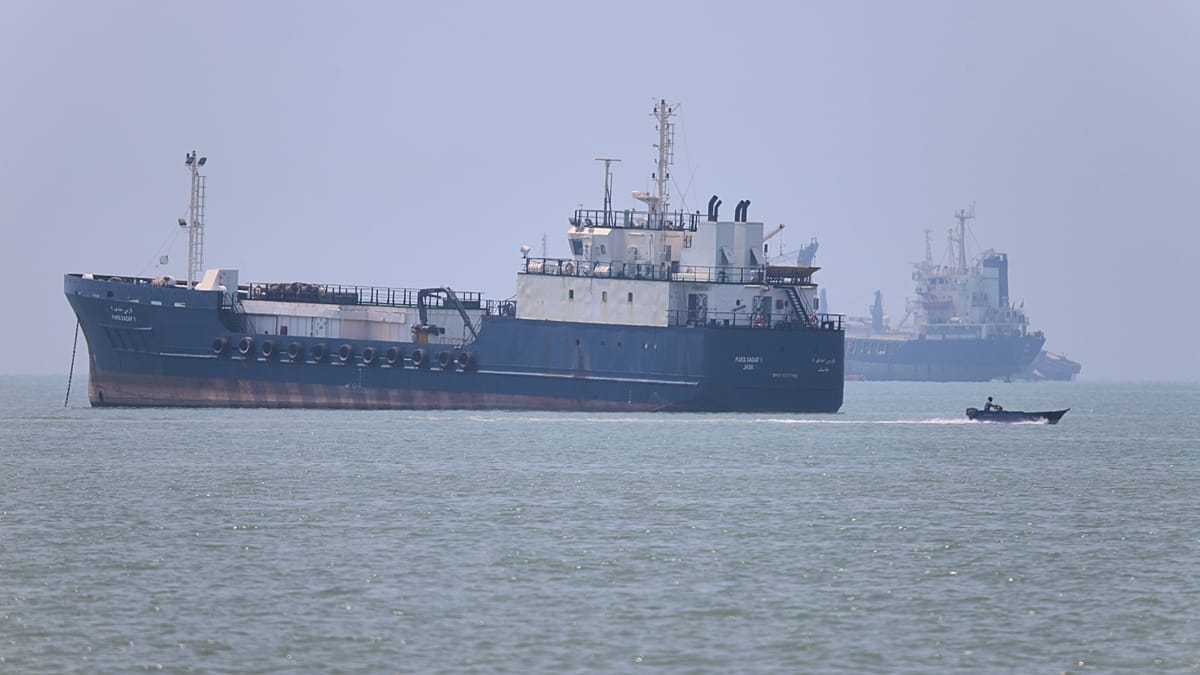
The Islamic Revolutionary Guard Corps (IRGC) has formally denied claims from American officials suggesting the existence of a direct military-to-military communication hotline between Iran and the United States concerning operations in the Strait of Hormuz. The denial, issued by the IRGC spokesperson, characterizes reports of such a channel as a “sheer lie,” deepening the uncertainty surrounding maritime security protocols in one of the world’s most critical energy transit corridors.
This rejection follows recent warnings regarding potential ceasefire violations and maritime stability in the region. The tension centers on the strategic waterway, through which a significant volume of oil per day—or a substantial portion of global petroleum liquids consumption—passed as of 2022, according to data from the U.S. Energy Information Administration. The absence of a verified communication mechanism between the two nations raises concerns among shipping insurers and global energy analysts regarding the potential for miscalculation during naval encounters.
The Dispute Over Maritime Communication Channels
The controversy stems from conflicting narratives regarding how Tehran and Washington manage naval interactions in the Persian Gulf. While some U.S. officials have previously alluded to the necessity or existence of informal de-confliction measures to prevent accidental escalations, the IRGC’s public stance is that no such direct hotline has been established. This public refutation serves as a diplomatic signal, reinforcing Iran’s long-standing policy of refusing direct bilateral military engagement with the United States.

Historically, the U.S. Fifth Fleet, headquartered in Bahrain, has maintained that its primary mission in the region is to ensure the free flow of commerce. The U.S. Naval Forces Central Command frequently reports on interactions with Iranian fast-attack craft, often characterizing these encounters as “unsafe and unprofessional.” Conversely, the Iranian leadership has consistently maintained that the security of the Strait of Hormuz is a regional responsibility, rejecting the presence of foreign naval forces as a destabilizing factor.
Geopolitical Stakes in the Strait of Hormuz
The Strait of Hormuz remains a central point of global economic vulnerability. As a narrow chokepoint between Oman and Iran, any disruption to transit through these waters typically leads to immediate volatility in global crude oil and liquefied natural gas (LNG) markets. Analysts tracking the International Energy Agency’s market reports note that the region’s stability is tied not only to direct military action but also to the perception of risk among commercial maritime operators.

The recent rhetoric from the U.S. administration underscores a focus on strict enforcement of existing maritime norms. By highlighting alleged ceasefire violations, the administration is signaling a shift toward a more interventionist posture in the region. For the global shipping industry, this creates a complex environment where the lack of a verified “hotline” means that standard naval communication protocols—often mediated through international radio frequencies—remain the only available, albeit limited, tools for avoiding direct conflict.
Why Direct Communication Matters for Global Markets
The primary risk to global markets in the absence of a hotline is the “flash-point” scenario: an accidental collision or a misinterpreted naval maneuver that triggers a rapid escalation. In previous decades, various “incidents at sea” agreements were used by global powers to manage such risks. However, the current breakdown in formal diplomatic relations between Washington and Tehran has rendered such institutional frameworks largely inapplicable.
Market participants often look for signs of “de-escalation signals,” which include the existence of back-channel communications. When these are denied by one of the primary actors, the market risk premium for shipping through the Persian Gulf typically increases. Insurance premiums for vessels traversing the region are directly linked to the Lloyd’s Market Association’s designated “Listed Areas,” which are periodically updated based on the threat of war, strikes, and terrorism.
Next Steps for Regional Monitoring
The situation remains fluid as the transition in the U.S. executive branch approaches. Observers are monitoring the U.S. Department of State’s daily press briefings for any formal clarifications regarding maritime de-confliction efforts. Additionally, the International Maritime Organization (IMO) continues to provide regulatory frameworks for safe navigation, though these do not address the specific bilateral military tensions currently in play.
There are no scheduled formal meetings between Iranian and U.S. military officials at this time. The international community will likely look to the next periodic report from the U.S. Central Command for updates on naval encounters in the region. We invite our readers to share their analysis on the impact of these geopolitical developments on global energy prices in the comments section below.