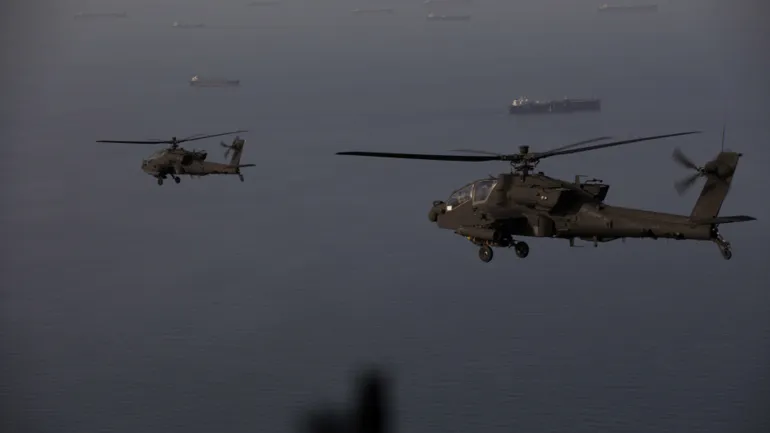
Bahrain has accused Iran of launching drone attacks against its territory, triggering a wave of condemnation from regional powers and deepening concerns over the stability of the Strait of Hormuz. The incident, which occurred amid a fragile US-Iran ceasefire, has prompted Egypt, Qatar, the United Arab Emirates, and Kuwait to publicly denounce the strikes as a violation of sovereignty and a threat to regional peace efforts.
The Bahraini government described the drone incursions as a direct challenge to its territorial integrity, asserting that Tehran bears sole responsibility for any resulting escalation. In response, regional capitals have called for immediate de-escalation, warning that such actions jeopardize ongoing diplomatic momentum in the Middle East. The situation has intensified existing disagreements regarding the maritime governance of the Strait of Hormuz, a critical global shipping artery.
Regional Diplomatic Response
Egypt led the regional outcry, condemning the reported drone attacks “in the strongest terms.” In an official statement, the Egyptian Foreign Ministry characterized the move as an unacceptable breach of Bahraini sovereignty and a significant threat to regional stability. Cairo urged all involved parties to prioritize diplomatic channels and refrain from actions that could derail recent efforts to lower tensions.

Other members echoed these sentiments. Qatar’s government labeled the attacks a “flagrant violation of international law,” while the United Arab Emirates reaffirmed its “full solidarity” with Bahrain. Kuwait’s foreign ministry issued a warning that the incident represents a dangerous escalation, potentially undermining both regional and international initiatives intended to preserve security in the Gulf.
Strait of Hormuz Governance Disagreements
The security of the Strait of Hormuz has become a primary point of contention between Tehran and Western-aligned maritime bodies. Iranian state media recently reported an increase in commercial vessels opting to use shipping corridors designated by the Iranian Revolutionary Guards. This shift followed reports that Iranian forces had fired warning shots at vessels deemed non-compliant with local navigation instructions.
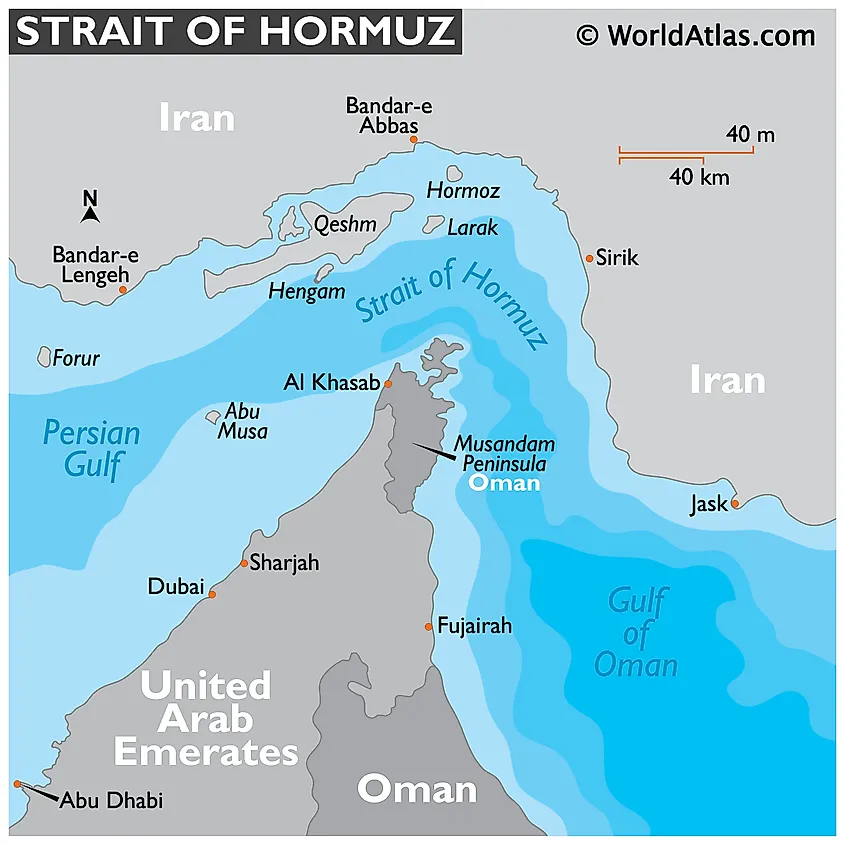
Iranian Deputy Foreign Minister Kazem Gharibabadi stated that safe passage through the strait cannot be guaranteed through what he termed “ambiguous arrangements” that exclude Iran. He emphasized that any navigation framework must be coordinated with Tehran under the provisions of the Islamabad memorandum of understanding. Should these conditions not be met, Iranian officials suggested the possibility of suspending the alternative shipping corridor.
This approach stands in contrast to the strategy employed by the Joint Maritime Information Center, a US Navy-supported body tasked with maritime coordination. The center recently announced the widening of shipping lanes near Oman to facilitate traffic. This expansion is viewed as part of broader US efforts to restore normal commercial navigation through the strategic waterway, further highlighting the lack of consensus on who holds authority over the waterway’s management.
Escalation and Ceasefire Tensions
The current diplomatic friction follows a series of military engagements that have strained the recently brokered US-Iran ceasefire. The Iranian Supreme National Security Council issued a formal condemnation of US air strikes conducted on Friday, which targeted radar facilities and missile storage sites along Iran’s southern coast. Tehran described the strikes as a clear breach of both the ceasefire memorandum and the UN Charter.
The US military, however, maintains that the strikes were a defensive response to Iranian aggression. According to statements from the US government, four attack drones were launched at a commercial vessel transiting the strait, with one drone successfully striking a cargo ship before US forces intercepted the remaining three. Donald Trump addressed the incident shortly after, while JD Vance warned that “violence will be met with violence,” urging Tehran to utilize direct communication to resolve disputes regarding the ceasefire’s implementation.
On Saturday, the Iranian Revolutionary Guards declared they had conducted retaliatory strikes against US military positions in the region, though they did not provide specific details on the targets hit.
Parallel Diplomatic Efforts
While tensions in the Gulf have spiked, diplomatic efforts elsewhere in the region continue to evolve. In Washington, Lebanon and Israel concluded four days of negotiations, resulting in the signing of a new framework agreement. US Secretary of State Marco Rubio described the accord as an important first step, though he cautioned that “much work remains” before a lasting settlement can be achieved.

The situation remains fluid, with regional governments and international observers monitoring the impact of these developments on the broader ceasefire agreement. Further updates are expected as international mediators work to clarify the status of the Strait of Hormuz and address the competing security claims made by Tehran and Washington.
Keep reading
- Disney Praises Global Success of Korean Content at D23
- UK Government Launches Review of ZEV Mandate and Electric Vehicle Sales Targets
- Trump Claims Total US Control of Strait of Hormuz as Iran Rejects Assertions (archyworldys.com)
- Apple Warns iPhone Users in 110 Countries of Mercenary Spyware Attacks (archynewsy.com)