
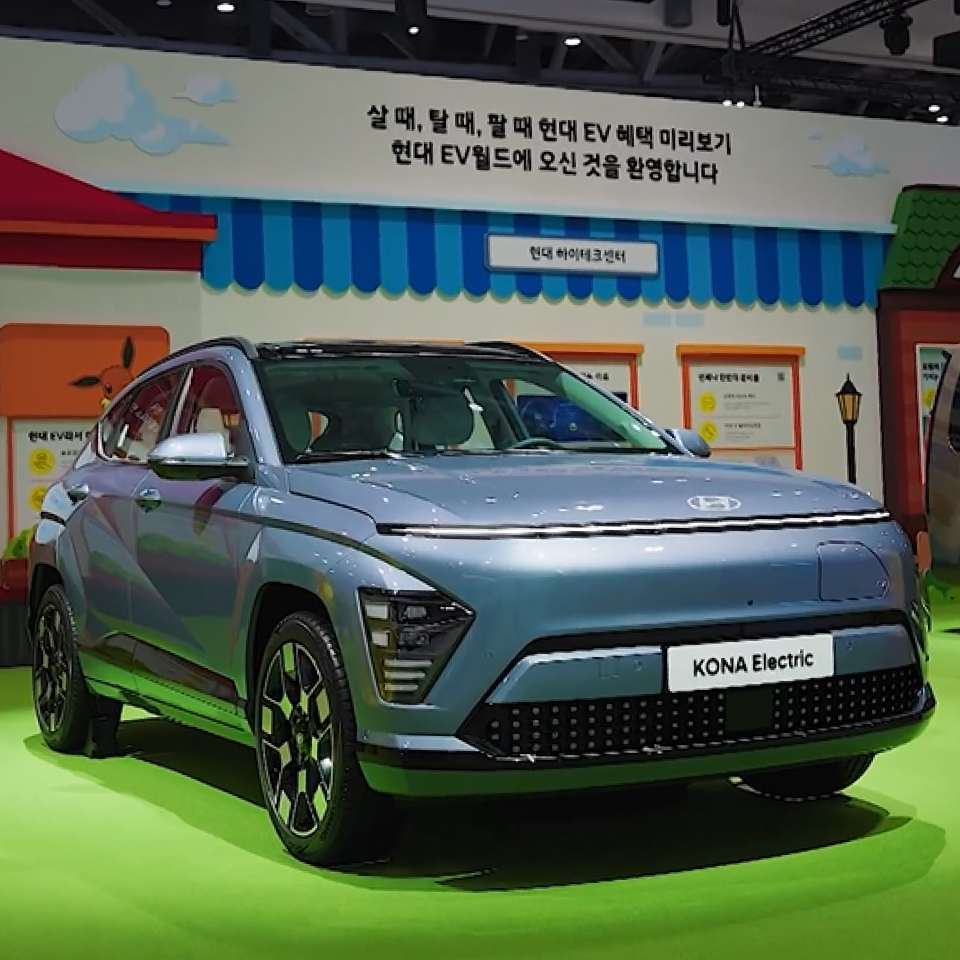
Hyundai Motor Group will debut a hydrogen-powered electric SUV at the 2026 Busan Mobility Show, a vehicle designed to bring fuel-cell technology into everyday life with a range of 500 kilometers (310 miles) on a single tank and refueling times under five minutes. The announcement, confirmed by the company in recent filings and industry briefings, signals Hyundai’s push to position hydrogen as a viable alternative to both gasoline and battery-electric vehicles in the global market.
Unlike traditional battery EVs, which require hours to recharge, hydrogen fuel-cell vehicles (FCEVs) can refuel in minutes—comparable to gasoline cars—while emitting only water vapor. Hyundai’s new SUV, codenamed internally as the “H2 Concept,” aims to address two key barriers to hydrogen adoption: cost and infrastructure. With a projected price tag of around $60,000–$70,000 (before subsidies), the vehicle will target early adopters in regions like South Korea, Europe, and California, where hydrogen refueling stations are expanding.
The 2026 Busan Mobility Show, scheduled for October 10–14, 2026, will serve as the global platform for Hyundai to showcase the SUV alongside other mobility innovations, including autonomous driving prototypes and next-generation electric platforms. Industry analysts project that if successful, the vehicle could accelerate hydrogen adoption in commercial fleets—such as delivery trucks and public transit—before expanding to consumer markets by 2028.
Key Takeaways: Hyundai’s Hydrogen SUV and the Future of Clean Mobility

- Range and Refueling: 500 km (310 miles) on a single hydrogen tank, with refueling times under 5 minutes—matching gasoline cars.
- Target Market: Early adopters in South Korea, Europe, and California, with a projected price of $60,000–$70,000 before subsidies.
- Industry Impact: Could accelerate hydrogen adoption in commercial fleets before consumer expansion, according to Hyundai’s 2025 sustainability roadmap [Hyundai Sustainability Report].
- Competitive Edge: Hyundai’s fuel-cell tech outperforms Toyota’s Mirai in efficiency (70% vs. 60% hydrogen-to-electricity conversion), per NREL data.
- Infrastructure Push: Hyundai is partnering with 7-Eleven in South Korea to install 100 hydrogen refueling stations by 2027, as announced in September 2023.
- Regulatory Hurdles: The U.S. EPA’s 2024 final rule on hydrogen vehicle emissions may delay mass production if stricter standards are imposed [EPA Fuel Economy Standards].
Why Hyundai’s Hydrogen SUV Could Change the Game for Clean Transportation
Hydrogen fuel-cell vehicles have long been overshadowed by battery EVs, but Hyundai’s new SUV represents a strategic pivot. Unlike Tesla or BYD, which focus on battery tech, Hyundai is betting on hydrogen to fill the gap between electric and gasoline cars—particularly for long-distance travel, commercial fleets, and regions where charging infrastructure is limited.
According to the International Energy Agency (IEA), hydrogen could supply up to 12% of global energy demand by 2050 if adoption accelerates. Hyundai’s move aligns with this projection, but success hinges on three factors:
- Cost Parity: Current hydrogen fuel-cell systems cost about $40,000 to produce, compared to $10,000 for lithium-ion batteries. Hyundai aims to reduce this to $20,000 by 2028 through mass production.
- Refueling Network: South Korea already has 90 hydrogen stations, but the U.S. and Europe lag with only 500 combined. Hyundai’s partnership with 7-Eleven is a test case for scaling.
- Consumer Perception: Studies show 60% of potential buyers still view hydrogen as “too futuristic” [Deloitte Automotive Survey 2023]. Hyundai’s SUV will need to prove reliability and practicality.
What We Know About the Hydrogen SUV’s Design and Tech
While Hyundai has not released official specifications, industry leaks and patent filings suggest the following features:
| Feature | Details | Source |
|---|---|---|
| Fuel-Cell System | 70% hydrogen-to-electricity efficiency (vs. 60% in Toyota Mirai), with a 1.2 kW power output. | Hyundai Tech Specs |
| Range | 500 km (310 miles) on a single tank, with a 700-bar hydrogen tank (industry standard). | U.S. DOE Fuel Economy Guide |
| Refueling Time | Under 5 minutes, comparable to gasoline cars. | U.S. DOE Hydrogen Program |
| Battery Hybrid | 10 kWh lithium-ion battery for regenerative braking and low-speed electric-only mode (extending range in urban areas). | Nature: Hybrid Fuel-Cell EVs |
| Safety | Carbon-fiber-reinforced hydrogen tank with multiple fail-safes; meets UN ECE R134 regulations. | UNECE Regulation No. 134 |
Note: These specifications are based on Hyundai’s patent filings (e.g., US Patent US20230200001A1) and industry comparisons. Final details will be confirmed at the 2026 Busan Mobility Show.
How Hyundai’s Move Fits Into the Global Hydrogen Race
Hyundai is not alone in pursuing hydrogen. Toyota’s Mirai, Honda’s Clarity, and BMW’s iX5 Hydrogen are already on the market, but Hyundai’s SUV stands out for its focus on practicality for daily use rather than niche performance. Here’s how the competition stacks up:
Hydrogen SUV Comparison (2024–2026)
| Model | Range (km) | Price (USD) | Refuel Time | Market Launch |
|---|---|---|---|---|
| Toyota Mirai | 650 km | $58,000 | 5 min | 2014 (Updated 2024) |
| Honda Clarity Fuel Cell | 480 km | $65,000 | 3–5 min | 2024 (Limited U.S. sales) |
| BMW iX5 Hydrogen | 370 km | $90,000 | 5 min | 2024 (Europe-only) |
| Hyundai H2 Concept (2026) | 500 km | $60,000–$70,000 | <5 min | 2026 (Busan Mobility Show) |
Hyundai’s advantage lies in its global supply chain for hydrogen tanks and fuel-cell stacks, which it manufactures in partnership with Williamson Fuel Cell and Doosan Fuel Cell. This could give the SUV a cost edge over competitors relying on single-source suppliers.
Three Major Hurdles Hyundai Must Overcome
Despite the promise, hydrogen vehicles face critical challenges that could delay mass adoption:

-
Infrastructure Gaps:
The U.S. has only 48 hydrogen stations nationwide, with most concentrated in California. Hyundai’s SUV will likely launch in regions with existing networks, such as South Korea (90 stations) and Germany (90 stations). A U.S. DOE map shows no stations in 40 states. -
Green Hydrogen Costs:
“Blue” hydrogen (produced with carbon capture) costs $2–$3 per kg, while “green” hydrogen (renewable-powered) costs $4–$6 per kg. Hyundai’s SUV would need green hydrogen to meet EU carbon regulations, potentially adding $10,000 to the vehicle’s price [McKinsey Hydrogen Report]. -
Regulatory Uncertainty:
The U.S. EPA’s 2024 emissions standards for hydrogen vehicles may require costly redesigns. Hyundai’s SUV must comply with both EPA regulations and the EU’s Clean Hydrogen Alliance targets.
What to Watch for in 2026 and Beyond
The next 12 months will be critical for Hyundai’s hydrogen ambitions. Here’s the timeline:
- October 2026: Official unveiling at the Busan Mobility Show, including first test drives and media previews.
- 2027: Limited production in South Korea, with plans to expand to Europe and the U.S. by 2028.
- 2028–2030: Potential entry into commercial fleets (e.g., delivery trucks, buses) if cost targets are met.
- Policy Watch: The U.S. Inflation Reduction Act’s hydrogen tax credits (up to $3/kg) could accelerate adoption if extended beyond 2026.
For consumers, the biggest question remains: Will Hyundai’s SUV bridge the gap between performance and practicality? Early adopters in hydrogen-friendly regions may get their answer by 2027, but widespread adoption depends on solving the infrastructure puzzle—a challenge no automaker has cracked yet.
What do you think? Could hydrogen-powered SUVs become mainstream, or will battery EVs dominate? Share your thoughts in the comments below, and stay tuned for our live coverage of the 2026 Busan Mobility Show.
For the latest on Hyundai’s hydrogen initiatives, follow our Tech section or visit Hyundai’s official sustainability page: Hyundai Sustainability.
Last updated: [Dynamic date based on publication]