
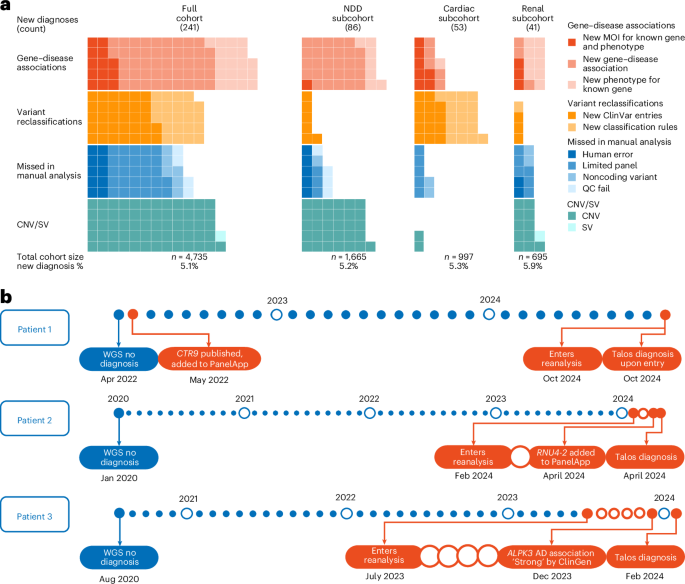
Automated reanalysis of genomic data using open-source tools is emerging as a viable strategy to improve diagnostic yields for patients with rare diseases. By identifying previously missed genetic variants, clinical teams can shorten the often lengthy “diagnostic odyssey” experienced by families, while reducing the financial burden on healthcare systems compared to manual, one-time interpretation models. Recent developments in bioinformatics emphasize that frequent, automated review of existing datasets—rather than repeated sequencing—provides a scalable and cost-effective pathway toward equitable genomic medicine.
The challenge of diagnosing rare conditions often lies in the rapid evolution of medical knowledge. Genetic variants that appear benign or “of uncertain significance” at the time of an initial test may be reclassified as pathogenic as new research enters clinical databases. Many patients wait years for a definitive diagnosis, a process that relies heavily on the periodic re-evaluation of genomic information by specialists.
Scaling Genomic Diagnostics Through Automation
The primary barrier to consistent reanalysis has historically been the high cost of manual labor required for bioinformatics pipelines. Clinical geneticists and lab technicians must often review thousands of variants, a process that is time-intensive and difficult to sustain at scale. New computational frameworks, such as the Talos tool, are designed to automate this process. By integrating existing clinical datasets with updated knowledge bases, these tools can flag potential diagnoses without requiring a human expert to review every negative result manually from scratch.
Automation allows healthcare providers to implement “continuous reanalysis” protocols. Instead of waiting for a patient or clinician to request a second look, the system periodically scans existing patient data against the latest global genetic findings. This shift from a passive to an active diagnostic model is essential for addressing health inequities, as it ensures that patients—regardless of their proximity to major academic medical centers—benefit from the global accumulation of genetic knowledge.
Why Frequent Reanalysis Matters for Rare Diseases
For individuals living with rare, undiagnosed conditions, the impact of a correct genetic diagnosis extends beyond clinical understanding. It often directs patients toward targeted therapies, clinical trials, or supportive care pathways that were previously inaccessible. It takes several years for patients to receive an accurate diagnosis, a delay that can significantly influence long-term health outcomes. Automated reanalysis serves as a critical safety net, ensuring that the “negative” results of today do not remain permanently ignored as clinical understanding grows.

The transition toward open-source diagnostic tools also lowers the barrier to entry for smaller clinical laboratories. By removing licensing fees and proprietary software restrictions, institutions can allocate more funding toward patient care and specialized genetic counseling. This democratization of tools is a central objective for public health researchers aiming to provide equitable access to precision medicine on a global scale.
Addressing Challenges in Data Integration and Privacy
While the potential for automated genomic reanalysis is significant, its integration into standard clinical practice requires rigorous attention to data privacy and regulatory compliance. Genomic data is highly sensitive, and the storage and processing of such information must adhere to strict international standards. In the European Union, the General Data Protection Regulation (GDPR) governs how health data, including genetic sequences, is handled, requiring institutions to maintain high levels of security and patient consent transparency.
Interoperability remains another hurdle. Genomic data formats must be standardized to ensure that automated tools can effectively communicate with electronic health records (EHRs) across different hospital systems. The Global Alliance for Genomics and Health (GA4GH) continues to lead efforts in establishing technical standards that enable the secure, cross-border sharing of genomic data, which is vital for the success of large-scale automated reanalysis programs.
Looking Ahead: The Next Phase of Clinical Adoption
The move toward automated reanalysis is not intended to replace the clinical geneticist, but rather to augment their capabilities. The role of the physician remains central in interpreting the clinical relevance of a variant flagged by software and communicating those findings to the patient and their family. As these tools become more sophisticated, the focus will shift toward clinical validation studies and the development of standardized protocols for how and when to disclose new findings to patients.

The next major checkpoint for the field involves the integration of these automated pipelines into routine, hospital-wide workflows. Future updates from international health bodies and regulatory agencies are expected to provide clearer guidelines on the reporting of reanalyzed data. Readers interested in the latest clinical updates regarding rare disease diagnostics can monitor the progress of institutional implementation programs through the Orphanet portal, which provides comprehensive information on rare diseases and orphan drugs.
As genomic technologies continue to evolve, the ability to turn “dark” data into actionable health information will define the next decade of medical practice. We encourage our readers to share their thoughts on the role of automation in healthcare in the comments section below.