
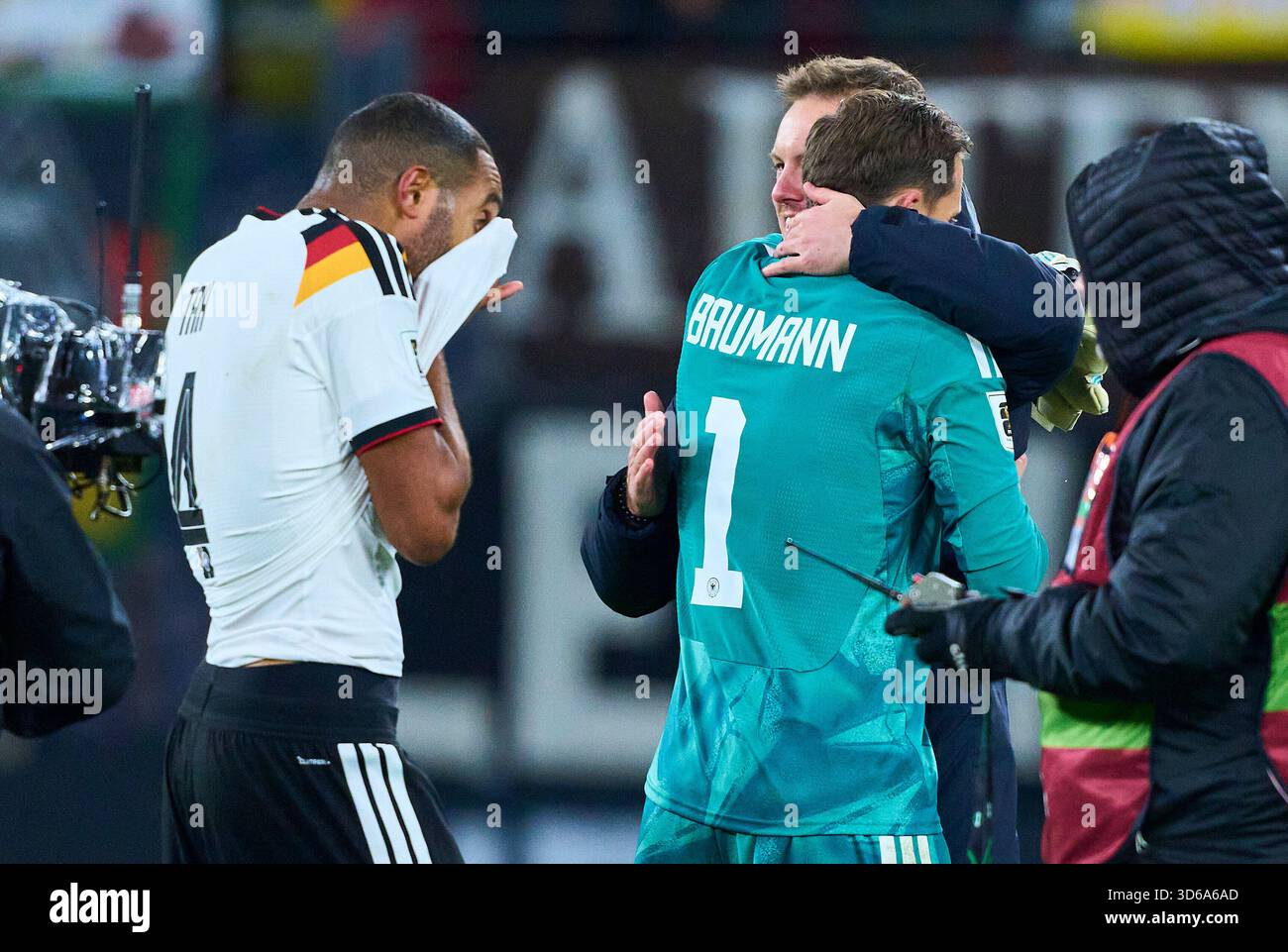
Germany has been eliminated from the 2026 World Cup following a defeat against Paraguay, sparking widespread criticism of Julian Nagelsmann and the team’s tactical direction. The exit marks another early departure for the national team, continuing a trend of instability that began with their group-stage exit in Russia 2018.
Reports from ESPN Deportes indicate a deep sense of disappointment across the German press, where critics are questioning Nagelsmann’s leadership and the squad’s inability to perform in high-stakes knockout or decisive matches. The loss to Paraguay has reignited a national debate regarding the identity of the Mannschaft and whether the current project under Nagelsmann can deliver a return to global dominance.
The fallout has extended beyond the coaching staff, with reports from the Chicago Tribune describing the mood in Germany as one of “false hope,” suggesting that the initial optimism surrounding the 2026 campaign has collapsed into a familiar pattern of failure. This sentiment reflects a recurring cycle of rebuilding and disappointment that has plagued the German Football Association (DFB) for several tournament cycles.
Why is Julian Nagelsmann facing such intense criticism?
Critics argue that Nagelsmann has failed to instill a cohesive tactical identity that can withstand the pressures of the World Cup. According to ESPN Deportes, the press is highlighting a lack of clinical finishing and a defensive fragility that plagued the match against Paraguay. The primary criticism centers on the coach’s inability to adjust tactics during the game to counteract the opposition’s strategy.

This lack of a “compass” is a sentiment echoed by Sports Illustrated, which notes that Germany has struggled to find its direction since the 2018 World Cup loss to Mexico. The publication suggests that the structural issues within the team are systemic and that Nagelsmann’s tenure has not yet provided the definitive solution required to break the cycle of early exits.
The frustration is not limited to the media. Reports from Diario AS mention that Jürgen Klopp has expressed fury over Germany’s performance, specifically targeting the lack of intensity and competitive spirit. While Klopp’s comments have been framed in the context of his passion for the national team, they underscore the gap between the team’s perceived potential and its actual output on the pitch.
How has the political and sporting leadership responded?
Not all reactions have been critical. Friedrich Merz has come out in defense of the national team. According to Yahoo, Merz urged for a level of support and patience, suggesting that the team should not be completely dismantled after a single tournament failure, though his comments contrast sharply with the prevailing mood in the sporting press.

The contrast in framing is evident: while political figures like Merz emphasize resilience and support, sporting outlets like ESPN Deportes and Sports Illustrated focus on the tactical void and the failure of the DFB’s long-term planning. This divide highlights the tension between the national pride associated with the team and the professional requirements of elite international football.
The pattern of failure since Russia 2018
The 2026 elimination is viewed by many analysts as a continuation of a downward trend. The 2018 defeat to Mexico remains the benchmark for the team’s decline. Since then, the team has struggled with consistency, often performing well in friendlies or qualifying rounds only to falter in the final tournament.
The “false hope” mentioned by the Chicago Tribune refers to the belief that Nagelsmann’s appointment would bring a modern, analytical approach that would finally resolve the issues of the post-2018 era. Instead, the defeat to Paraguay suggests that the team remains vulnerable to the same psychological and tactical traps that have hindered them for nearly a decade.
The current situation can be summarized by the following timeline of instability:
| Event | Outcome | Primary Issue Cited |
|---|---|---|
| 2018 World Cup | Group Stage Exit (Loss to Mexico) | Tactical rigidity and lack of preparation |
| Interim Period | Multiple Coaching Changes | Lack of a clear long-term identity |
| 2026 World Cup | Elimination (Loss to Paraguay) | Tactical failure under Nagelsmann |
What happens next for the German National Team?
The German Football Association (DFB) is now faced with a critical decision regarding the future of Julian Nagelsmann. With the press and former greats like Klopp expressing dissatisfaction, the pressure to either overhaul the squad or change the coaching staff is mounting.

The immediate focus will be on the DFB’s post-tournament review, where officials will analyze the performance data and match footage from the Paraguay game. The goal will be to determine if the failure was a result of individual player errors or a fundamental flaw in Nagelsmann’s system. Given the history since 2018, the DFB cannot afford another cycle of “false hope” without concrete structural changes.
The next confirmed checkpoint will be the official DFB press conference and technical report, scheduled to be released following the conclusion of the 2026 World Cup cycle, where the federation will address the coaching staff’s status and the roadmap for the next qualifying cycle.
Do you think Julian Nagelsmann should remain as head coach, or is it time for a complete change in leadership for the Mannschaft? Share your thoughts in the comments below.