

Poland managed a unique strategic alignment with the Trump administration by prioritizing personal rapport and transactional diplomacy over traditional multilateral diplomacy, according to analyses of U.S.-Poland relations between 2017 and 2021. This approach allowed Warsaw to secure increased U.S. military presence and strengthen bilateral security ties while other European Union members faced public friction with the White House.
The relationship was anchored in the ideological symmetry between the Law and Justice (PiS) party and Donald Trump’s “America First” platform. Both entities emphasized national sovereignty, skeptical views of centralized European governance, and a hardline stance on migration. By mirroring this rhetoric, Polish leadership positioned the country as the primary reliable partner for the U.S. within the European continent.
Central to this strategy was the cultivation of direct, personal ties. Former Polish leaders avoided the public critiques of Donald Trump that characterized the rhetoric of leaders in France and Germany. Instead, they focused on specific, tangible deliverables—such as the acquisition of American military hardware and the establishment of permanent U.S. bases—to solidify the bond.
How Poland leveraged personal ties for security gains
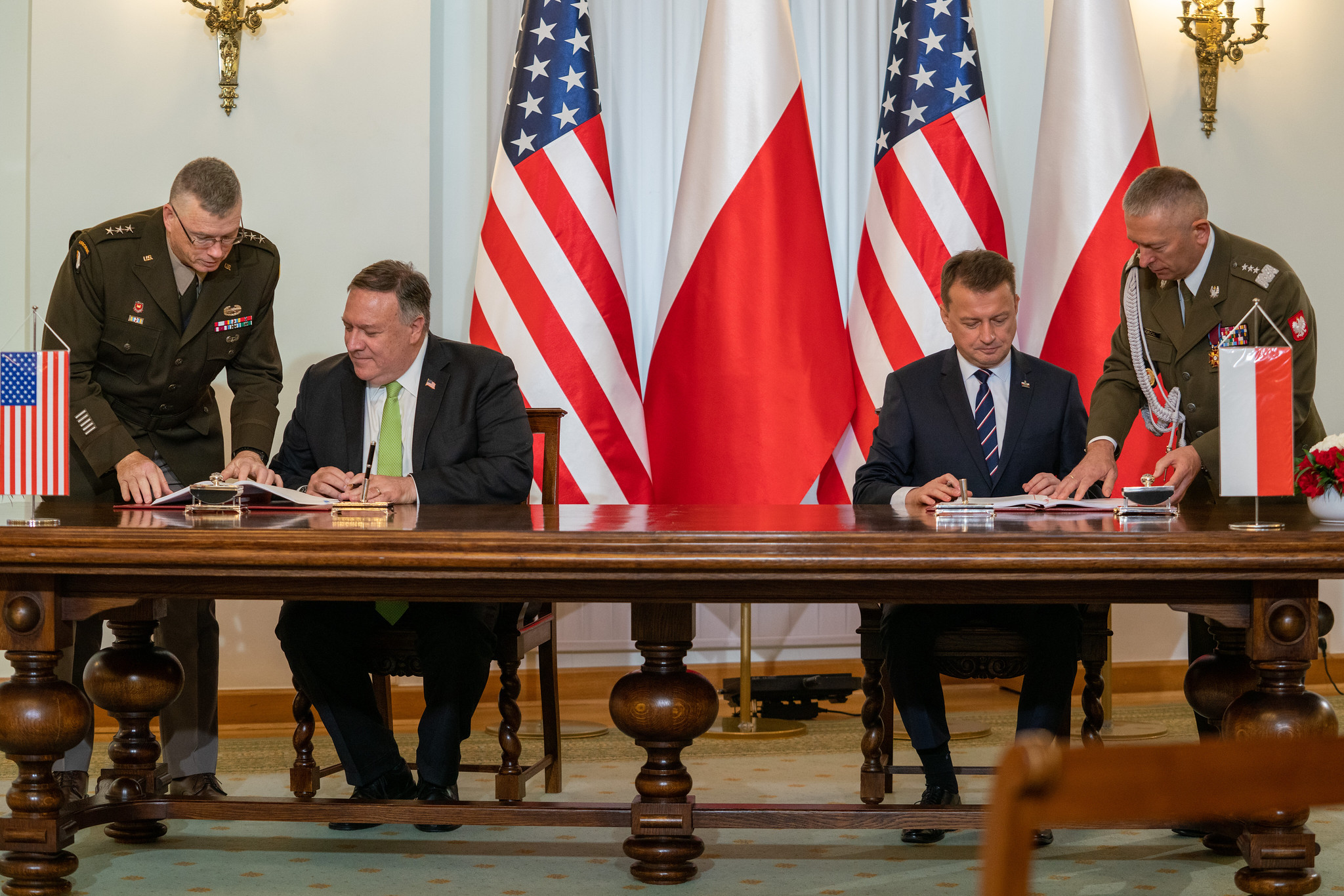
Warsaw shifted its diplomatic focus toward a transactional model that favored bilateral agreements over EU-wide consensus. This shift resulted in significant military upgrades. According to the U.S. Department of State, the two nations deepened cooperation through the “enhanced Defense Cooperation Agreement,” which facilitated the rotation of U.S. troops into Poland.
The Polish government pursued high-profile arms deals to signal commitment to U.S. industry. This included the purchase of F-35 lightning II stealth fighters and HIMARS rocket systems. By framing these purchases as a security necessity for the “Eastern Flank” of NATO, Poland aligned its national defense goals with Trump’s demand that European allies increase their defense spending to meet the 2% GDP threshold.
The personal chemistry between the PiS leadership and the Trump administration also manifested in joint public appearances and shared political language. While other EU leaders questioned the legitimacy of the U.S. presidency or its commitment to NATO, Polish officials maintained a supportive public posture, which ensured that Warsaw remained a “preferred partner” in the eyes of the White House.
The risks of transactional diplomacy
Despite the short-term gains, analysts note that a relationship built on personal affinity is inherently fragile. The “luck” of this alignment depended on the specific personalities in power rather than long-term institutional treaties. When the administration changed in 2021, the nature of the partnership shifted toward a more traditional, values-based diplomacy centered on the rule of law and democratic norms.

The tension between Poland’s bilateral success and its standing within the European Union created a dual-track foreign policy. While the U.S. relationship flourished, Poland faced increasing scrutiny from the European Commission regarding judicial independence. This friction highlighted the trade-off: gaining favor with a populist U.S. administration often meant alienating the institutional core of the EU.
Historical precedents suggest that U.S. foreign policy is subject to sudden pivots. The reliance on a single leader’s preference, rather than a broad strategic consensus across the U.S. political spectrum, leaves a nation vulnerable to policy reversals when a new administration takes office.
Comparing the Polish approach to other EU states
The contrast between Poland and other EU powers during the Trump era was stark. While Germany’s leadership often engaged in public disagreements regarding trade and climate accords, Poland avoided public confrontation. This created a vacuum in which Poland could present itself as the “most pro-American” country in Europe.
This strategy provided Poland with a degree of leverage. By being the “reliable” partner, Warsaw could occasionally push its own agenda or secure concessions that other EU members could not. However, this approach was largely dependent on the Trump administration’s specific disregard for traditional diplomatic protocols and its preference for “strongman” leadership styles.
What happens next for U.S.-Poland relations
The current trajectory of U.S.-Poland relations is now being tested by a shift in Polish domestic politics. With the transition to a new government in Poland that is more aligned with EU judicial standards, the relationship is moving away from the purely transactional, personality-driven model of the late 2010s.
The focus has shifted toward a broader strategic partnership that includes not only military cooperation but also energy independence and a unified response to Russian aggression in Ukraine. The stability of this bond now rests on institutional agreements and shared geopolitical threats rather than the personal rapport of individual leaders.
The next critical checkpoint for this relationship will be the ongoing implementation of the U.S. military’s permanent presence in Poland and the continued delivery of advanced weaponry as part of the long-term modernization plan. These institutional commitments serve as the hedge against the volatility of individual political cycles.
Do you believe transactional diplomacy is the most effective way for smaller nations to engage with superpowers? Share your thoughts in the comments below.