
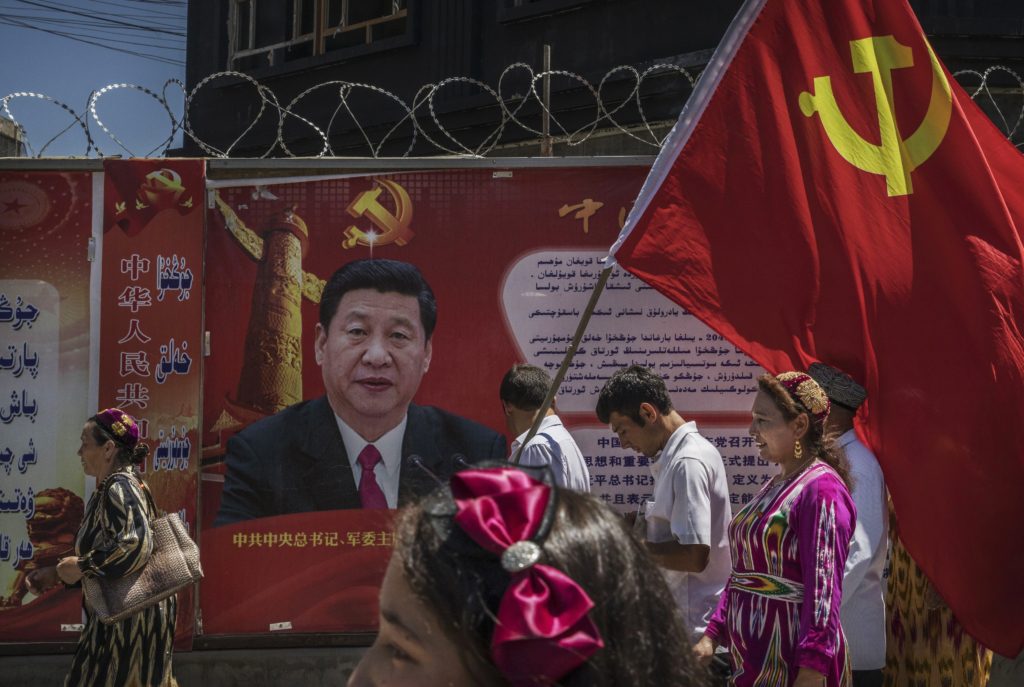
China’s new Ethnic Unity Law, scheduled to take effect on July 1, 2026, aims to consolidate a shared national identity by requiring minority groups to align with state-defined cultural and political norms. According to Amnesty International, the legislation provides a legal framework for the forced assimilation of Uyghurs, Tibetans, and Mongolians into a national identity dominated by Han Chinese culture.
The law frames “ethnic unity” as a necessary requirement for the advancement of “Xi Jinping Thought” and the “rejuvenation” of a shared national political identity. By prohibiting acts that “undermine ethnic unity or create ethnic division,” the state establishes broad legal mandates that critics argue allow for arbitrary enforcement against peaceful cultural and religious expression.
During a State Council press conference on June 24, senior officials confirmed that certain elements of the law are applicable beyond China’s borders. This extraterritorial reach has prompted warnings from human rights monitors regarding the potential for increased transnational repression of diaspora communities and activists worldwide.
How does the Ethnic Unity Law impact minority rights?
The legislation shifts the state’s approach from managing diversity to enforcing conformity. Sarah Brooks, Deputy Regional Director at Amnesty International, stated that the law does the opposite of protecting minority cultures, instead pushing groups to adopt a single, state-defined identity. Brooks noted that “unity” in this legal context refers to political and ideological alignment with the Chinese Communist Party rather than harmony between different communities.
Under the new framework, activities that already carry significant risk within China may face further criminalization. These include the promotion of minority languages, the documentation of human rights abuses, and campaigning for the release of detainees held for their beliefs or cultural expressions. The law essentially institutionalizes policies of forced assimilation by providing a national legal basis for practices that have already impacted non-Han ethnic groups.
What is the risk of transnational repression?
The confirmation by the State Council that the law applies beyond China’s borders creates a legal mechanism to target individuals outside the country. Amnesty International has previously documented China’s use of transnational repression, which includes the surveillance of diaspora populations, harassment of overseas critics, and the intimidation of family members remaining in China to silence dissent.

Peaceful advocacy for minority rights conducted anywhere in the world could now be characterized as “undermining ethnic unity.” This allows the state to characterize international human rights work as a criminal act.
Which precedents illustrate the enforcement of these policies?
The risks associated with the new law are highlighted by existing cases where cultural and academic work was criminalized under previous policies. The detention of Uyghur academic Ilham Tohti, Uyghur ethnographer Rahile Dawut, and Tibetan religious leader Choktrul Dorje Ten Rinpoche serve as examples of how the state treats peaceful intellectual and religious activities as threats.
These cases demonstrate a pattern where the pursuit of ethnic identity or the documentation of cultural heritage is viewed as “creating ethnic division.” The 2026 law is expected to entrench these trends.
Comparison of State Objectives vs. Human Rights Obligations
| State Objective (Ethnic Unity Law) | International Human Rights Standard |
|---|---|
| Political alignment with the CCP and Xi Jinping Thought | Protection of individual freedom of thought and belief |
| Adoption of a state-defined, Han-dominated identity | Right to maintain and protect distinct ethnic and cultural identity |
| Prohibition of “undermining unity” (broadly defined) | Protection of peaceful assembly and freedom of expression |
| Extraterritorial application of unity mandates | Sovereignty and protection against transnational harassment |
By defining “unity” as “conformity,” the state effectively removes the legal space for minority cultures to exist independently of the party’s ideological goals.

The next significant checkpoint for this legislation is its official implementation date on July 1, 2026. International monitors continue to track the State Council’s guidance on how the law will be applied to citizens and residents living outside of China.
World Today Journal encourages readers to share this report and provide comments on the implications of extraterritorial laws on global human rights.