
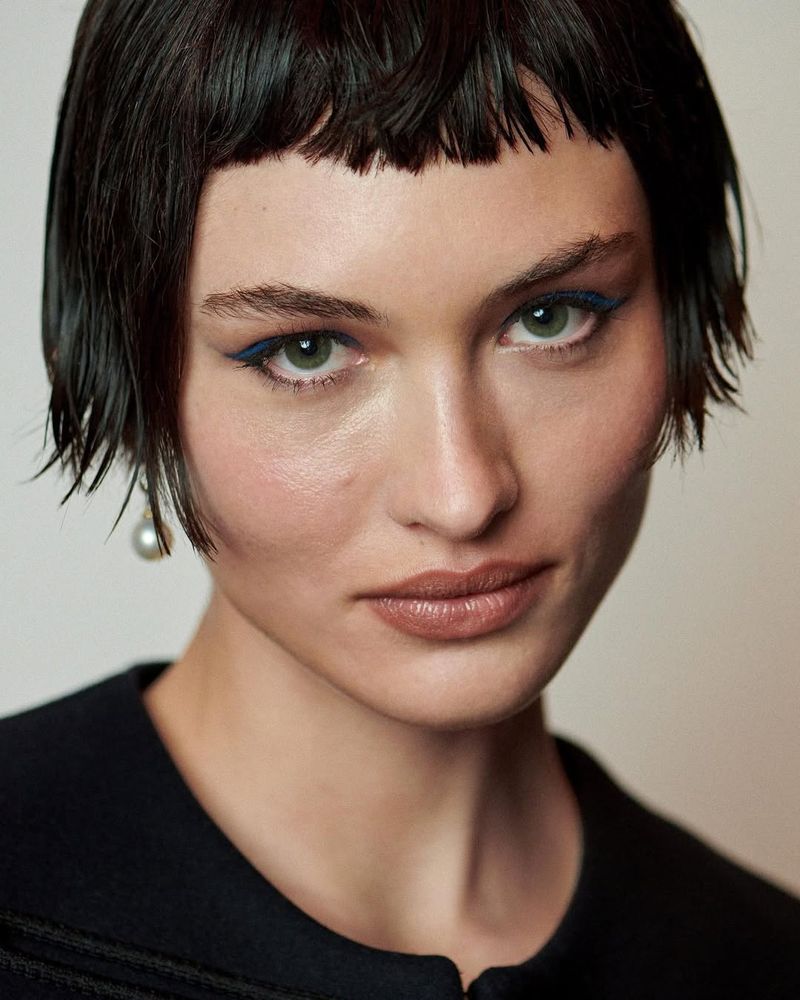
Public discussions regarding personal grooming choices often highlight the divide between individual expression and perceived social preferences. Recent discourse surrounding the “ultra-short fringe,” or micro-bangs, has reignited debates about how such hairstyles are received in broader society, with some anecdotal reports suggesting that this specific aesthetic choice may not align with traditional beauty standards favored by some men. As a physician and health journalist, I observe these trends as reflections of the interplay between fashion, identity, and the psychological impact of external validation.
The micro-bang—a fringe cut significantly above the eyebrows—has long been a staple of avant-garde fashion and subcultures, yet it frequently elicits polarized reactions. While proponents argue that the style offers a bold, practical, and distinctive look, critics often describe it as jarring or unconventional. In the context of interpersonal perception, what individuals choose to do with their hair often serves as a non-verbal cue that can influence first impressions, though these reactions are deeply rooted in cultural conditioning and personal preference rather than objective aesthetic truth.
The Psychology of Aesthetic Preferences
From a psychological perspective, hair is a primary component of self-presentation. According to research on social perception, hairstyles are among the first features processed when evaluating another person’s appearance. When a person adopts a style that deviates from the “norm,” such as an ultra-short fringe, it can trigger cognitive dissonance in observers who hold rigid expectations of what constitutes an attractive or conventional look. This is not necessarily a reflection of the style itself, but rather the observer’s own comfort level with unconventional aesthetics.
It is important to differentiate between subjective preference and universal appeal. Beauty standards are fluid and change across generations and geographic regions. The American Psychological Association notes that while humans often have a biological predisposition toward symmetry, the specific “rules” of attractiveness are heavily influenced by media, social circles, and historical trends. Consequently, the claim that a specific gender has a “hatred” for a particular haircut is often an oversimplification of complex social dynamics.
Navigating Trends and Personal Identity
For those considering a drastic change in hairstyle, the decision often involves weighing personal satisfaction against the desire for social approval. Medical professionals and psychologists generally encourage individuals to prioritize personal autonomy in their grooming habits. The act of choosing a hairstyle that resonates with one’s own sense of self-expression can have positive effects on self-esteem, regardless of how that style is perceived by others.

Furthermore, hair health plays a significant role in how any style, including a short fringe, is perceived. Maintaining healthy, nourished hair is often more critical to the overall appearance than the length of the bangs themselves. According to the American Academy of Dermatology, consistent hair care routines that minimize heat damage and breakage are essential for achieving any desired look. A well-maintained, intentional style—even one that is unconventional—often carries a level of confidence that mitigates negative external reactions.
Why Subjective Opinions Vary
The discourse surrounding “who likes what” in fashion is rarely backed by empirical data that applies to an entire population. Instead, these discussions are often driven by personal anecdotes shared in lifestyle media. When a publication suggests that men have a “great dislike” for a specific look, it typically reflects a collection of personal accounts rather than a sociological consensus.

It is worth considering the following factors when encountering such claims:
- Cultural Context: What is considered “fashionable” in a metropolitan center like Berlin or Paris may differ significantly from expectations in more conservative or rural environments.
- Individual Agency: Research in the field of behavioral psychology suggests that individuals who prioritize their own aesthetic choices over perceived social expectations often report higher levels of long-term satisfaction.
- Media Framing: Lifestyle articles often use hyperbolic language to drive engagement, which can distort the reality of how people truly feel about these minor aesthetic choices.
Moving Forward with Personal Style
Ultimately, the choice to wear an ultra-short fringe is a matter of personal style. While some individuals may find the look unconventional, others view it as a high-fashion statement that highlights facial features and demonstrates confidence. There is no biological or medical mandate for what constitutes an “attractive” fringe; such metrics are entirely social.

As we continue to observe the evolution of beauty standards, it remains clear that authenticity is a significant factor in how others perceive us. Whether one chooses to follow current trends or experiment with bold, non-traditional styles, the most important metric remains the individual’s own comfort and confidence. For those seeking to change their hair, consulting with a professional stylist who understands face shape and hair texture can help ensure that any style, no matter how short, is executed in a way that feels intentional and flattering.
We welcome your thoughts on how evolving beauty standards influence your own personal style choices. Please share your experiences in the comments section below, and stay tuned to our health and wellness updates for more analysis on the intersection of lifestyle and public perception.