
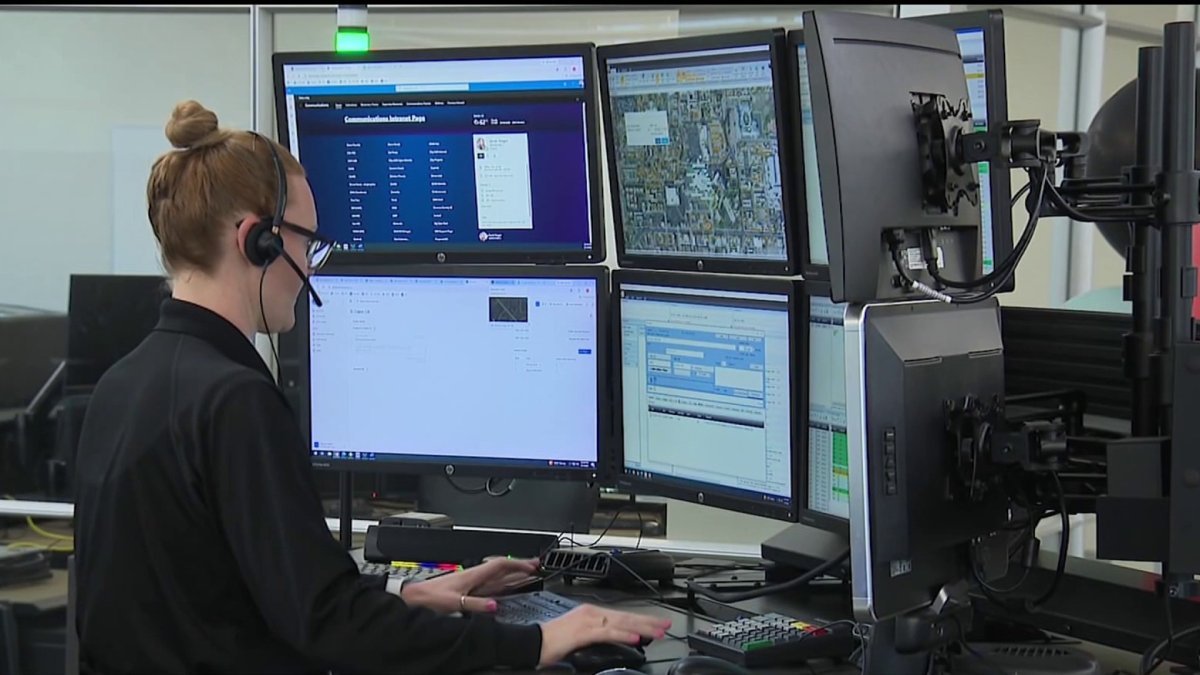
The El Cajon Police Department has implemented an artificial intelligence system called “Ava,” developed by the tech company Aurelian, to manage non-emergency police calls. The system screens low-priority reports to reduce dispatcher hold times and workload, while all 911 emergency calls continue to be routed directly to human dispatchers.
The agency handles an estimated 180,000 calls annually, with 100,000 of those classified as non-emergencies, according to department data. These reports include noise complaints, animal issues, parking disputes, power outages, and building permit requests. The police department began the citywide rollout of the AI system on Wednesday to alleviate pressure on its staff of 17 dispatchers who manage calls 24 hours a day.
Chief Jeremiah Larson stated that the system is designed to ensure callers get through immediately regardless of whether they speak English, Spanish, or Arabic. Larson noted that the implementation will improve the caller experience and increase employee efficiency.
How the AI system processes non-emergency reports
The “Ava” AI system functions as an initial screening layer for the department’s non-emergency line. When a resident calls, the AI interacts with the caller to gather a report and collect key information. Once the data is captured, the system enters the details into the computer system for human review.
Department officials emphasized that the AI does not replace human decision-making. Craig Groll, the department’s communications manager, stated that every call is reviewed by a human for accuracy, priority, and triaging. The AI acts as a data-gathering tool rather than a final authority on police response.
Addressing dispatcher burnout and call volume
The adoption of the AI system follows a trend of police departments becoming “catch-all” centers for municipal issues. Groll noted that residents often default to calling the police department when they are unsure which city agency to contact for non-police matters.
By filtering these low-priority calls, the department intends to give dispatchers more time to recover between high-stress emergency calls. Groll explained that dispatchers often handle life-threatening situations and highly emotional pleas for help without sufficient time to decompress before the next call. The goal is to prioritize emergency responses while maintaining a streamlined process for non-urgent reports.
Contract costs and California implementation
The El Cajon Police Department signed a one-year contract with Aurelian for $74,000. According to the agency, El Cajon is the first city in California to utilize Aurelian’s specific AI technology for this purpose. The El Cajon Police Department has stated it has no plans to replace human personnel with the technology.
The city will review the performance of the Ava system over the next 12 months to determine if the contract will be renewed. This trial period will likely focus on the accuracy of the AI’s data collection and the measurable reduction in hold times for the public.
Multilingual accessibility and public impact
A primary feature of the Ava system is its ability to provide automatic translation in Spanish and Arabic. This allows the department to serve a diverse population more efficiently by providing help in a caller’s preferred language immediately upon contact.

The department expects that removing the “hold” period for non-emergency callers will reduce frustration and ensure that the 17-person dispatch team can focus their cognitive resources on 911 emergencies. By automating the intake of routine reports—such as parking issues or noise complaints—the agency aims to optimize its emergency response pipeline.
The department will evaluate the system’s efficacy before the contract expires next year. Residents seeking updates on city services or police reporting can visit the official City of El Cajon website.
Do you think AI belongs in emergency services? Share your thoughts in the comments below or share this article on social media.